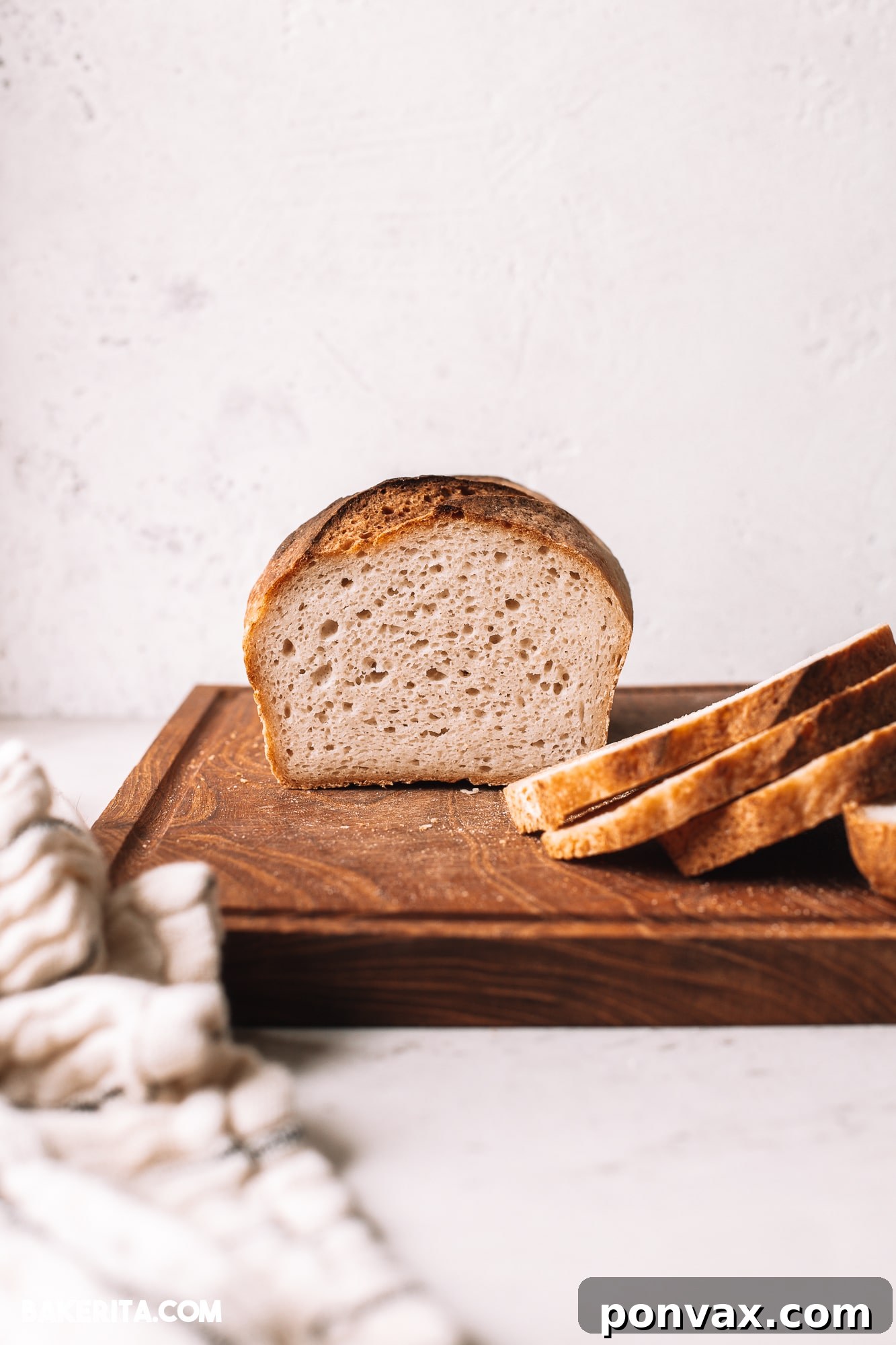
Unlock the secrets to baking your perfect **gluten-free sourdough bread** right in your own kitchen! This comprehensive Gluten-Free Sourdough Bread Guide transcends a mere recipe; it’s an indispensable resource for both beginners and seasoned bakers seeking to master the art of simple, yet spectacularly delicious, gluten-free sourdough. Packed with clear explanations, unwavering encouragement, and essential links to all the ingredients and equipment you’ll need, you’ll soon be crafting artisanal loaves that rival any bakery. This proven methodology has already empowered **thousands** to achieve astounding success with their gluten-free sourdough journey!
Elevate Your Gluten-Free Sourdough Journey: Join Our Thriving Community!
**Join over 20,000+ passionate sourdough bakers in my Gluten-Free Sourdough Friends Facebook Group** to connect, ask questions, share invaluable tips, ingenious tricks, and celebrate your baking triumphs. This vibrant community is your ultimate support system!
Discover all the **sourdough ingredients & tools** you’ll need to begin your baking adventure, conveniently curated on my Amazon Storefront.
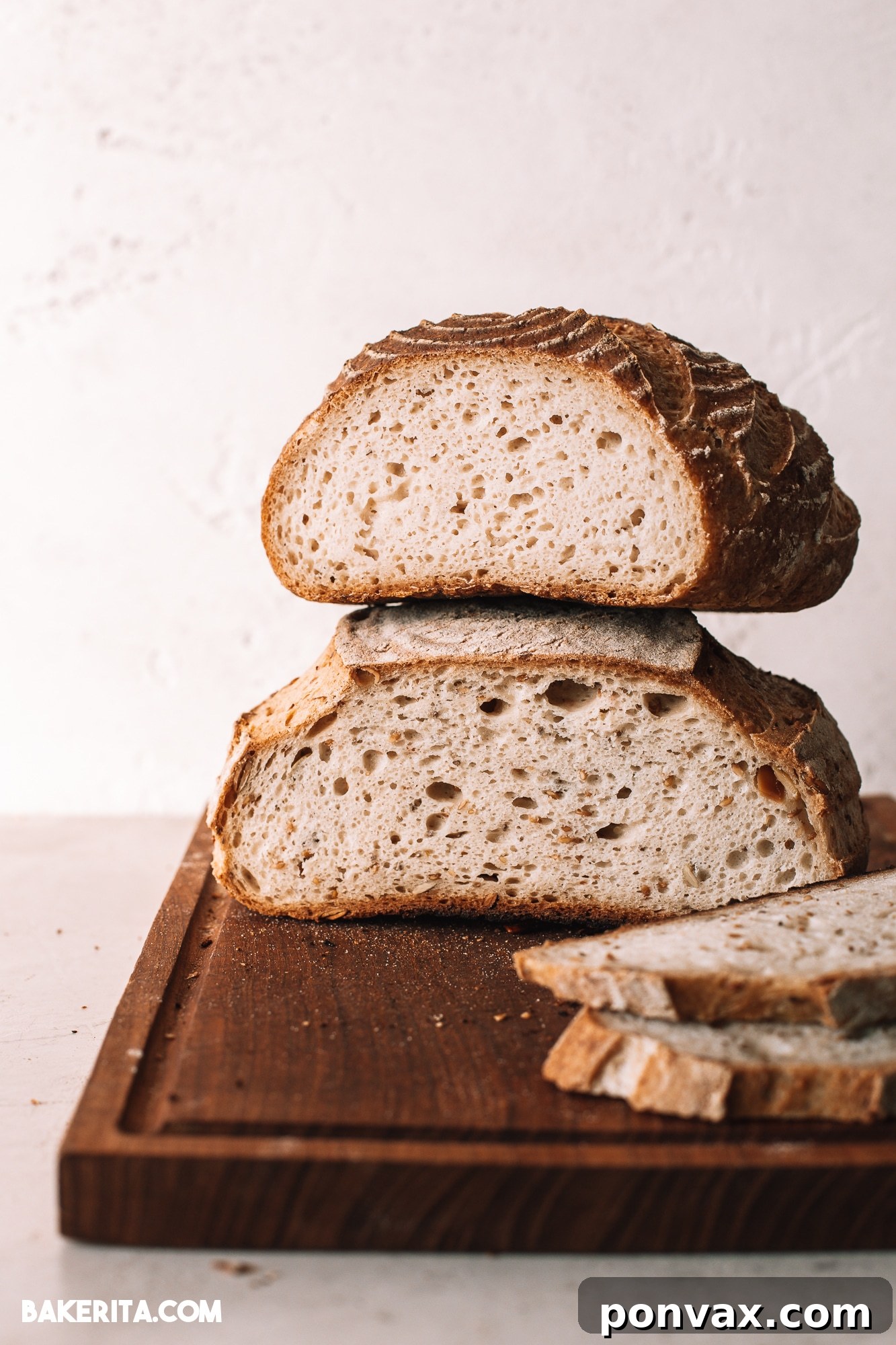
Baking gluten-free sourdough bread has been, without a doubt, my most requested culinary challenge, leading to countless hours of dedicated testing and refinement. More than just a recipe, it’s a profound *project* – a rewarding journey that demands your commitment in both time and energy. To achieve consistent gluten-free sourdough success, you must embrace the process, understanding that it will take some experimentation to discover what truly works best for *your* unique environment and ingredients. At the heart of my gluten-free sourdough philosophy lies a core belief:
Embracing the Intuitive Art of Gluten-Free Sourdough Baking
While a foundational understanding of the science is undeniably helpful, and I strongly advocate for precise measurements by weight when you’re just starting, remember that making gluten-free sourdough bread is ultimately an intuitive practice. There are myriad variables that influence the outcome of your loaf, far beyond what any single recipe can fully account for. Consider factors such as the ambient air temperature and humidity in your kitchen, the hardness and temperature of your water, and even the specific brands and batches of flours you’re using. Each of these elements can subtly alter the dough’s behavior.
It’s easy to get lost in the intricate scientific details, and for many, that’s part of the fun! However, it’s equally crucial to develop and trust your intuition. As you progress through more baking cycles, you’ll begin to understand the nuances of your dough, recognizing its feel, its texture, and how it responds to different conditions. This intuitive connection grows with each loaf, empowering you with greater confidence and adaptability.
Many aspiring bakers, myself included, have felt a sense of nervousness when approaching sourdough. It can seem daunting with its living starter and multi-day process. But I assure you, with a willingness to dedicate the necessary time and a spirit of joyful experimentation, there’s truly nothing to be nervous about. **Every single person can learn to make incredible bread.**
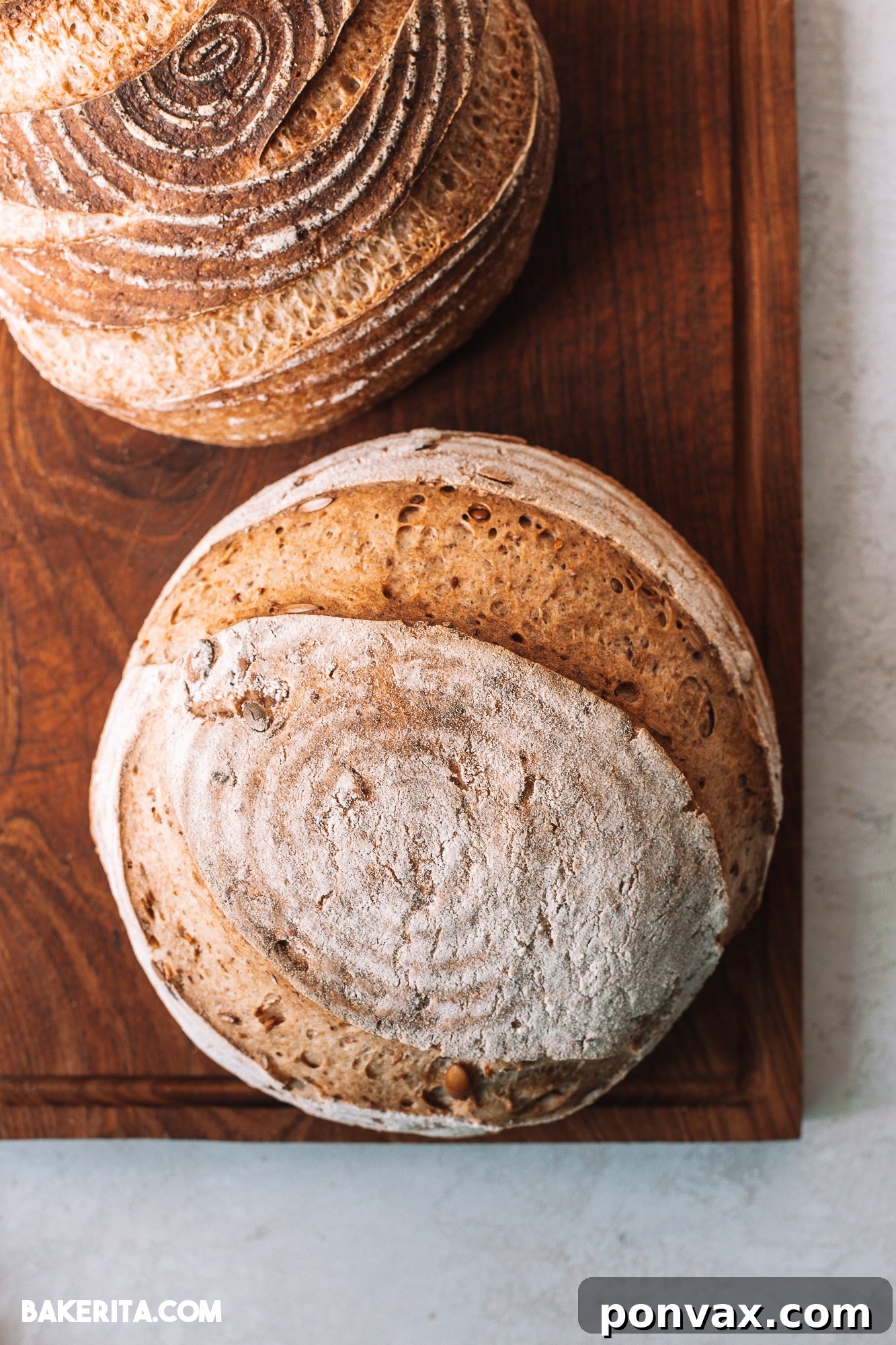
Should you choose to accept this delightful mission, you will be richly rewarded. Imagine pulling fresh, golden-crusted loaves of heavenly gluten-free sourdough bread from your oven – a reward that truly transcends the effort. These loaves are perfect in every way: whether toasted to perfection for breakfast, forming the base of a hearty sandwich for lunch, or transformed into irresistible garlic bread for dinner. The aroma alone will make your kitchen feel like a professional bakery.
Before diving deeper, I want to extend my heartfelt gratitude and credit where it is due: **Georgeats** has been an invaluable source of knowledge and inspiration throughout my gluten-free sourdough journey. Much of what I’ve learned and refined stems from her brilliant work. Specifically, this recipe and this recipe from her site are incredibly informative and yield amazing results. I believe in continuous learning, which is why I’ll share even more trusted resources towards the end of this guide. The more knowledge you acquire, the better equipped you’ll be. I don’t claim to know everything, so I love referring you to experts who can offer deeper insights for your further learning! Now, let’s get into the heart of gluten-free sourdough.
The Foundation: Nurturing Your Gluten-Free Sourdough Starter
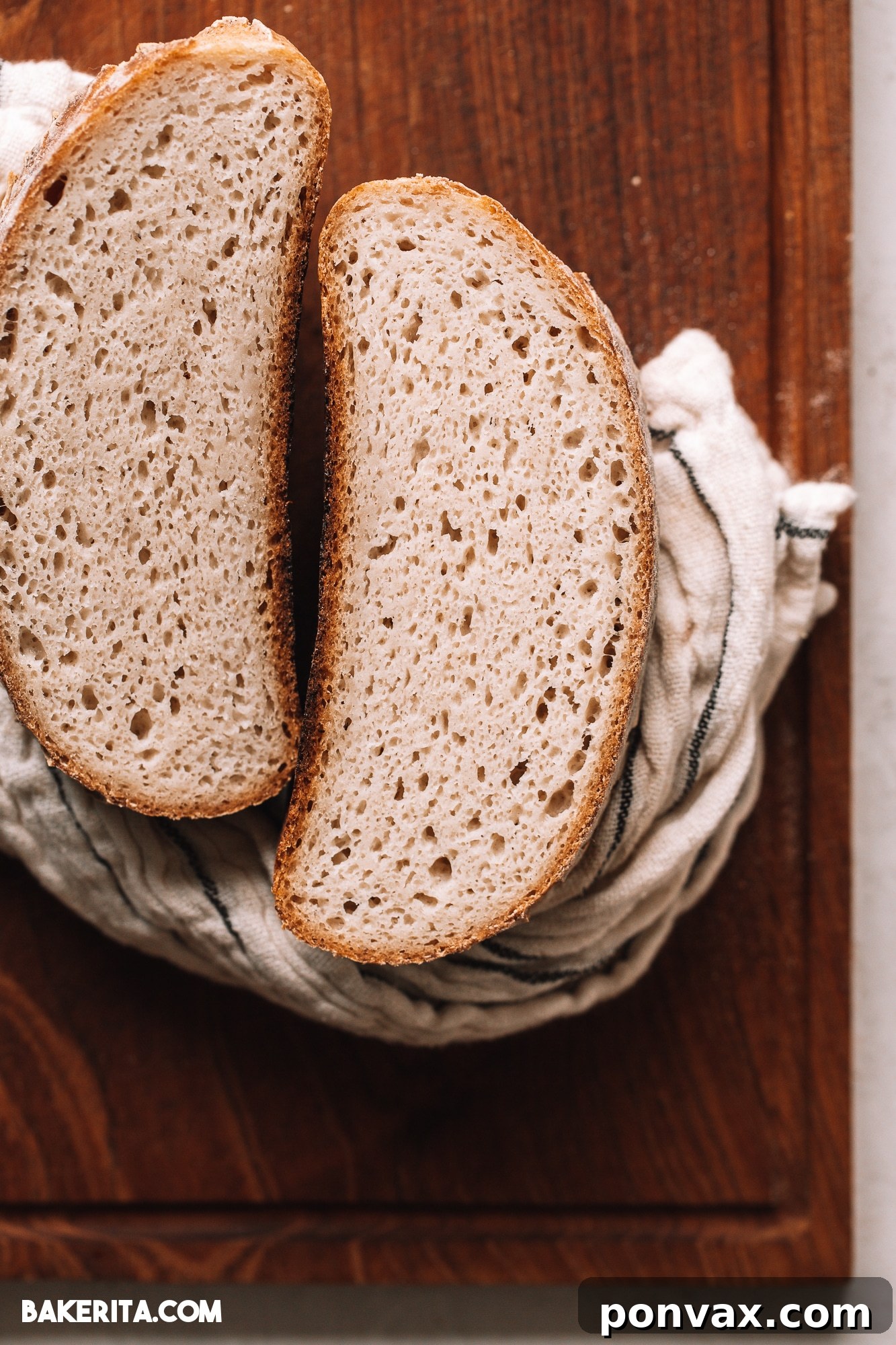
Your sourdough starter is more than just an ingredient; it is the living heart of your bread, the single most critical component for success. A healthy, vibrant starter is what guarantees a beautifully risen, flavorful loaf. Without an active and happy starter, your bread will inevitably turn out dense, lacking that characteristic airy crumb and failing to achieve a good “oven spring” when it hits the heat.
For a comprehensive, step-by-step guide on how to create and maintain this vital ingredient, please refer to my full guide: **How to Make a Gluten-Free Sourdough Starter here.**
I personally feed my starter primarily with brown rice flour due to its neutral flavor and reliable performance, but you have several excellent options. Sorghum, millet, or most other whole-grain gluten-free flours work wonderfully as starter feeds. These whole grains provide ample nutrients for the wild yeasts and bacteria to thrive. I would **not** recommend using a pre-made gluten-free flour blend or a simple starch, as these often lack the robust nutrients necessary for a strong, active starter. You can also experiment with combinations, such as a 50/50 mix of brown rice and sorghum flour, to observe different activity levels and flavors.
I confess, I tend to be a bit relaxed with my starter feedings, often relying on intuition rather than strict precision, especially once it’s established. While the traditional 1:1:1 ratio (starter:flour:water by weight) is an excellent starting point, I typically remove about half of the starter (eyeballing it), then add around 100-125g of water, followed by a slightly lesser amount of brown rice flour (between 100-115g). The exact amounts can be forgiving once you understand the desired consistency.
The **texture is paramount.** When you mix your starter after feeding, it should resemble a thick, pasty consistency, similar to a very thick pancake batter or a sticky dough. This ensures your starter has sufficient flour to consume, leading to vigorous fermentation and those coveted visible air bubbles.
You’ll know your starter is at its peak and ready for baking when it has **visibly doubled in size**. Look for a domed top and an abundance of small and large air bubbles throughout. A simple trick is to place a rubber band around your starter jar at the level it reaches immediately after feeding. This allows you to easily track its rise and confirm when it has doubled. A piece of tape works just as well!
It’s important to **manage your expectations and avoid comparing your gluten-free starter to a traditional gluten-based starter.** Gluten-containing starters often exhibit much more dramatic growth, sometimes even tripling in size. It’s highly unlikely your gluten-free starter will achieve such a dramatic expansion, so cultivate patience and celebrate its efforts. Your gluten-free starter is doing its very best within its unique limitations!
If you’re finding your starter isn’t as vigorous as you’d like, consider increasing your feeding frequency. A “power feeding” regimen, where you feed your starter twice within a single day, can often supercharge its activity and make it very happy. On your designated bread baking day, if you haven’t seen robust growth, try two closely spaced feedings. This ensures your starter reaches peak activity precisely when you need it for your dough, promoting maximum rise and flavor development.
The Gluten Equivalent: All About Psyllium Husk
**Psyllium husk is our unsung hero in gluten-free sourdough bread; it effectively acts as our gluten replacement.** In the absence of gluten, a protein matrix that provides elasticity and structure in traditional bread, psyllium husk steps in to provide crucial binding properties and elasticity. This allows the dough to become genuinely workable—no more crumbly messes! It also contributes significantly to the bread’s overall structure, giving it the necessary support to rise beautifully and maintain its shape throughout baking.
For a deeper dive into this incredible ingredient and its unique properties, you can read **all about psyllium husk** on my dedicated guide.
Psyllium is a natural form of soluble fiber, carefully extracted from the husks of *Plantago ovata* seeds. Beyond its culinary uses, it’s widely recognized for numerous health and digestive benefits, particularly its ability to promote regularity and support gut health. However, for our purposes, it’s the remarkable gelling and thickening capabilities of its fiber-rich husks that we are specifically harnessing to create exceptional gluten-free sourdough.
Through extensive experimentation, I’ve concluded with absolute certainty: **you simply *need* psyllium husk for truly excellent gluten-free sourdough bread.** In my bread recipes, attempting to substitute or omit it is highly discouraged. Psyllium is what transforms the dough from a sticky, unmanageable mass into a cohesive, pliable material that can be shaped and handled. It’s also the secret to achieving that desirable chewy texture and elasticity that makes sourdough so satisfying.
**IMPORTANT NOTE:** It’s crucial to understand that **whole psyllium husk** and **psyllium husk *powder*** are distinctly different in their properties and absorbency. For this recipe, you absolutely want to use the **whole husk**. The powder is significantly more absorbent and will require substantial adjustments to the liquid content, which I have not tested extensively in these specific recipes. While whole psyllium husk is often found in the supplement or natural foods section of most grocery stores, always double-check the label to ensure you’re getting the correct form.
Crafting Your Masterpiece: Picking the Perfect Flour Blend
The selection of your gluten-free flour blend is pivotal to the texture, flavor, and overall success of your sourdough bread. The flours listed below are my personal favorites and the ones I use most frequently in my gluten-free sourdough recipes. I strongly encourage you to experiment with different combinations, meticulously noting which blends yield your preferred results. This intuitive exploration will truly personalize your baking journey. I’ll delve into more detailed proportions within the recipe section itself, but here’s a breakdown of key players:
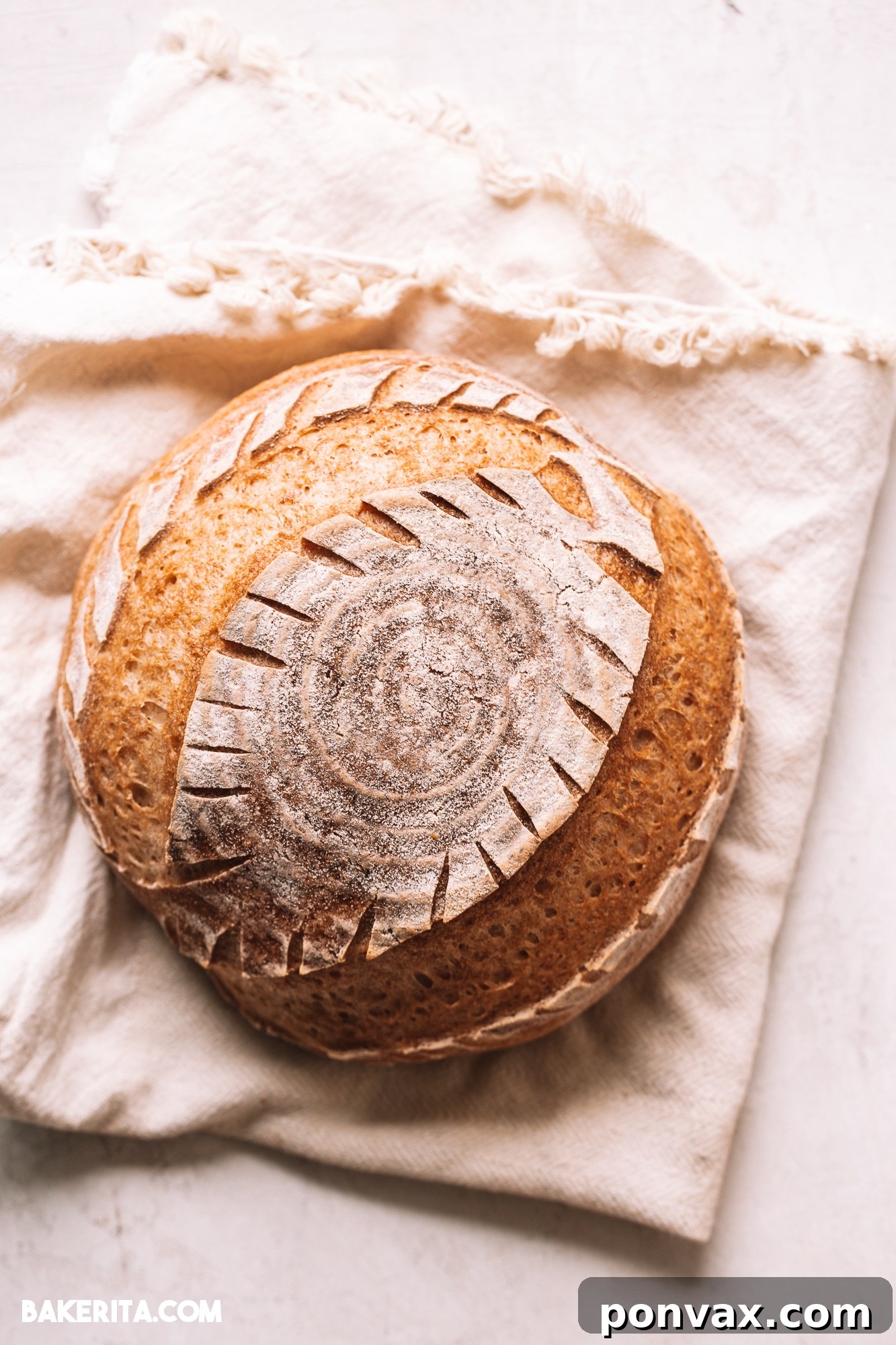
- **Brown Rice Flour:** This is a fundamental staple in my sourdough baking. My original starter, which has produced all the delicious loaves you see pictured, is made with brown rice flour. For optimal results, it’s imperative to source a *superfine* version. A grainier brown rice flour can significantly impact the dough’s hydration and final texture, potentially leading to a denser crumb.
- **Sorghum Flour:** This is my absolute MVP (Most Valuable Player) in the gluten-free flour lineup! Sorghum flour consistently creates a wonderfully smooth texture and possesses a mild, slightly sweet flavor that complements sourdough beautifully. As an added bonus, it’s packed with impressive nutritional benefits, being high in dietary fiber and rich in antioxidants.
- **Millet Flour:** Millet flour introduces a unique element to the bread, imparting a subtle cakiness and a hint of sweetness. For this reason, I generally advise against using it in very large quantities. It can also lend a slightly creamy, yellowish tint to your finished loaf. While it’s not always my top choice, it undeniably contributes to an excellent texture. My dad, for instance, consistently raves about my millet-infused loaves! It’s definitely a fun flour to experiment with and is also loaded with beneficial nutrients.
- **Quinoa Flour:** I find that quinoa flour adds a delightful, slightly more pronounced sour note that I personally adore, and it contributes to a fabulously textured bread. The more I incorporate quinoa flour into my blends, the more I appreciate its unique qualities. It’s an excellent option for those looking to add depth of flavor and an interesting texture.
- **Potato Starch** (*not* potato flour): Ensure you are using potato *starch*, which is distinctively snow-white and very powdery. This ingredient is crucial for providing significant lift to your bread and expertly balancing the heavier whole-grain flours. Its inclusion prevents your bread from becoming overly dense and heavy, contributing to a lighter, airier crumb.
- **Tapioca Flour or Arrowroot Flour:** These two starches are largely interchangeable in this recipe and serve a similar purpose. They work synergistically with the potato starch to impart a desirable lightness and elasticity to your gluten-free sourdough, contributing to a wonderfully tender crumb.
Beyond these, you can certainly explore other gluten-free flours such as buckwheat flour, teff flour, and oat flour. While I haven’t extensively experimented with these myself to provide specific guidance, I am continually learning and will update this post as I discover more about their performance within this recipe. Embrace the spirit of discovery in your baking!
Your Essential Gluten-Free Flours
Brown Rice Flour
Buy Now →
Millet Flour
Buy Now →
Potato Starch
Buy Now →
Arrowroot Flour
Buy Now →
Sorghum Flour
Buy Now →
Quinoa Flour
Buy Now →
Understanding Sourdough Hydration: Decoding the Ratios
When you delve into the world of sourdough, you’ll frequently encounter terms like “100% hydration” or “85% hydration.” These percentages, while sounding complex, simply refer to the **ratio of water to flour** in a recipe. So, a loaf described as “100% hydration” indicates a 1:1 ratio of flour to water by weight. For example, 500g of flour would be combined with 500g of water.
However, my strongest recommendation for beginners, especially in gluten-free baking, is to **avoid getting overly fixated on precise hydration ratios initially.** I largely set them aside during my learning phase, and this approach served me well. The primary instance where I pay close attention to hydration is when feeding my starter, aiming for approximately 100% hydration. This means feeding 1 part active starter, to 1 part water, to 1 part flour – a balanced meal for your microbial friends.
The reason for this flexible approach in gluten-free baking is critical: gluten-free flours exhibit a far wider range of absorbency compared to traditional all-purpose wheat flour. Some gluten-free flours are incredibly thirsty, while others absorb liquid more slowly. This variability means that focusing solely on a strict ratio can be misleading. Instead, it becomes far more important to observe and adjust for the **right consistency** in your gluten-free sourdough dough. Often, you’ll discover that gluten-free flours, due to their higher absorbency, require a greater proportion of water than flour to achieve the desired dough texture. Trust your instincts and the feel of the dough over rigid numbers.
Essential Bread Baking Terminology for the Gluten-Free Sourdough Enthusiast
Navigating the world of sourdough comes with its own unique vocabulary. Understanding these terms will demystify the process and enhance your learning experience:
- **Preferment / Levain:** These terms are interchangeable and refer to a foundational mixture you prepare from your active sourdough starter, a measured amount of water, and flour. This preferment acts as the primary leavening agent for your main bread dough. You’ll allow this mixture to ferment and rise for a period, which significantly impacts the depth of flavor—specifically, how sour your final loaf will be. A longer fermentation period for the preferment generally leads to a more pronounced sour flavor.
- **Proofing:** Also known as the final rise, proofing is the critical fermentation period your shaped bread dough undergoes just before it’s baked. During this time, the yeast activity produces carbon dioxide gases, which create the airy pockets and overall volume in your bread. While some traditional bread recipes call for two distinct rises, I typically opt for a single, comprehensive proofing stage, especially since we’ve already initiated fermentation with the preferment.
- **Banneton:** A banneton is a specialized basket, traditionally crafted from rattan, used specifically for proofing shaped bread dough. Its coiled structure and porous material allow for better airflow around the dough compared to, say, a simple bowl lined with a tea towel. This improved airflow helps the bread maintain its shape and rise more effectively. Crucially, you do *not* bake the bread directly in the banneton. While not strictly essential, a banneton is a wonderful tool to have for achieving beautifully shaped loaves. My preferred size for this particular recipe is an 8-inch round banneton.
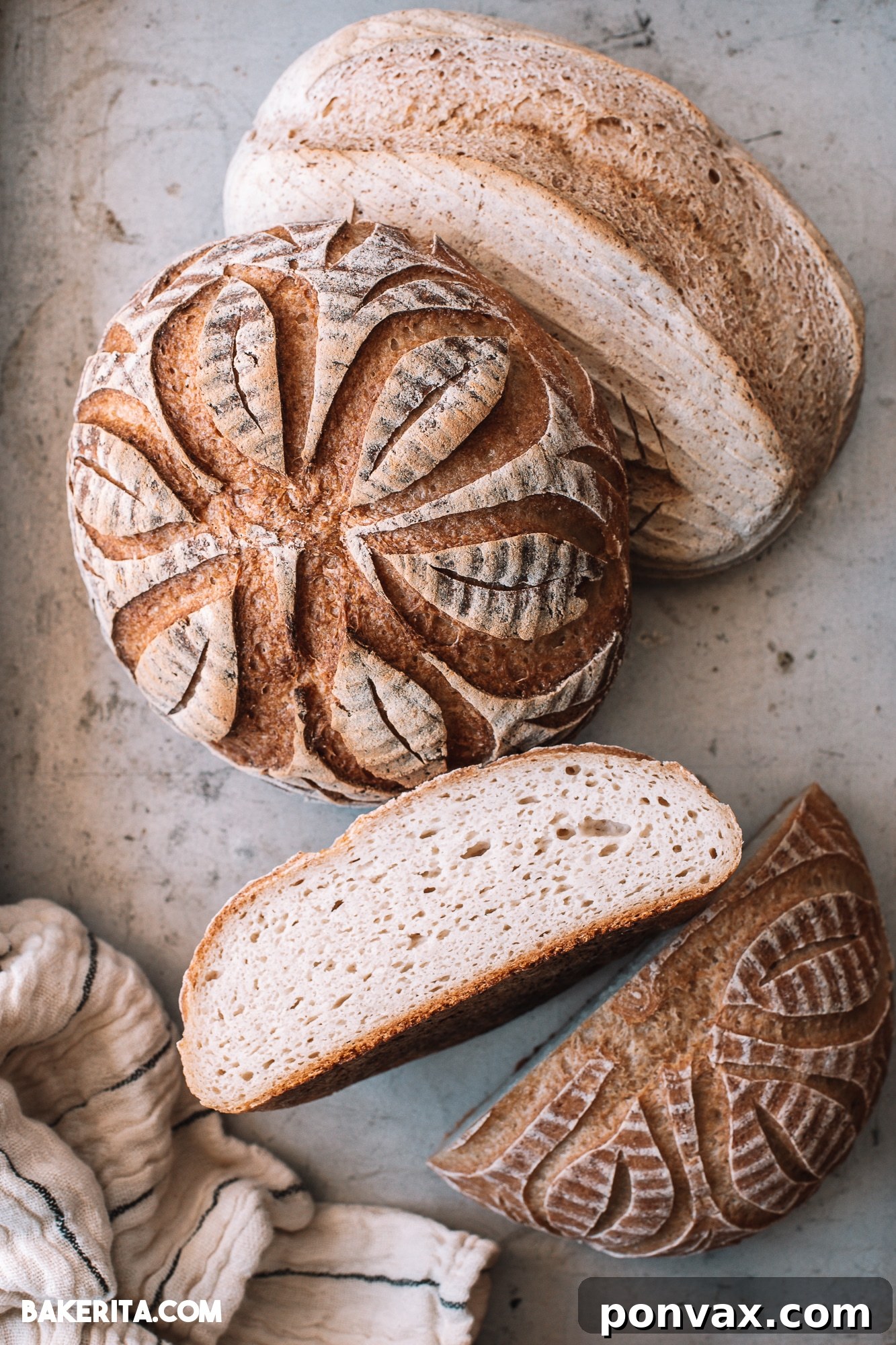
- **Scoring:** Scoring refers to the deliberate cuts you make on the surface of your proofed dough just before it enters the hot oven. These strategic incisions serve a vital purpose: they act as controlled release points for the steam and gases that rapidly expand within the bread during the initial stages of baking. Without scoring, the bread will naturally crack in uncontrolled places to release this pressure. By making your own cuts, you guide where the bread expands, allowing for a more even rise and enabling you to create stunning decorative patterns on your crust.
- **Lame:** Pronounced “lahm,” a lame is a specialized tool equipped with an extremely sharp razor blade, used specifically for scoring sourdough bread. The superior sharpness of a lame allows for clean, precise cuts that promote optimal oven spring and aesthetic appeal. While a very sharp knife can be used, a dedicated lame offers unparalleled precision. **This** is the specific model I use and highly recommend.
- **Oven Spring:** This term describes the dramatic, rapid increase in volume that your bread experiences during the first 10-15 minutes of baking, immediately after it’s placed in the hot oven. It’s primarily driven by the rapid expansion of gases (carbon dioxide and ethanol vapor) trapped within the dough as it heats up, coupled with the final burst of yeast activity. Preheating your Dutch oven to a high temperature before adding the loaf significantly contributes to a spectacular oven spring by providing immediate, intense heat.
Your Essential Gluten-Free Sourdough Baking Tool Kit
Having the right tools can make a significant difference in your gluten-free sourdough baking success and enjoyment. Here’s a rundown of the essential equipment you’ll need:
- **A Happy, Active Starter:** This is non-negotiable. Ensure your starter is consistently doubling in size after each feeding, indicating peak activity, before you embark on baking a loaf. A strong starter is the foundation of a great loaf.
- **Banneton Basket:** While not strictly mandatory, a banneton is highly recommended. These rattan baskets provide ideal airflow and support for your dough during proofing, helping it hold its shape beautifully and often imparting attractive ridges on the crust. As an alternative, you can certainly use a bowl generously lined with a clean, well-floured cloth tea towel. I find an 8-inch banneton perfect for most of my boules.
- **Lame (Scoring Tool):** This specialized razor blade is used for making precise cuts on your bread before baking. Its sharp edge ensures clean scores that guide the bread’s expansion. If you don’t have a lame, a very sharp knife will also work effectively. My personal lame is from the excellent Wire Monkey Shop.
- **Stand Mixer (Optional but Recommended):** While I’ve successfully kneaded countless loaves by hand using just a bowl and a wooden spoon, a stand mixer equipped with a dough hook can significantly simplify and expedite the mixing process, especially for stickier gluten-free doughs. If you have one, it’s a great asset.
- **Dutch Oven:** A Dutch oven isn’t absolutely essential, but it is a game-changer for sourdough baking. Its heavy lid effectively traps steam during the initial bake, creating a moist environment crucial for a thin, crisp crust and maximum oven spring. Furthermore, preheating the Dutch oven to a high temperature helps support the bread’s rapid rise. I use a high-quality 5.5qt Staub Dutch oven, but many more affordable options perform just as well. I’ve included some excellent recommendations below the recipe section.
- **Parchment Paper or Silicone Sling:** Parchment paper is incredibly useful for creating a “sling” that allows you to gently lower your proofed dough into a scorching hot Dutch oven. This prevents the dough from deflating if it were to be dropped or mishandled. If you’re a dedicated baker, consider investing in a reusable silicone baking mat specifically designed for lowering and lifting bread into a Dutch oven, offering an eco-friendly and convenient alternative.
Exploring Loaf Shapes: Beyond the Classic Boule
When you envision sourdough bread, the classic round loaf, known as a **boule**, likely comes to mind. This iconic shape is typically proofed within a banneton basket (or a cloth-lined bowl) and then baked to perfection in a Dutch oven. However, the versatility of this gluten-free sourdough dough extends far beyond just boules!
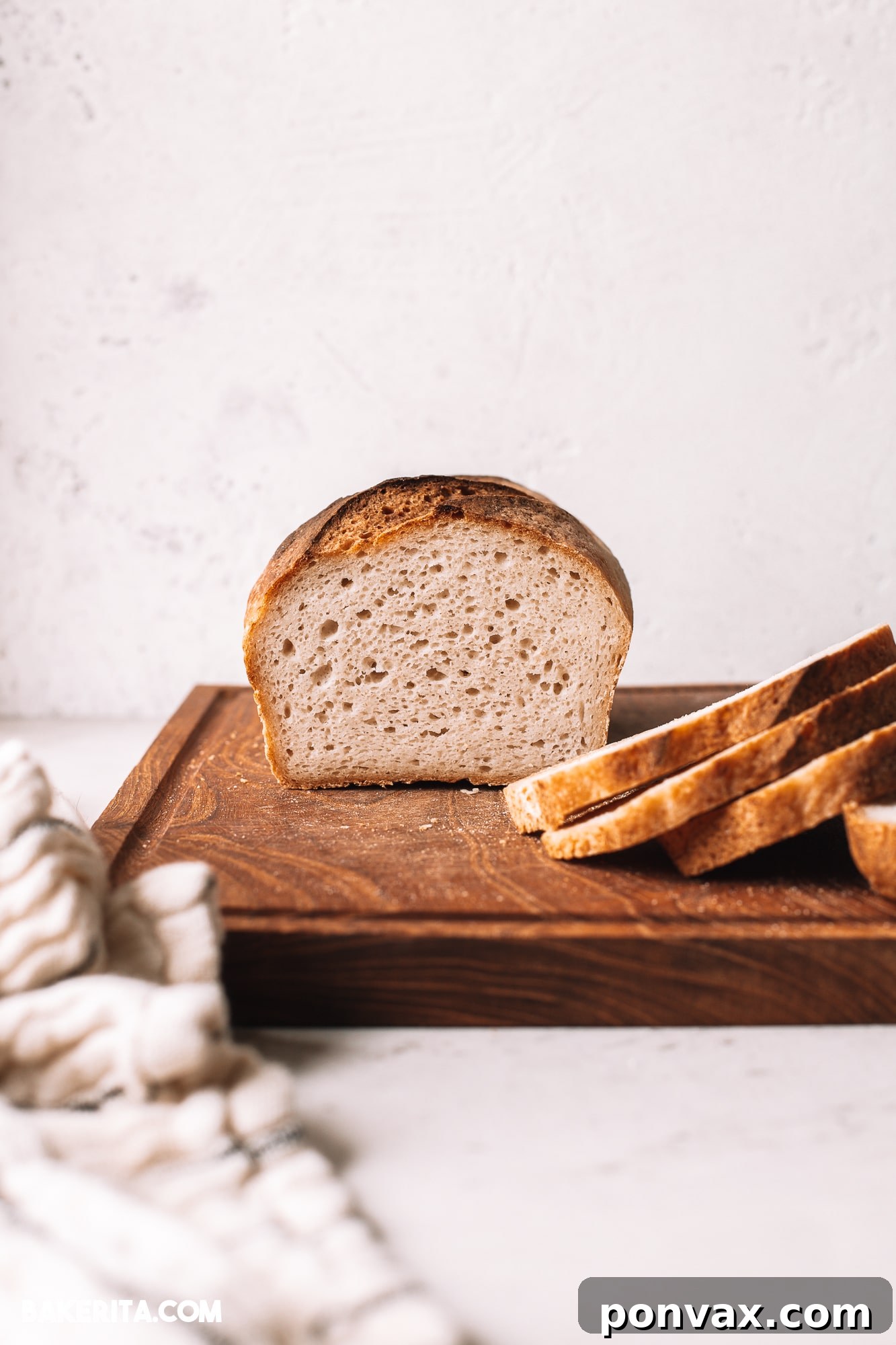
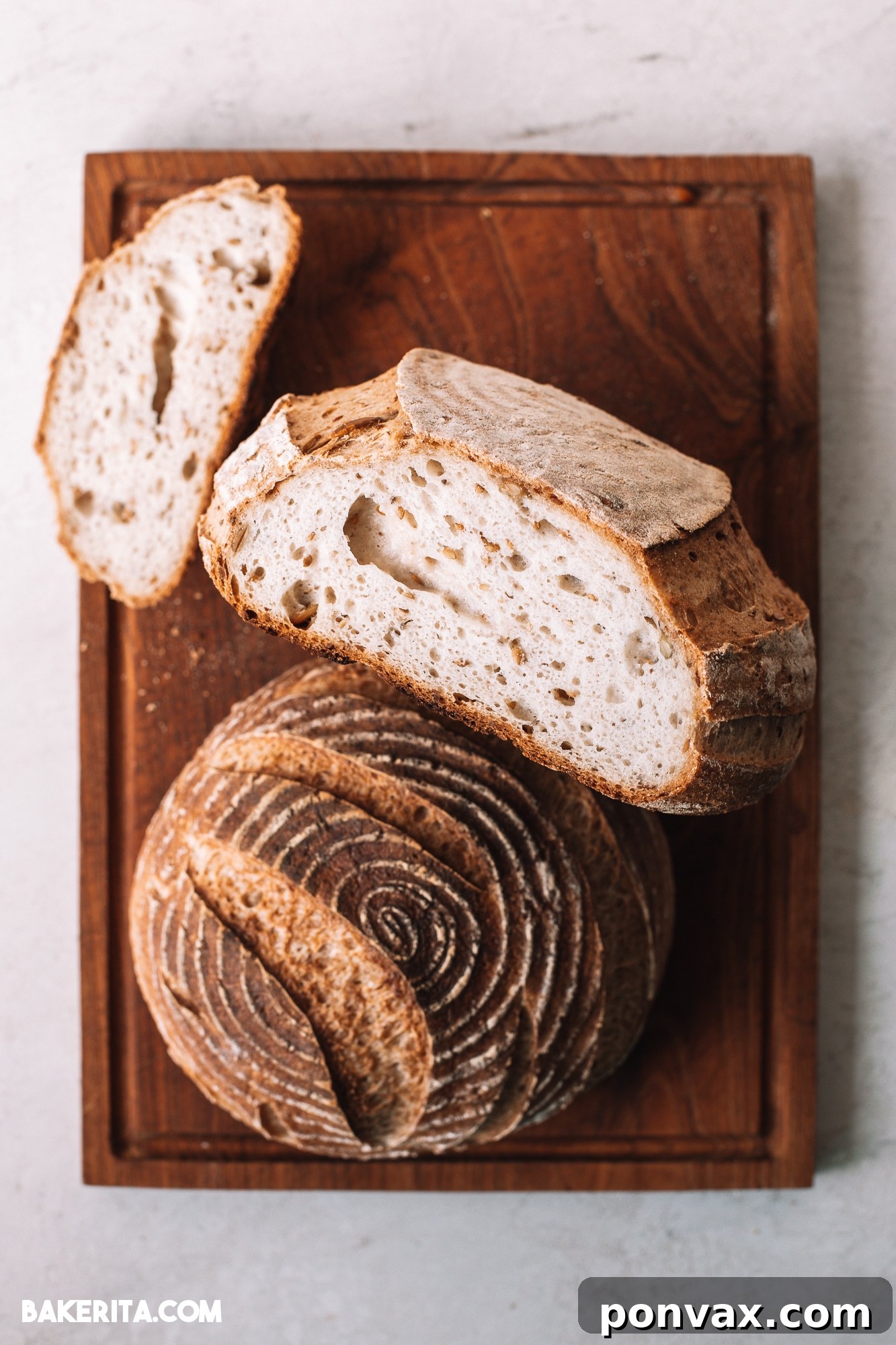
I frequently enjoy adapting this very recipe to bake beautiful sandwich slices in a traditional metal loaf pan. This yields consistently shaped, uniform slices that are perfect for everyday use. Another favorite variation of mine is to shape the dough into elegant baguettes, which bake wonderfully in a dedicated baguette pan. You can also explore different aesthetics by using an oval-shaped banneton, which produces longer, more elliptical boules, often referred to as batards.
If you choose to bake your sourdough in any alternative pans, **I strongly recommend opting for metal pans.** Metal is an excellent conductor of heat, ensuring that your loaf develops a wonderfully crispy bottom and sides. This is often harder to achieve with silicone or glass pans. When using a metal loaf pan, you’ll want to allow the shaped dough to complete its entire proofing cycle directly within the pan. This eliminates the need for a risky transfer after it has risen, preserving its delicate structure.
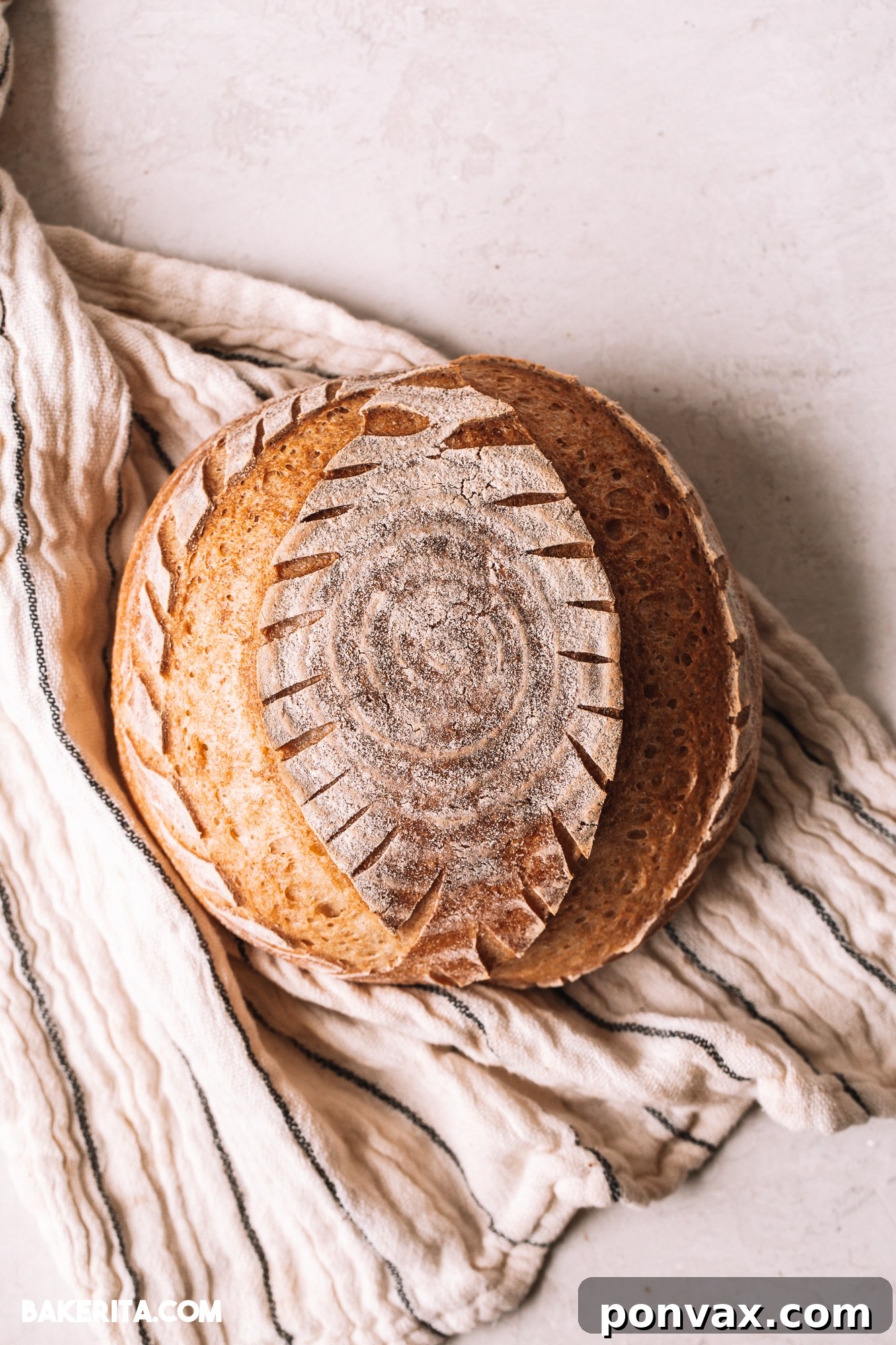
Preparing Your Starter for Baking Day
Ensuring your sourdough starter is at its absolute peak activity is paramount when you prepare to mix your preferment. A weak or sluggish starter will result in a flat, dense loaf. You also need to make sure you have enough active starter both for the preferment *and* to save a portion to continue feeding. Therefore, before initiating the bread-making process, I always perform a “big feeding.” This usually involves feeding my starter with approximately 150g each of water and flour, aiming for a robust doubling in size.
If your starter has been stored in the refrigerator (which slows its activity significantly), it’s crucial to give it a “wake-up call.” I recommend performing at least two consecutive feedings, spaced several hours apart, before you plan to make bread. This consistent feeding helps revive its vigor and ensures it’s super happy, bubbly, and ready to impart its potent leavening power to your dough.
The Process: How to Make Gluten-Free Sourdough Bread
Embarking on the journey to bake gluten-free sourdough bread involves a series of intentional steps, each contributing to the final masterpiece. Let’s begin with the crucial first stage: the **preferment**.
- **Creating the Preferment:** This initial mixture combines your **active sourdough starter**, precise amounts of **flour**, and **water**. Essentially, it’s a dedicated feeding solely for the portion of starter you’ll use in your bread. The preferment can be allowed to “proof” or activate for a duration ranging from four hours up to eighteen hours. This extended fermentation time is not arbitrary; it directly influences the level of sourness in your finished loaf. A shorter ferment will yield a milder flavor, while a longer fermentation will deepen the characteristic sour notes of sourdough.
- **Preparing the Psyllium Gel:** While your preferment is working its magic, start by mixing the **whole psyllium husk**, your chosen **sweetener** (maple syrup or honey), and a portion of the **filtered water**. Whisk these ingredients together until they are fully combined. Then, allow this mixture to rest. The psyllium husk will absorb the liquid and form a thick, cohesive gel, which is essential for mimicking gluten’s structure in our dough.
- **Combining Dry Ingredients:** In a separate, large mixing bowl or the bowl of your stand mixer, thoroughly combine **all of the specified flours and starches**, along with the **sea salt**. This is also the opportune moment to incorporate any dry herbs or other seasonings you wish to infuse into your bread.
- **Integrating Wet Ingredients with Preferment:** Once the psyllium gel has fully formed and your preferment is bubbly and active, whisk the psyllium gel mixture directly into the preferment. If you’re using olive oil to soften the crust, add it at this stage. This is also when you would incorporate any wet seasonings, such as minced garlic, or pre-soaked nuts and seeds.
- **Mixing the Dough:** Pour the combined wet ingredients (preferment + psyllium gel + oil/wet seasonings) into the bowl containing your dry flour mixture. Begin by using a sturdy spoon to bring the ingredients together, then transition to using your hands to fully incorporate everything. Alternatively, if you have a stand mixer, attach the dough hook and mix on a medium speed until a smooth, cohesive dough forms. This typically takes a few minutes in a stand mixer, ensuring all the flour is adequately hydrated and the psyllium is fully integrated.
- **Kneading and Initial Shaping:** Once your dough has achieved a soft, smooth, and pliable consistency, turn it out onto a clean, lightly floured work surface. Knead the dough gently for a few minutes, focusing on developing its structure. Then, use your hands to shape the dough into your desired form, most commonly a round boule. The goal is to create a taut surface on the dough ball.
- **Proofing in a Banneton or Bowl:** Generously dust your banneton basket or a bowl lined with a clean tea towel with brown rice flour to prevent sticking. Carefully transfer the shaped dough into the prepared banneton or bowl, ensuring the smooth, taut side of the dough is facing downwards. This way, the “seams” created during shaping will be facing up. When you eventually flip the loaf out for baking, the smooth side will become the top crust.
- **Final Proof:** Cover the dough (with a plastic shower cap or plastic wrap) and allow it to proof. You can either let it rise for approximately three to four hours at room temperature, or for a slower, more flavor-developing ferment, proof it overnight (8-12 hours) in the refrigerator. Remember, proofing times are highly dependent on environmental factors like room temperature and humidity, as well as the activity of your starter. Look for the dough to increase significantly in size and feel puffy, rather than strictly adhering to a timer.
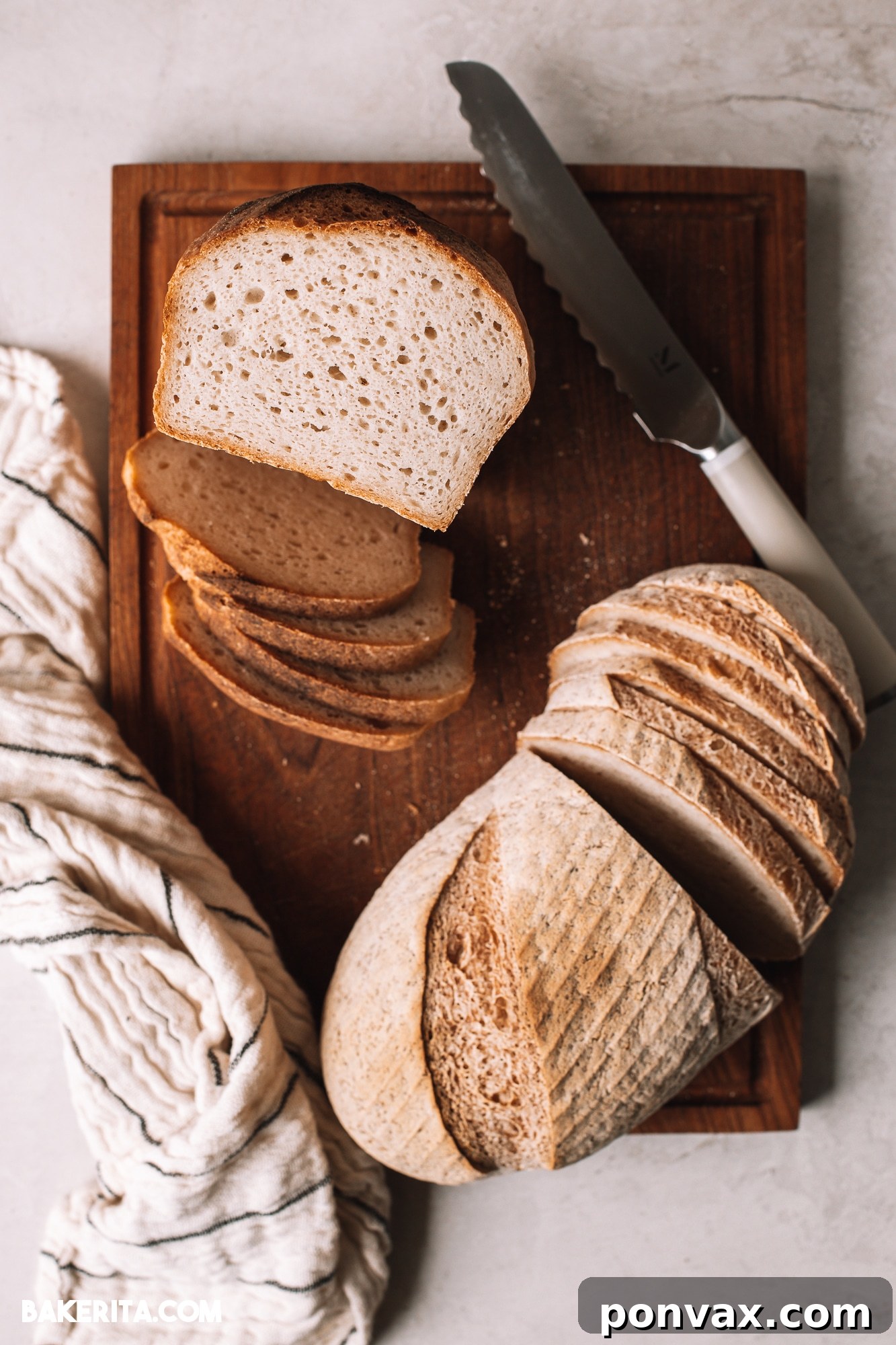
Mastering the Art of Proofing Your Gluten-Free Sourdough
Proofing is a cornerstone of successful sourdough baking, representing the critical resting and fermentation period after your bread dough has been mixed and shaped. Scientifically, it’s during proofing that the yeast and bacteria in your starter actively ferment the sugars in the flour, producing carbon dioxide and other gases. These gases become trapped within the dough’s structure, creating the characteristic airy bubbles and open crumb you desire in a well-baked loaf.
The duration and environment for proofing are highly variable and location-dependent. For instance, in my consistent San Diego climate, a 3 to 4-hour room-temperature proof typically works very reliably. However, I often adjust this slightly—a bit longer in the cooler winter months, and a touch shorter during the warmer summer, directly correlating with the ambient temperature. Another excellent option for both convenience and flavor development is an overnight proof in the refrigerator. This cold fermentation slows down yeast activity, allowing beneficial bacteria more time to produce complex acids, resulting in a more pronounced sour flavor.
If you reside in a particularly warm and humid climate, your proofing time will naturally be shorter due to accelerated yeast activity. Conversely, if your loaf seems to be proofing *too* quickly, you might consider slightly decreasing the amount of starter used in your dough. This adjustment provides the dough with sufficient time to develop its flavor and structure without *overproofing* before it’s ready for the oven. Conversely, in a cool environment, or if your starter is relatively new and not yet at peak strength, you may need to increase the amount of starter or extend the proofing time to achieve adequate rise.
You’ll know your bread is perfectly proofed when it appears noticeably larger and puffier—it won’t quite double in size like some traditional doughs, but it will certainly feel airy and expanded. The most reliable test is the **”poke test”**: gently press a floured finger into the dough. If the indentation springs back slowly and partially (not fully, and not staying completely indented), your loaf is likely ready. It’s a tactile intuition that develops over time, but after baking a few loaves, you’ll gain a confident feel for what a well-proofed gluten-free sourdough loaf feels like!
Understanding the signs of improper proofing is crucial for troubleshooting:
- If your bread is **over-proofed:** You’ll typically observe a large, irregular hole or cavern just beneath the top crust of your baked loaf. The crumb below this cavern will often be dense and gummy, particularly at the bottom where the dough has collapsed and settled. To rescue an over-proofed loaf *before* it goes into the oven, you can gently “punch it down,” reshape it, and allow it to undergo a shorter second rise.
- If your bread is **under-proofed:** The baked loaf will likely be very dense and heavy, with a tight, gummy crumb and very few visible bubbles. It will lack the characteristic open structure and lightness of good sourdough.
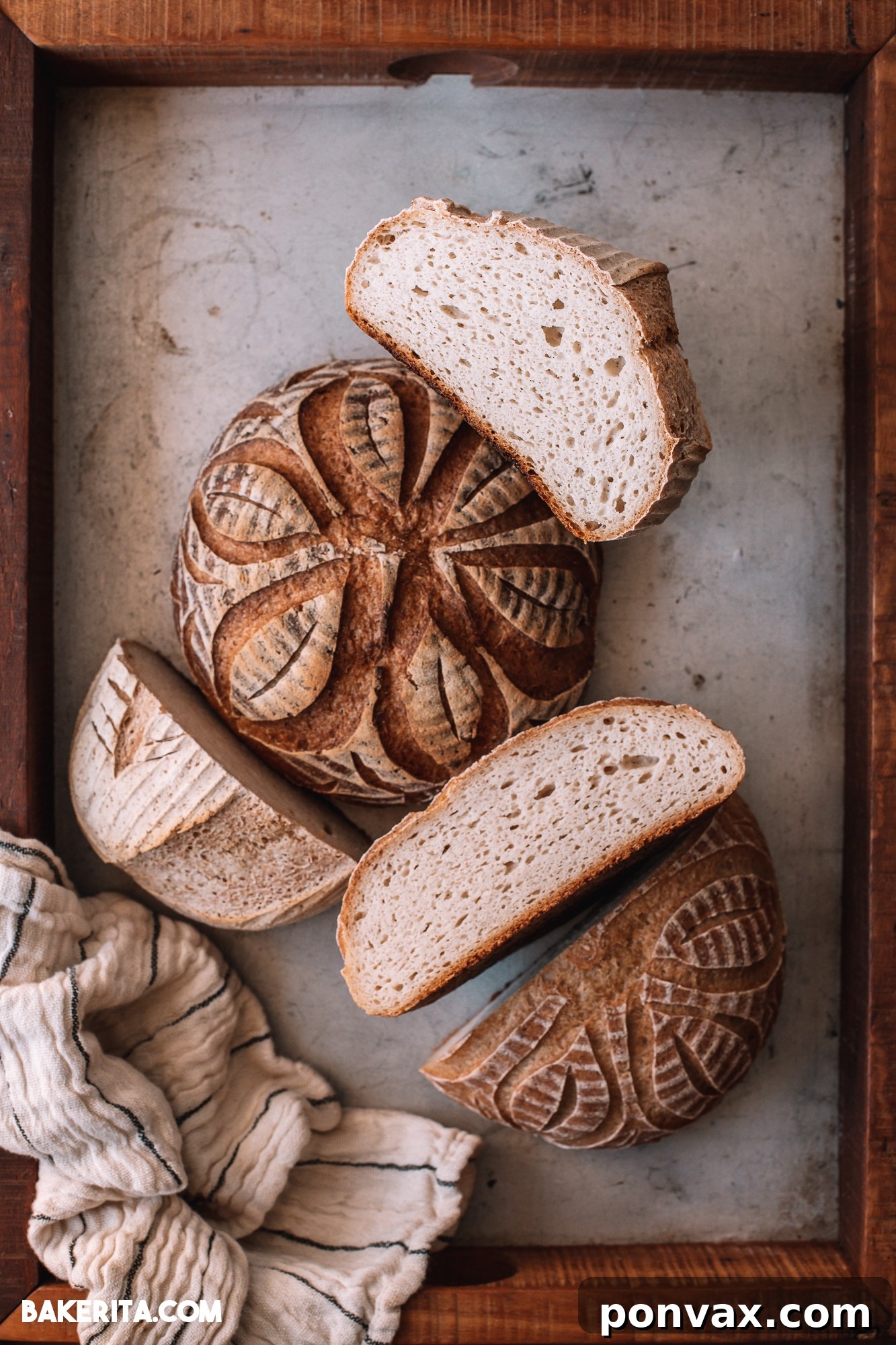
Preheating: The Crucial Step Before Baking
Approximately one hour before your gluten-free sourdough bread is scheduled to enter the oven, begin the preheating process. Set your oven to a robust 425°F (218°C). If you plan to bake your loaf in a Dutch oven, it is absolutely essential to place the empty Dutch oven inside the cold oven and allow it to preheat along with the oven. This ensures the Dutch oven reaches a very high, even temperature, which is fundamental for achieving an excellent “oven spring” and a wonderfully crispy crust on your loaf.
Should you not have a Dutch oven, or if your bread shape (like a baguette) doesn’t fit within it, you can still achieve a good bake. In such cases, preheat a heavy-duty baking sheet or a pizza stone inside the oven instead. The principle remains the same: the dough needs to be introduced to an intensely hot surface to kickstart the baking process effectively.
PRO TIP: If you find yourself moving a bit slowly or taking your time to prepare the bread for the oven, consider preheating your oven to a slightly higher temperature, such as 450°F. This accounts for the inevitable heat loss that occurs when the oven door is opened. Once your bread is safely inside and the Dutch oven lid is replaced, you can then lower the temperature to the recommended 425°F for the remainder of the bake.
Baking Time: From Oven Spring to Golden Perfection!
The moment your oven is perfectly preheated and your dough has achieved its ideal proofed state, it’s time for the artistic and functional step of scoring your bread. Scoring isn’t just for aesthetics; it’s a critical technique that directs the expansion of your bread in the oven. By creating deliberate cuts, you prevent uncontrolled cracking and encourage an even, beautiful rise. Ensure your cuts are deep enough – typically about a half-inch – otherwise, the dough might still crack haphazardly where it wasn’t adequately scored.
To score your bread, gently invert your proofed loaf from its banneton or bowl onto a sheet of parchment paper or a reusable silicone sling. This method provides a convenient “handle” for transferring the dough. With your lame or sharp knife, make your desired cuts. Next, carefully remove your hot Dutch oven from the preheated oven, exercising extreme caution. Gently lower your scored loaf, using the parchment paper or silicone sling, into the searing hot Dutch oven. It’s crucial not to drop the loaf, as this can cause precious air bubbles to deflate and compromise your bread’s texture.
Promptly replace the lid on the Dutch oven and return it to the oven for an initial bake of 45 minutes. This covered phase is vital as the trapped steam creates a moist environment, preventing the crust from setting too quickly and allowing for maximum oven spring. After 45 minutes, carefully remove the lid. The bread will now have achieved most of its rise. Continue baking uncovered for an additional 25 to 40 minutes. The exact duration will vary depending on your oven’s calibration and how deeply golden brown and crisp you prefer your crust to be. Keep an eye on it for that perfect hue.
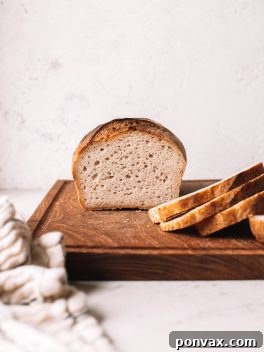
Once your bread has reached your desired level of golden perfection, very carefully remove it from the oven. The most challenging part follows: allowing the bread to cool *completely* at room temperature. This patience is paramount! Resist the urge to cut into it immediately. Slicing a warm loaf releases internal steam too rapidly, often resulting in a gummy, unset crumb. Use all your willpower to refrain from cutting until it has fully cooled, ideally for at least 2-3 hours. The wait is truly worth it for the ideal texture and flavor.
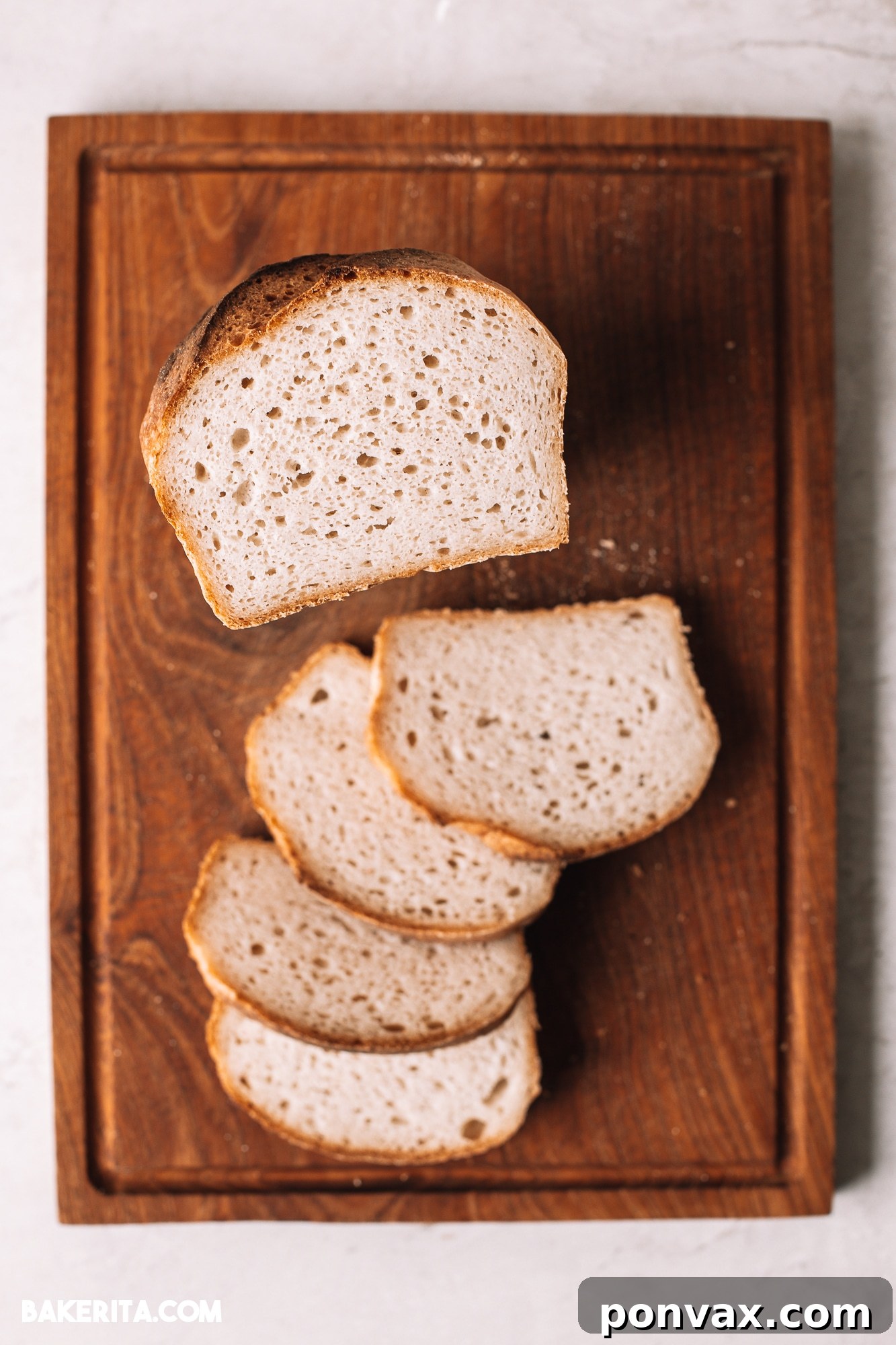
Your Gluten-Free Sourdough Baking Schedule: A Step-by-Step Guide
While baking gluten-free sourdough bread isn’t overly complicated, adhering to a thoughtful schedule is key to achieving optimal results. This sample timeline provides a helpful framework, but remember that flexibility is often required based on your starter’s activity and ambient conditions.
- **5:00 PM (Day 1 – Evening): Prepare Your Starter for Baking.** Perform a substantial feeding for your sourdough starter (e.g., 150g active starter, 150g water, 150g flour). The goal is to maximize its activity and ensure it’s vigorous for the next step.
- **8:00 PM (Day 1 – Evening): Initiate the Preferment.** Your starter should be nearing or at its peak rise, displaying abundant bubbles and a domed surface. At this point, mix up your preferment according to the recipe. Cover it securely and allow it to ferment overnight at room temperature.
- **8:00 AM (Day 2 – Morning): Mix Your Bread Dough.** Your preferment should be active and bubbly, ready for action. Proceed to mix all the ingredients for your main bread dough. Once mixed, gently shape the dough and place it into your proofing basket (banneton) or a clean, lined bowl. Allow it to proof at room temperature for approximately three to four hours, or until it feels noticeably puffy.
- **10:00 AM (Day 2 – Morning): Preheat Oven and Dutch Oven.** About an hour before your bread is fully proofed and ready for baking, preheat your oven to 425°F (218°C). If you’re using a Dutch oven, place it empty inside the oven to preheat thoroughly with the oven. This ensures it’s scorching hot for excellent oven spring.
- **10:55 AM (Day 2 – Morning): Prepare for Baking.** (Or whenever your bread is fully proofed and feels soft and airy to the touch.) Carefully invert your proofed bread dough onto a sheet of parchment paper. This creates a convenient “sling” for transfer. Score your bread as desired with a lame or sharp knife, ensuring the cuts are deep enough to guide the rise.
- **11:00 AM (Day 2 – Morning): Bake (Covered).** With extreme caution, remove the scorching hot Dutch oven from the oven. Close the oven door to retain heat. Carefully lift your bread by the parchment paper sling and lower it gently into the hot Dutch oven. Avoid dropping it, as this can deflate the precious air bubbles. Replace the lid securely, return the Dutch oven to the oven, and set your timer for 45 minutes.
- **11:45 AM (Day 2 – Morning): Bake (Uncovered).** After 45 minutes, swiftly and carefully remove the lid from the Dutch oven. Close the oven door promptly. The bread should have achieved a significant rise during this covered phase.
- **12:30 PM (Day 2 – Afternoon): Finish Baking and Cool.** Continue baking the bread uncovered for another 25 to 45 minutes. The precise timing depends on your oven and your preference for crust color and crispness. Bake until the crust is a beautiful golden brown. Carefully remove the bread from the oven. If safe and easy to do so, remove the loaf from the Dutch oven immediately. To check for doneness, gently tap or knock on the bottom of the loaf – it should sound hollow.
Now comes the ultimate test of patience: let your bread cool *completely* on a wire rack before attempting to slice it. This is undeniably the hardest part, but absolutely crucial. Cutting into a warm loaf releases all the trapped steam, leading to a gummy, unpleasant texture. Summon all your willpower and resist the urge to slice too early!
This schedule is merely a suggestion and can be adapted to fit your lifestyle. I’ve certainly baked delicious loaves by starting early in the morning and completing the entire process in one day. The key is to visualize the commitment and understand the approximate timings involved.
Troubleshooting Your Gluten-Free Sourdough Bread
Addressing Common Issues: My Bread is Gummy Inside!
One of the most frequent frustrations in gluten-free sourdough baking is encountering a gummy interior. More often than not, this issue can be attributed to one or a combination of the following factors:
- **Insufficient Baking Time:** This is the most common culprit. Gluten-free flours require a longer bake time to fully dry out and set their internal structure compared to traditional wheat flour. Don’t be afraid of a longer bake, even if the crust appears quite dark; the interior often needs more time. If your crust is browning too quickly but the inside remains gummy, try lowering your oven temperature slightly (e.g., to 400°F/200°C) and extending the baking duration. This gentle, longer bake helps evaporate excess moisture from the center, leading to a perfectly soft yet non-sticky crumb.
- **Excessive Water Content:** Too much liquid in your dough can overwhelm the gluten-free flours and psyllium, leading to a dense, gummy texture. Gluten-free flours vary wildly in absorbency.
- **Non-Superfine Flours:** Using coarser brown rice flour (or other grain flours) can result in a less cohesive dough and a gummier interior, as coarser particles absorb liquid differently and can create a heavier structure.
- **Premature Slicing:** Cutting into the bread while it is still warm is a cardinal sin of sourdough baking. The internal structure is still setting, and releasing the steam too early will inevitably lead to a gummy, dense crumb. Always allow your loaf to cool *completely* at room temperature, ideally for 2-3 hours, before slicing.
- **Aggressive Handling/Dropping:** If the proofed bread dough is dropped too forcefully into the hot Dutch oven, it can deflate many of the delicate air bubbles that contribute to an open, airy crumb, leading to a denser, potentially gummy interior.
**Practical Solutions for Gumminess:**
- **Adjust Liquid/Flour Ratio:** Try increasing your total flour content by 10-20 grams, or conversely, reducing the amount of filtered water by 10-30 grams. In my Facebook community, many bakers find success by reducing the water by 10-20 grams, particularly if they are not using superfine rice flours, which tend to be less absorbent.
- **Substitute Brown Rice Flour:** While brown rice flour is a great staple, it can sometimes contribute to gumminess, especially if it’s not superfine. Consider replacing some or all of the brown rice flour with other whole-grain gluten-free flours known for better texture, such as teff, millet, or oat flour. These often yield a less sticky crumb.
- **Extended Cooling in the Oven:** For a final measure against gumminess, once your bread is done baking and removed from the Dutch oven, turn off the oven and leave the oven door slightly ajar. Place the bread directly on the oven racks (outside of the Dutch oven) and allow it to cool inside the residual heat for an additional hour. This gentle, prolonged exposure to heat helps dry out any remaining excess moisture from the interior, ensuring a perfect, non-gummy consistency.
Flavor Adjustment: My Bread is Too Sour / Not Sour Enough – Help!
The distinctive sourness of your gluten-free sourdough bread is a wonderful characteristic, and its intensity can be precisely controlled by manipulating a few key factors. The most significant of these is **time** – specifically, the duration of fermentation.
**If you desire a MORE sour bread:**
- **Extend Preferment Fermentation:** The easiest and most impactful way to increase sourness is to allow your preferment to ferment for a longer period. I’ve achieved wonderfully sour loaves with preferments that fermented for 16 hours or more.
- **Reduce Starter, Increase Proof Time:** Use a slightly *smaller* amount of active starter in your dough. Less starter means a slower initial fermentation, which necessitates a longer proofing period. Instead of the typical three hours, your dough might require 4, 5, or even 6 hours to proof adequately, depending on the starter quantity and ambient conditions. This extended proof allows more time for acid development.
- **Cold Proof Overnight:** A refrigerated proof overnight (8-12 hours) is an excellent method for intensifying sour flavor. The cold temperature significantly slows yeast activity but allows the acid-producing bacteria in your starter to thrive, creating a deeper, more complex tang. Just be vigilant to avoid *overproofing* during this extended cold ferment, as it can lead to the dreaded dense bottom and cavernous top.
- **Add Apple Cider Vinegar:** For an immediate boost of tang and a little extra lift, a teaspoon of apple cider vinegar can be incorporated into your bread dough.
This excellent article from Homestead & Chill, while not exclusively focused on gluten-free sourdough, offers invaluable tips and scientific insights into how to cultivate a more sour sourdough starter and loaf.
**If you desire a LESS sour bread:**
- Generally, this recipe tends to produce a moderately sour loaf, so you might not frequently encounter the issue of *too* much sourness. However, if you find your bread is excessively tangy for your palate, simply reverse the strategies above.
- **Increase Starter, Reduce Proof Time:** Use a slightly larger amount of active starter (but don’t go overboard, as the bread still needs time to develop) and significantly shorten the overall proofing time. The quicker fermentation and bake will result in a milder flavor profile.
Further Resources for Your Gluten-Free Sourdough Journey
The world of gluten-free sourdough is vast and rewarding. Here are some additional resources, both from my site and trusted experts, to help you continue learning and growing your baking skills:
- How to Make a Gluten-Free Sourdough Starter (My comprehensive guide)
- Introduction to Working with Gluten-Free Sourdough from Cultures of Health
- Gluten-Free Sourdough Starter & Bread Q&A from The Art of Gluten-Free Baking
- Gluten-Free White Bread Sourdough with TONS of tips & troubleshooting help from GeorgeEats
- How To Make Your Sourdough More Sour from Homestead & Chill
I am continuously updating and expanding this guide, and I plan to create a dedicated gluten-free sourdough bread Q&A page to address your most pressing questions. Please don’t hesitate to reach out with any questions or concerns you have, either in the comments section below or directly on my Instagram. My ultimate goal is to empower *everyone* to successfully bake incredible gluten-free bread!
**Seeking further baking assistance and community?** Join over 21,000+ enthusiastic sourdough bakers in my **Gluten-Free Sourdough Friends Facebook Group**! It’s a fantastic place to discuss all things gluten-free sourdough, troubleshoot baking challenges, and proudly share photos of your beautiful loaves!
How to Make Gluten-Free Sourdough Bread
**A few equipment notes…** A kitchen scale is an absolute must-have for accuracy; volume measurements are not provided. I use a banneton for all my bread proofing, but a bowl with a clean towel works too.
A stand mixer is optional, but it significantly simplifies the dough mixing process. Explore all the necessary ingredients and my favorite sourdough-making equipment on my Amazon Storefront, linked below.
**4/28/2021 Note:** This recipe has been adjusted to include an additional 15g of brown rice flour, which has proven effective in mitigating gumminess issues reported by some bakers.
Pin Recipe
20 minutes
1 hour 20 minutes
4 hours
5 hours 40 minutes
12 slices
Ingredients
Preferment
-
150 g active gluten-free sourdough starter, it should be at peak rise and super bubbly, see Notes -
100 g filtered water -
80 g superfine brown rice flour
Liquids
-
20 g whole psyllium husk, or 16g psyllium husk powder (sift into the water to prevent clumping if using the powder) -
20 g maple syrup or honey -
300 g filtered water, use 270g to 290g if you’re having issues with gumminess -
8 to 15 g olive oil, optional, helps soften the crust slightly, I recommend the higher amount of flour if you use this
Flour Mix (see Notes for options)
-
80 g potato starch, not potato flour! -
60 g tapioca flour or arrowroot flour -
80 g sorghum flour -
65 g to 80g superfine brown rice flour, if you’re having issues with gumminess, use the higher amount of flour; you can also replace this with another whole grain flour, like oat, millet, buckwheat, etc. if you avoid rice flours -
12 g sea salt
Equipment
-
Baguette Pan
-
Banneton Basket
-
Dough Hook
-
Kitchen Scale
-
KitchenAid Stand Mixer
-
Lame
-
Loaf Pan
-
Organic India Psyllium Husk
-
Oval Banneton
-
Silicone Bread Sling
Instructions
To make the preferment
-
In a bowl, mix together 150g active starter, water, and brown rice flour. Mix until smooth, then cover and let rest at room temperature for anywhere between 4 and 18 hours. The longer it ferments, the more sour your loaf will be. I’ve had success all across the time spectrum!150 g active gluten-free sourdough starter,
100 g filtered water,
80 g superfine brown rice flour
To make the dough
-
Whisk together the psyllium husk, sweetener, and water. Whisk until combined and let gel while preparing the flour mixture.20 g whole psyllium husk,
20 g maple syrup or honey,
300 g filtered water -
In a large bowl or stand mixer, combine all of the flours + starches, plus salt. This is also where you’d add any herbs and other dry seasonings if you want to flavor your dough.80 g potato starch,
60 g tapioca flour or arrowroot flour,
80 g sorghum flour,
65 g to 80g superfine brown rice flour,
12 g sea salt -
Whisk the psyllium gel mixture into the preferment, along with the olive oil if using, and any other wet seasonings (like garlic, soaked nuts or seeds, etc.).8 to 15 g olive oil
-
Add the wet ingredients to the flour mixture. Use a spoon and then your hands to bring the dough together, or use your dough hook to mix all of the ingredients until a smooth dough forms. It will take a few minutes in a stand mixer. If you’re using your hands, you will likely want to knead the dough together for a few minutes to make sure all the flour is hydrated and the dough is smooth.
-
Once your dough is soft and smooth, turn it out onto a clean, smooth work surface. Lightly flour it if your dough seems sticky – mine usually doesn’t need any flour. Knead into a smooth ball, and use your hands to shape the dough into a round (or whatever shape you’re making).
-
Dust your banneton or tea towel-lined bowl generously with brown rice flour. You can place the dough directly into the banneton if you want the horizontal lines you see on my round loaves, or you can use the liner for a smoother look. **See notes section for instructions on making the bread in a loaf pan.**
-
Use a dough scraper or your hands to transfer the dough into your banneton, or a bowl lined with a clean tea towel. Put the smooth side facing down, so the “seams” of the loaf are facing up. Since we’ll flip the loaf before baking, the seams will be on the bottom after baking.
-
Cover, and let the dough proof for about three to four hours at room temperature, or overnight in the refrigerator. (While this timing works pretty consistently for me here in San Diego, other bakers have mentioned that sometimes their bread can take up to 6 to 8 hours to rise well. Remember to look for the soft, puffy texture instead of relying strongly on the exact timing. Conditions of weather, your starter, ingredients, etc. can vary this timing pretty widely!)
When you’re ready to bake
-
An hour before your dough is fully proofed, turn on the oven to 425°F. Make sure your Dutch oven is preheating inside of the oven if you’re using one. If you did an overnight proof in the refrigerator, I recommend taking the bread out to finish rising at room temperature for an hour to two while the oven preheats. You want the loaf to feel puffy when it’s going into the oven.
-
When your oven is preheated and your dough is well proofed, carefully flip the dough onto a sheet of parchment paper. Score the bread as desired, making sure your cut is deep enough, otherwise, you’ll still have cracking where you didn’t cut through.
-
Remove your hot Dutch oven, carefully, from the oven. Carefully lower your loaf into the Dutch oven, being careful not to drop it in, which will cause gumminess and reduce the loaf’s rise. Replace the lid, and put your bread into the oven for 45 minutes.
-
After 45 minutes of baking, remove the lid and let it finish baking for 25 to 40 minutes. The exact timing will depend on your oven and how golden brown you want your bread.
-
Once the bread is golden brown to your liking, remove it from the oven. Very carefully remove the bread from the Dutch oven and let cool *completely* at room temperature before slicing into it. This is the hardest part, but worth the wait!
To store your sourdough bread
-
It will keep well at room temperature for two or three days. You can store it in a linen bread bag to extend its life. If your loaf gets a bit stale, put it in a 300°F for 10 minutes to refresh the crust. You can also slice and freeze the bread. It toasts from frozen perfectly!
Notes
General Notes
- If you’re in a very warm climate, you may want to use less starter, around 125g, to get a longer rise.
- For the flours, you can absolutely play around with alternative flours than I have listed here, but I’d stick with the total amount of flour to keep the liquid to flour ratio steady. Note that more starches (tapioca, arrowroot & potato) will cause a quick rise and a more “white bread” texture and flavor, whereas adding more whole grains will make for a less fluffy, light loaf. Experiment with subbing in different flours, like quinoa and millet, for the brown rice and sorghum, to see what you like best!
For a loaf shape
- If you’re wanting to bake your sourdough in a loaf pan, follow the same instructions up until you’re placing the dough in the banneton. Instead, shape the dough to a longer oval shape and place the dough seam side down in the **metal** loaf pan you’ll be baking in. The one I use is 8.5″ x 4.5″.
- Allow the dough to rise in the loaf pan. When ready to bake, bake for an hour. Check on the loaf and if it’s firm enough, remove it from the pan and bake directly on the oven racks for another 20 minutes or so, until golden all around and hollow-sounding when you knock on the sides or bottom.
For gumminess issues
- **Increase the amount of flour or reduce the amount of water:** you can try increasing the flour by 10-20g or reducing the water by 10-30 grams. In my Facebook group, many people have luck reducing the amount of water by 10-20 grams, particularly if you’re not using superfine rice flours (which tend to absorb extra water).
- **Replace the brown rice flour.** Rice flours have a little more inherent gumminess, and if you can’t get superfine rice flours, you’re better off using a different whole grain gluten-free flour. Oat flour, teff flour, buckwheat flour, and millet flour are the ones I’ve used and heard of others using most successfully.
- Let the loaf finish cooling in the oven. When the bread is done baking, turn off the oven, remove from the pan, and put it right on the racks. Leave the oven cracked and let the bread cool in there for an hour – the extra time in the heat helps cook off any remaining excess moisture.
Nutritional Info
- Based on the exact recipe. Changing flours/flour amounts will change the exact amount of calories and other nutritional info, but this gives a general guide. It’s based on 12 slices.
Calories: 145kcal,
Carbohydrates: 32g,
Protein: 2g,
Fat: 1g,
Saturated Fat: 0.2g,
Polyunsaturated Fat: 0.3g,
Monounsaturated Fat: 0.5g,
Sodium: 395mg,
Potassium: 145mg,
Fiber: 3g,
Sugar: 2g,
Calcium: 15mg,
Iron: 1mg
Did you make this recipe?
Please consider leaving a star rating and review!