From College Decisions to Perfect Brioche: A Journey of Discovery and Deliciousness
Life is full of pivotal moments, from choosing your path in higher education to mastering a new culinary skill. This post shares my personal journey through a significant life decision and how I celebrated it with a truly exceptional homemade brioche.
Navigating the College Selection Journey
The past few months have been a whirlwind of introspection, research, and, admittedly, many sleepless nights. The question of where I would attend college next year weighed heavily on my mind, a query I knew many of you were curious about. Choosing the right university is more than just picking a name; it’s about finding a place where you can thrive academically, personally, and socially.
The Weight of Expectation vs. Personal Preference
My decision was far from simple. I found myself at a crossroads, torn between two vastly different institutions. On one hand, there was a highly-ranked, “name brand” university, a school that many would consider a dream come true. Ranked an impressive 17th in the country by U.S. News & World Report and nestled in the vibrant city of Nashville, Tennessee, gaining admission felt like a significant achievement. Initially, I believed this was the obvious choice, the path I was perhaps expected to take.
However, as I delved deeper, a sense of unease began to settle in. Despite its prestige and undeniable allure, something just didn’t click. The academic programs, while excellent, didn’t ignite my passion in the way I’d hoped. Furthermore, the prevailing party scene, a significant part of the campus culture, was decidedly not my style. I realized that a university’s reputation, while important, doesn’t always translate into the perfect fit for an individual’s unique aspirations and personality.
The University of Puget Sound: My Ideal Fit
In stark contrast, my attention was drawn to a smaller, lesser-known university located in Tacoma, Washington, on the scenic Puget Sound. From the moment I stepped onto its campus, a profound sense of belonging washed over me. It felt, quite simply, perfect. The intimate class sizes promised personalized attention and meaningful interactions with professors. The genuinely kind and sincere people I met, both students and faculty, created an incredibly welcoming atmosphere. And the campus itself, with its picturesque beauty, felt like an immediate home.
This was the school that resonated with my true desires, a place where I envisioned myself flourishing. It became clear that happiness and an environment conducive to personal growth were far more important than any national ranking or popular perception. I chose to listen to my intuition, to prioritize my own well-being and academic alignment over external expectations.
Embracing a New Chapter in Tacoma, WA
So, with a heart full of excitement and a clear vision for my future, I am thrilled to announce my official commitment to the University of Puget Sound in Tacoma, WA. My journey as a Logger will commence on August 19th, 2011, and I couldn’t be more eager to embark on this new chapter. The prospect of delving into a challenging yet supportive academic environment, coupled with the charm of a tight-knit community, fills me with immense anticipation.
The location itself adds another layer of thrill. Tacoma’s proximity to Seattle means endless opportunities for exploration. I’m already envisioning frequent trips to Pike Place Market, eager to sample the incredible array of culinary delights and fresh produce the city has to offer. The Pacific Northwest promises not just an education, but a vibrant new lifestyle filled with natural beauty, cultural experiences, and, of course, amazing food.
This decision represents more than just a college choice; it signifies a commitment to following my own path, embracing what truly feels right, and celebrating the exciting adventures that lie ahead.
Celebrating Milestones: The Joy of Homemade Brioche
What better way to mark such a significant life decision than with a truly special culinary creation? For me, the answer was clear: fresh, homemade brioche. Its rich, buttery flavor and impossibly tender crumb make it the ultimate celebratory bread, a perfect metaphor for the sweet beginnings of a new phase of life.
Brioche is more than just bread; it’s an experience. The process of making it, from kneading the luxurious dough to watching it rise and bake into a golden masterpiece, is incredibly rewarding. And the result? Pure indulgence. There’s truly no better way to celebrate a college commitment or any personal victory than with this exquisite pastry.
Mastering the Art of Brioche: Why King Arthur’s Flour Recipe Stands Out
Over the years, I’ve tried numerous brioche recipes, but none compare to the one from King Arthur Baking Company. It consistently delivers the most exceptional results – a brioche that is rich, airy, and utterly delicious. This recipe truly is the best I’ve encountered, making brioche baking accessible yet yielding professional-quality bread.
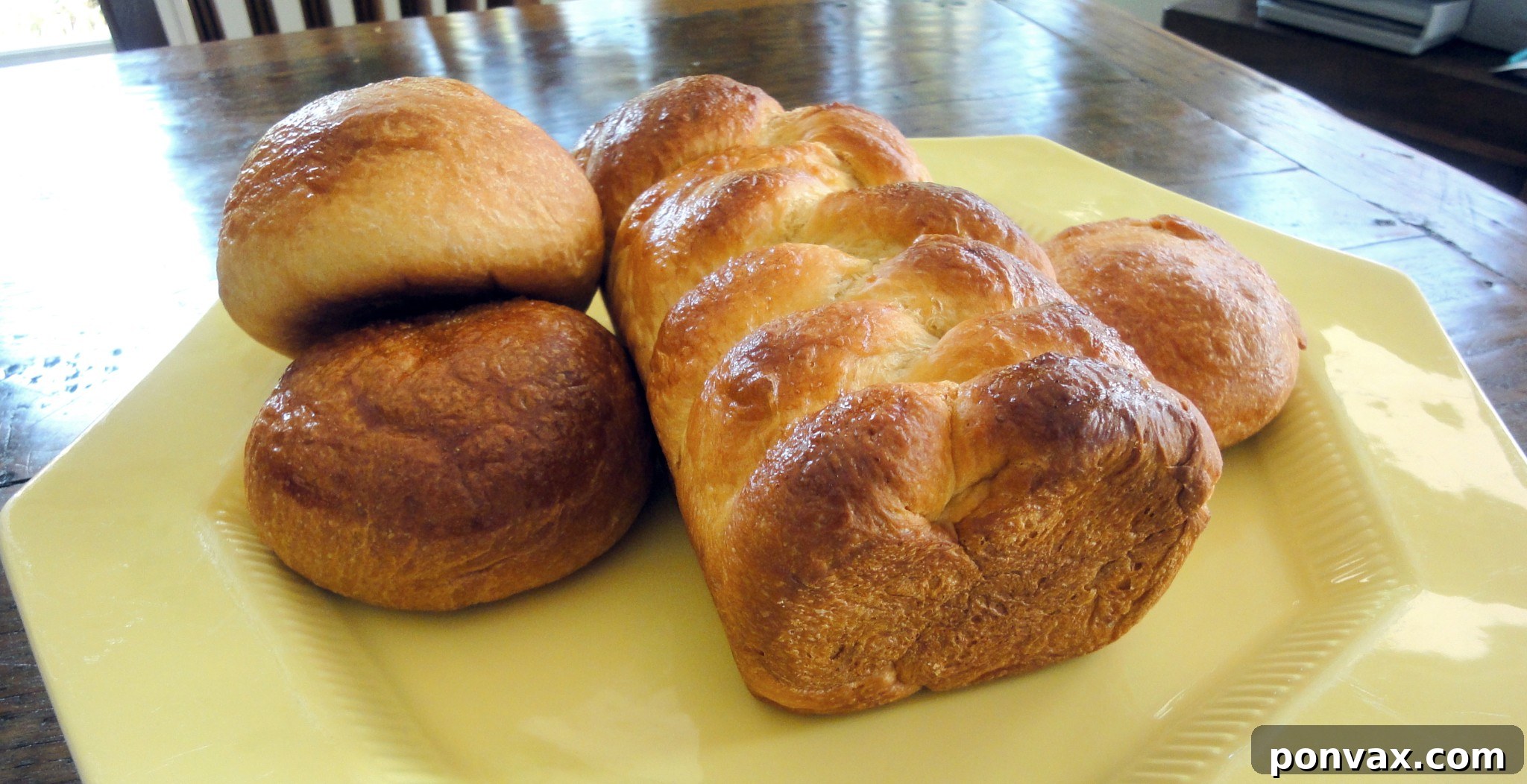
Its versatility is another major highlight. While I specifically crafted both classic buns and a beautiful loaf, this brioche dough is a fantastic base for countless other treats. Imagine turning it into heavenly cinnamon rolls, sticky buns, or even elegant brioche à tête. I’ve personally used leftover brioche to make French toast, and I can confirm it’s beyond heavenly – a true breakfast revelation. The richness of the brioche, combined with the golden crispness of French toast, creates an unforgettable culinary delight.
Another fantastic advantage of this particular recipe is how beautifully the bread freezes. There’s absolutely no need to cut the recipe in half if you’re worried about having too much. Simply bake an extra loaf or a batch of buns, let them cool completely, and then freeze them for future enjoyment. This means you can always have a taste of homemade brioche on hand, ready to be thawed and savored whenever the craving strikes.
Homemade Brioche
Pin Recipe
Ingredients
For the best brioche, quality ingredients make all the difference. Ensure your butter is at room temperature and your eggs are fresh.
- 2 ¾ cups all-purpose flour
- ¼ cup nonfat dry milk, optional, but recommended for a softer crumb and richer flavor
- 3 tablespoons sugar
- 1 ¼ teaspoons salt
- 1 tablespoon instant yeast**
- 3 large eggs*
- ¼ cup lukewarm water
- 10 tablespoons butter, room temperature, cut into small pieces
Instructions
Follow these detailed steps to achieve a perfectly tender and flavorful brioche. Patience is key when working with enriched doughs!
-
1. Prepare the Dough: In the bowl of a stand mixer fitted with a dough hook, or in a bread machine set to the dough cycle, combine all the ingredients. Mix on low speed, then increase to medium, allowing the mixture to come together. Initially, the dough will appear sticky and unmanageable, but resist the urge to add more flour. Continue kneading for an extended period, typically 15 to 20 minutes in a stand mixer, until the dough transforms into a smooth, shiny, and beautifully satiny consistency that easily pulls away from the sides of the bowl. This long kneading time is crucial for developing the gluten structure necessary for brioche’s signature texture. Hand-kneading this rich dough is not recommended due to its sticky nature and the long development time required. If using a bread machine, allow it to complete its kneading cycle before proceeding.
-
2. First Rise and Chill: Once kneaded, gently form the very soft dough into a ball. Place it in a lightly greased bowl, ensuring it’s well-coated to prevent sticking. Cover the bowl tightly with plastic wrap or a clean kitchen towel. Allow the dough to rise in a warm place for 1 hour at room temperature. This initial rise allows the yeast to activate fully. After the first rise, transfer the covered bowl to the refrigerator for several hours, or ideally, overnight. Chilling the dough slows down the fermentation process, enhancing the flavor, and more importantly, it chills the butter within the dough, making it much firmer and significantly easier to handle and shape.
-
3. Shape the Brioche: Once thoroughly chilled, turn the dough out onto a lightly floured surface. At this stage, you have several options for shaping:
- For mini-brioches or individual buns, divide the dough into 12 equal pieces.
- For a single large round brioche, leave the dough whole.
- For two standard loaves, divide the dough in half. You can simply shape each half into an oval or, for a more decorative touch, divide each half into three pieces and create elegant three-strand braids before placing them in the loaf pans.
- As an example, I often divide the dough in half: one half is shaped into a classic loaf, and the other half is portioned into mini-brioches.
-
4. Second Rise (Proofing): Place your shaped dough into your chosen greased pan(s) – whether it’s a loaf pan, muffin tin for buns, or a round baking dish. Cover the pan(s) lightly with plastic wrap or a clean kitchen towel, taking care not to let it touch the dough. Allow the dough to rise in a warm, draft-free place for 2 ½ to 3 hours, or until it has visibly doubled in size and appears very puffy and light. This crucial proofing stage is essential for achieving the light, airy texture of finished brioche.
-
5. Baking a Large, Round Brioche: Preheat your oven to 400°F (200°C). Carefully place the pan with the large round brioche into the preheated oven. Bake for 10 minutes at this higher temperature to achieve a good initial rise and crust. After 10 minutes, reduce the oven temperature to 350°F (175°C) and continue baking for approximately 30 to 35 minutes more. Keep an eye on the brioche after 15 minutes; if it begins to brown too quickly, lightly tent it with aluminum foil to prevent over-browning. A perfectly baked brioche should have a deep, rich brown color, sound hollow when gently tapped on the bottom, and register an internal temperature of 190°F (88°C) using an instant-read thermometer. It’s easy to underbake brioche since its rich egg and butter content causes it to brown quickly on the outside. Once baked, remove the brioche from the oven and let it cool in the pan for 10 minutes before carefully transferring it to a wire rack to cool completely.
-
6. Baking Mini Brioches/Buns: Preheat your oven to 375°F (190°C). Place the pan(s) containing the mini brioches into the preheated oven. Bake for 25 to 30 minutes. Similar to the large brioche, if they start to brown too rapidly after about 10 minutes, tent them lightly with aluminum foil. Once baked, remove the pan(s) from the oven, allow them to stand for 5 minutes, then turn the brioches out onto a wire rack to cool.
-
7. Baking Loaves: For brioche loaves, allow them to rise in their pans until they have nearly reached the rim, which typically takes about 3 hours. Preheat your oven to 350°F (175°C). Bake the loaves for 40 to 45 minutes, tenting them with foil after 15 to 20 minutes of baking to prevent the tops from over-browning while the interior bakes through. Remove from oven and cool on a wire rack.
Notes
*Egg Variation: For an even richer crumb and a beautiful golden wash, consider using 3 large eggs plus 1 egg yolk in the dough. This approach also conveniently leaves you with an extra egg white, which can be brushed on top of your loaf before baking if you plan to garnish it with pearl sugar or other toppings.
**Yeast Substitution: If you only have active dry yeast on hand, you can absolutely use it in this recipe. Simply substitute the instant yeast with active dry yeast, then activate it by stirring it into the lukewarm water along with a pinch of the sugar from the recipe. Let this mixture sit for 5-10 minutes until it becomes foamy, indicating the yeast is active. Once foamy, proceed with the recipe by adding all other ingredients and kneading as directed.
Storage: Brioche is best enjoyed fresh, but it can be stored at room temperature in an airtight container for 2-3 days. For longer storage, wrap cooled brioche tightly in plastic wrap and then in aluminum foil, freezing for up to 2-3 months. Thaw at room temperature or gently warm in a low oven.
Serving Suggestions: Beyond French toast, brioche makes incredible sandwiches (both sweet and savory), delicious bread pudding, or can simply be enjoyed sliced with butter and jam.
Did you make this recipe?
Share your culinary creations and tag us on social media!