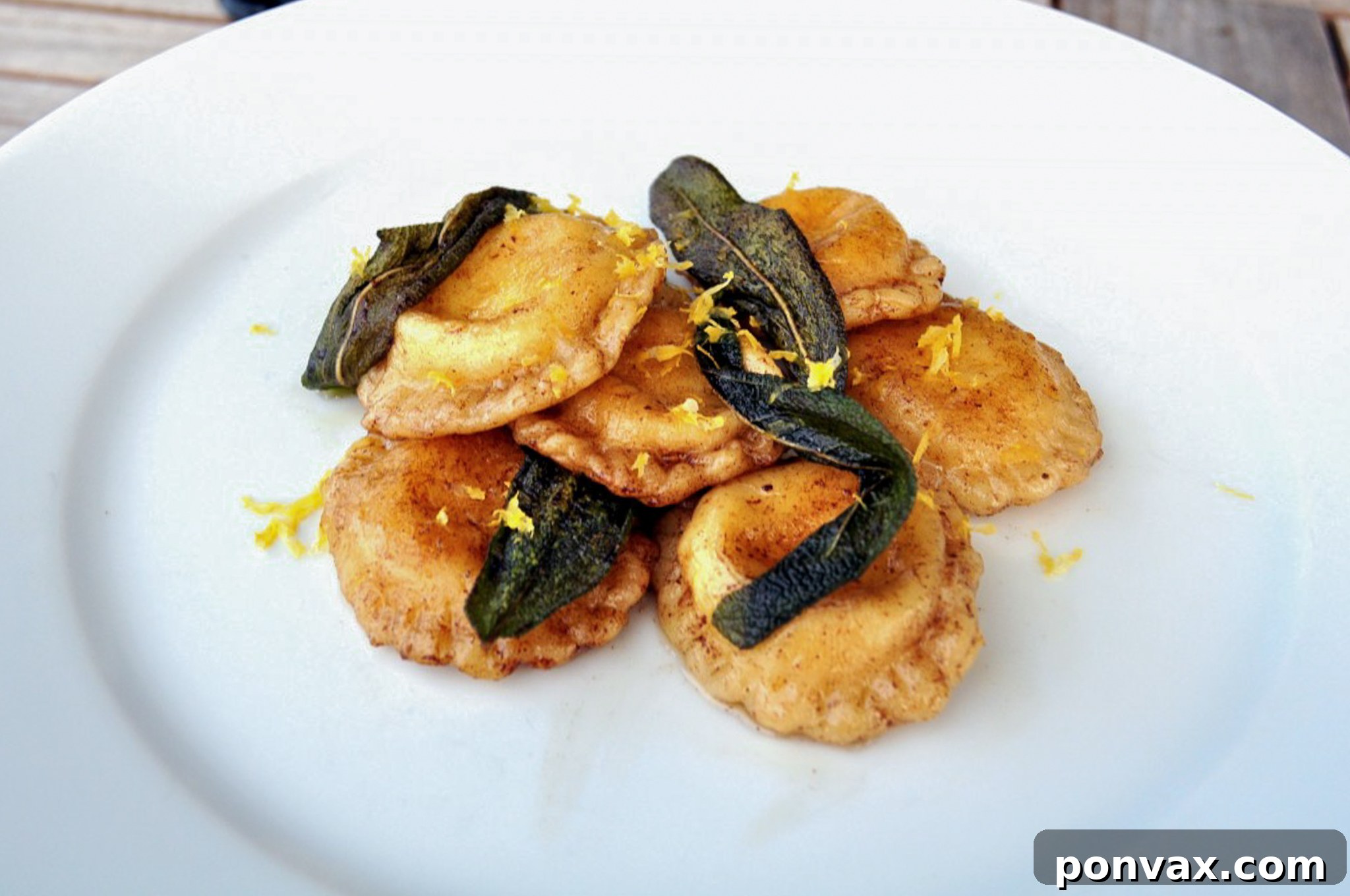
Discover the unparalleled flavor of fresh, homemade pasta with this exquisite Lemon Ricotta Ravioli recipe, perfectly complemented by a rich and aromatic Sage Brown Butter Sauce. Experience Italian cooking at its finest, made accessible for your kitchen.
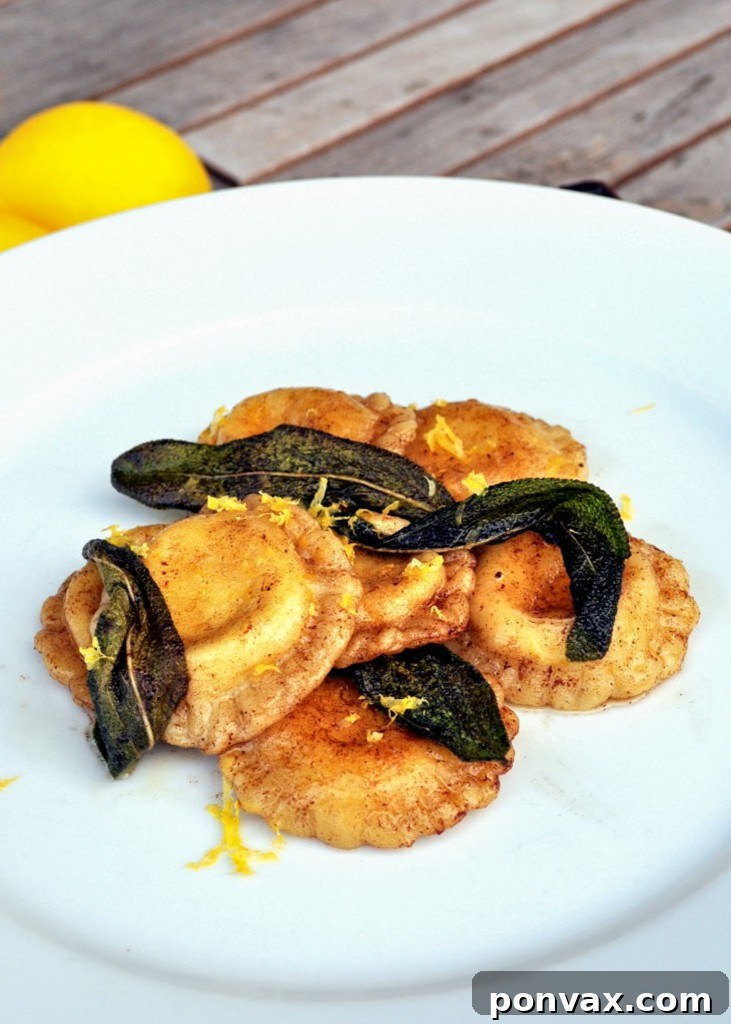
Homemade Lemon Ricotta Ravioli with Sage Brown Butter Sauce: An Exquisite Italian Delight
While many of you know me for my sweet creations and baking endeavors, today, I’m thrilled to share a savory revelation that has completely captivated my kitchen: an extraordinary Lemon Ricotta Ravioli enveloped in a fragrant Sage Brown Butter Sauce. Yes, you read that right – a pasta dish! It might seem like a departure from my usual repertoire, but some recipes are simply too magnificent not to share, transcending the boundaries of my typical dessert-focused posts. This isn’t just any dinner recipe; it’s a culinary experience that promises to elevate your home cooking to gourmet levels, proving that the magic of homemade extends far beyond just cakes and cookies.
I often find myself whipping up delicious dinners, but the challenge of capturing their beauty under less-than-ideal evening lighting usually means these culinary gems remain confined to my family’s dinner table. However, this particular Lemon Ricotta Ravioli recipe demanded its moment in the spotlight. It’s a dish so profoundly satisfying, so bursting with fresh flavors, that I felt it was my duty to bring it to you. Every single person who has tasted it has been utterly enchanted, including my father, who isn’t typically a big pasta enthusiast. His enthusiastic declaration that this is one of the best pasta dishes he’s ever had – a dish he’d order repeatedly in any fine restaurant – speaks volumes. While a daughter might always wonder if her dad’s praise is slightly biased, my own taste buds confirm his verdict: this ravioli is nothing short of sensational.

The Unbeatable Charm of Homemade Pasta and Ricotta
What makes this Lemon Ricotta Ravioli truly stand out is the commitment to fresh, homemade ingredients. From the light, airy ricotta cheese, which is surprisingly simple to prepare from scratch, to the tender, perfectly al dente pasta dough, every component contributes to an unparalleled depth of flavor and texture. The homemade ricotta melts in your mouth, offering a creamy, smooth counterpoint to the vibrant lemon zest. The fresh pasta has a distinct bite and elasticity that store-bought varieties simply cannot replicate, embodying the true essence of Italian culinary tradition.
And then there’s the sauce – a luscious, golden-brown butter infused with aromatic sage leaves. This silky, herby concoction coats each delicate ravioli pillow, bringing all the elements together in a symphony of taste. The subtle nuttiness of the browned butter, combined with the earthy sage and the bright tang of lemon, creates a truly unforgettable experience. It’s a harmonious blend of textures and tastes that dance on your palate, leaving a lasting impression of pure deliciousness.
I understand that the idea of making pasta and ricotta from scratch might sound daunting, suggesting a labor-intensive kitchen project. And while it does require a bit of dedication and time, I assure you, the effort is incredibly rewarding. This is the kind of recipe you pull out when you want to impress dinner guests, celebrate a special occasion, or simply treat yourself to something truly extraordinary. The journey from raw ingredients to these exquisite ravioli is a joy in itself, culminating in a meal that tastes like it came straight from a Tuscan trattoria. Trust me, this recipe will not disappoint; it will, in fact, redefine your expectations for homemade pasta.
Why Go Homemade? The Magic of Fresh Ingredients
The secret to this ravioli’s remarkable flavor lies in its homemade components. Making your own ricotta is a game-changer. Commercial ricotta often contains stabilizers and additives that can result in a grainy texture and a less vibrant taste. Our homemade version, on the other hand, is luxuriously creamy, subtly sweet, and incredibly fresh, tasting miles apart from anything you can buy in a tub. It’s also incredibly satisfying to watch simple milk and cream transform into such a delicate cheese with just a touch of acid, providing a rich, clean flavor that elevates the entire dish.
Similarly, homemade pasta dough offers a superior texture and taste that store-bought alternatives simply cannot match. There’s a certain delightful chewiness and elasticity to fresh pasta that dried pasta, no matter how good, simply can’t replicate. The process of kneading the dough, rolling it out to paper-thin sheets, and carefully filling it with the zesty ricotta is not just a culinary task, but a therapeutic and creative endeavor. When you make it yourself, you control the quality of every ingredient, ensuring no unwanted preservatives or artificial flavors sneak into your meal. This dedication to freshness and quality translates directly into a dish that is brighter, more authentic, and incomparably delicious, making every bite a celebration of true Italian craftsmanship.


Lemon Ricotta Ravioli with Sage Brown Butter Sauce
Pin Recipe
Ingredients
For the Ricotta
- 4 cups whole milk
- 2 cups heavy cream
- 1 teaspoon kosher salt
- 3 tablespoons good white wine vinegar
For the Pasta Dough
- 2 cups all-purpose flour, plus more for dusting
- 1 teaspoon salt
- 3 large eggs, plus 1 for egg wash
- 2 tablespoons extra-virgin olive oil
- Cornmeal, for dusting
For the Lemon Ricotta Filling
- 1 ¼ cup (10 oz.) homemade or high-quality store-bought ricotta cheese
- 2 tablespoons freshly grated Parmesan cheese
- 1 egg yolk, reserve the white for egg wash
- Zest of 2 lemons
- ½ tsp kosher salt
- 1 tablespoon heavy cream
To Assemble the Ravioli and Make the Sauce
- Prepared Lemon ricotta filling
- Prepared Pasta dough
- 8 fresh sage leaves
- 6 tablespoons unsalted butter
- 1 lemon, freshly juiced
- Zest of 1 lemon, for garnish
Instructions
For the Ricotta (Plan Ahead for Best Results)
-
Prepare your draining station: Set a large sieve over a deep bowl. Line the sieve with two layers of damp cheesecloth. This setup will collect the whey, leaving behind your beautiful curds.
-
Combine the whole milk, heavy cream, and kosher salt in a heavy-bottomed stainless-steel or enameled pot (such as a Le Creuset). Bring the mixture to a full boil over medium heat, stirring occasionally to prevent scorching. Once boiling, remove it immediately from the heat and stir in the white wine vinegar. This acid will cause the milk to curdle. Allow the mixture to stand undisturbed for 1 minute; you will visibly see it separate into thick, creamy curds and watery, milky whey.
-
Carefully pour the curdled mixture into the prepared cheesecloth-lined sieve. Allow it to drain at room temperature for 20 to 25 minutes. Periodically discard the liquid (whey) that collects in the bowl beneath the sieve. The longer the ricotta drains, the thicker and firmer it will become. For this ravioli recipe, aim for a fairly thick consistency, so let it drain for approximately 25-30 minutes. Once drained to your desired thickness, transfer the fresh ricotta to a clean bowl, discarding the cheesecloth and any remaining whey. Use it immediately or cover it tightly with plastic wrap and refrigerate. Homemade ricotta stays fresh in the refrigerator for 4 to 5 days.
For the Pasta Dough (The Foundation of Your Ravioli)
-
Using an electric mixer: In the bowl of an electric mixer fitted with a dough hook attachment, combine the all-purpose flour and salt. With the mixer on low speed, add the eggs one at a time, allowing each to incorporate before adding the next. Gradually drizzle in 1 tablespoon of extra-virgin olive oil. Continue mixing until all the flour is incorporated and the dough begins to form a cohesive ball. If the dough seems too dry, add the second tablespoon of olive oil slowly until it comes together. Once a ball forms, turn the dough out onto a lightly floured work surface. Knead the dough vigorously for about 8-10 minutes, folding it repeatedly until it becomes elastic, smooth, and no longer sticky. Brush the entire surface of the dough ball with any remaining olive oil, then wrap it tightly in plastic wrap. Let it rest at room temperature for at least 30 minutes. This crucial resting period allows the gluten to relax, making the dough much easier to roll out thinly.
-
Alternatively, if you don’t have an electric mixer (hand-kneading method): On a clean, flat work surface, mound the flour and salt together. Create a large well in the center of the flour mound. Crack the eggs into the well and add 1 tablespoon of olive oil. Using a fork, gently beat the eggs and oil in the center, gradually incorporating the flour from the inner wall of the well. Continue to draw in flour from the edges in a circular motion, using one hand to mix and the other to maintain the outer wall of the flour. Keep mixing until a shaggy dough forms, then gather it into a ball. If the dough is too dry to come together, add the second tablespoon of olive oil. Knead the dough for approximately 10-15 minutes until it is smooth, elastic, and uniform in consistency. Proceed with brushing with oil and resting as directed above.
For the Lemon Ricotta Filling (Bright and Creamy)
-
In a medium bowl, combine the homemade ricotta cheese (or your high-quality store-bought alternative), freshly grated Parmesan cheese, egg yolk (remember to reserve the white for the egg wash!), zest of 2 lemons, ½ teaspoon kosher salt, and 1 tablespoon of heavy cream. Stir all ingredients together until well combined and smooth. Taste and adjust seasoning if necessary. Cover the bowl with plastic wrap and refrigerate until you are ready to assemble the ravioli. This allows the flavors to meld beautifully.
To Assemble the Ravioli (The Art of Pasta Making)
-
Once your pasta dough has rested, cut the ball in half. Keep one half covered with plastic wrap to prevent it from drying out while you work with the first piece. Lightly dust your clean work surface and the piece of dough with a little all-purpose flour. Flatten the dough into a rough rectangle. Now, you’re ready to roll it through a pasta machine. Begin by passing the dough through the widest setting (usually setting #1) two or three times. Each time it emerges, gently pull and stretch the sheet with the palm of your hand to help it lengthen. Gradually reduce the machine’s setting, passing the dough through each progressively narrower setting two or three times, until you reach the narrowest setting. The goal is to achieve a paper-thin sheet of dough, approximately 1/8-inch thick, transparent enough that you should be able to faintly see your hand through it. Dust the sheets with flour as needed to prevent sticking. Repeat with the second half of the dough.
-
If you’re using a rolling pin (no pasta machine needed!): For those without a pasta machine, simply use a good, heavy rolling pin. Work on a lightly floured surface and roll the dough as symmetrically and as thinly as you possibly can. This will require a bit more effort and patience, but the results are just as delicious. Aim for that translucent thinness for delicate ravioli.
-
Prepare your egg wash by beating the reserved egg white with 1 tablespoon of water. Lay one long, thin sheet of pasta dough flat on your lightly floured counter. Lightly brush the entire top surface of the pasta sheet with the egg wash; this will act as your glue. Now, using a teaspoon, drop small mounds of the lemon ricotta filling onto one half of the pasta sheet, spacing them about 1.5 inches apart. Carefully fold the other half of the pasta sheet over the filling, like a blanket, aligning the edges. Working around each mound of filling, gently press out any trapped air pockets with your fingers to prevent the ravioli from bursting during cooking. Using a sharp knife or a small cookie cutter (circles, squares, or even fancy shapes!), cut out each individual ravioli. Then, use the tines of a fork to crimp and tightly seal the edges of each ravioli, ensuring the filling stays securely inside. Dust the finished ravioli and a large sheet pan with cornmeal to prevent sticking, and arrange them in a single layer to dry slightly while you assemble the remaining ravioli.
-
Bring a large pot of generously salted water to a rolling boil. Carefully add the ravioli to the boiling water, being careful not to overcrowd the pot; cook them in batches if necessary. Fresh ravioli cook very quickly. They will float to the surface when they are ready, typically after about 3-4 minutes. Once cooked, lift the ravioli from the water using a large strainer or a slotted spoon.
-
While the ravioli are cooking, prepare the Sage Brown Butter Sauce. Melt the unsalted butter in a large skillet or frying pan over medium-high heat. As the butter melts, add the fresh sage leaves. Continue to cook, swirling the pan occasionally, until the butter begins to brown and smells nutty, developing golden-brown flecks at the bottom of the pan. This usually takes 3-5 minutes. Immediately reduce the heat to low to prevent the butter from burning. Once your cooked ravioli are ready, carefully transfer them directly into the pan with the brown butter sauce. Sauté the ravioli in the sauce for about 1 minute on each side, gently tossing or flipping them until they are beautifully coated and the butter clings to the pasta. Turn off the heat and stir in the freshly squeezed lemon juice. Shake the pan gently to thoroughly coat all the ravioli.
-
Carefully plate your exquisite Lemon Ricotta Ravioli. Garnish generously with the reserved lemon zest for an extra burst of fresh aroma and a vibrant presentation. A sprinkle of freshly grated Parmesan cheese wouldn’t hurt either! Serve immediately and savor every delicious bite. Enjoy!
Notes
Tips for Perfect Homemade Ravioli Every Time
Creating homemade ravioli is a rewarding experience, and a few key tips can ensure your success. First, don’t rush the pasta dough resting period. This allows the gluten to relax, making the dough easier to roll thinly and preventing it from snapping back. A well-rested dough is the foundation of tender ravioli. Second, be meticulous when sealing your ravioli. Air pockets are the enemy! Gently press around each filling mound to remove all air before crimping the edges. This prevents the ravioli from bursting during cooking and ensures a beautiful, plump shape. Lastly, avoid overcrowding the pot when boiling. Cooking ravioli in smaller batches allows them to cook evenly and prevents them from sticking together, ensuring each delicate parcel is perfectly al dente.
When it comes to your ingredients, always opt for the freshest available. High-quality whole milk and heavy cream for the ricotta will yield the creamiest results. Fresh lemons provide the brightest zest and juice, truly making the lemon flavor pop in both the filling and the sauce. Similarly, fresh sage is non-negotiable for the aromatic brown butter sauce. The subtle earthiness and fragrance of fresh sage leaves infuse the butter with an unparalleled depth of flavor that dried sage simply cannot replicate. These small details collectively elevate the dish from good to truly extraordinary.
Creative Variations and Serving Suggestions
While this Lemon Ricotta Ravioli with Sage Brown Butter Sauce is a masterpiece on its own, there’s always room for personalization. For a richer filling, consider adding a tablespoon of finely chopped fresh spinach or a pinch of nutmeg to the ricotta mixture. If you’re a cheese lover, a touch of aged provolone or a stronger pecorino Romano can add another layer of savory complexity. For a seasonal twist, especially in autumn, roasted butternut squash or pumpkin puree could be incorporated into the filling, perhaps with a touch of cinnamon or allspice to complement the sage butter.
Beyond the classic sage brown butter, this versatile ravioli can shine with other sauces. A light roasted red pepper sauce would offer a sweet and smoky contrast, while a vibrant pesto could bring a burst of herbaceous freshness. For a heartier meal, a simple tomato butter sauce, perhaps with cherry tomatoes and basil, would also pair wonderfully. Serve your ravioli with a crisp green salad dressed with a light vinaigrette to cut through the richness of the butter sauce. A side of crusty artisan bread is perfect for soaking up any leftover sauce. For wine pairings, a crisp, dry white wine like a Sauvignon Blanc or an unoaked Chardonnay would complement the lemon notes beautifully, while a light-bodied Pinot Noir could also be a delightful match.
A Culinary Journey Worth Taking
This Lemon Ricotta Ravioli with Sage Brown Butter Sauce isn’t just a meal; it’s an invitation to embark on a delightful culinary journey. From the satisfaction of making your own fresh ricotta and pasta dough to the exquisite aroma of sage browning in butter, every step of this recipe is imbued with joy and anticipation. It’s a dish that celebrates fresh ingredients, traditional techniques, and the simple pleasure of creating something truly special with your own hands. The vibrant lemon, the creamy ricotta, the tender pasta, and the nutty, aromatic sauce converge to create a dish that is both comforting and sophisticated, familiar yet exceptional.
So, whether you’re a seasoned chef or an adventurous home cook, I wholeheartedly encourage you to carve out some time and try this recipe. It’s an opportunity to impress your loved ones, deepen your appreciation for Italian cuisine, and discover the immense gratification that comes from a truly homemade meal. You’ll be amazed at the depth of flavor and the sense of accomplishment this dish brings. Prepare to savor a truly memorable dining experience!