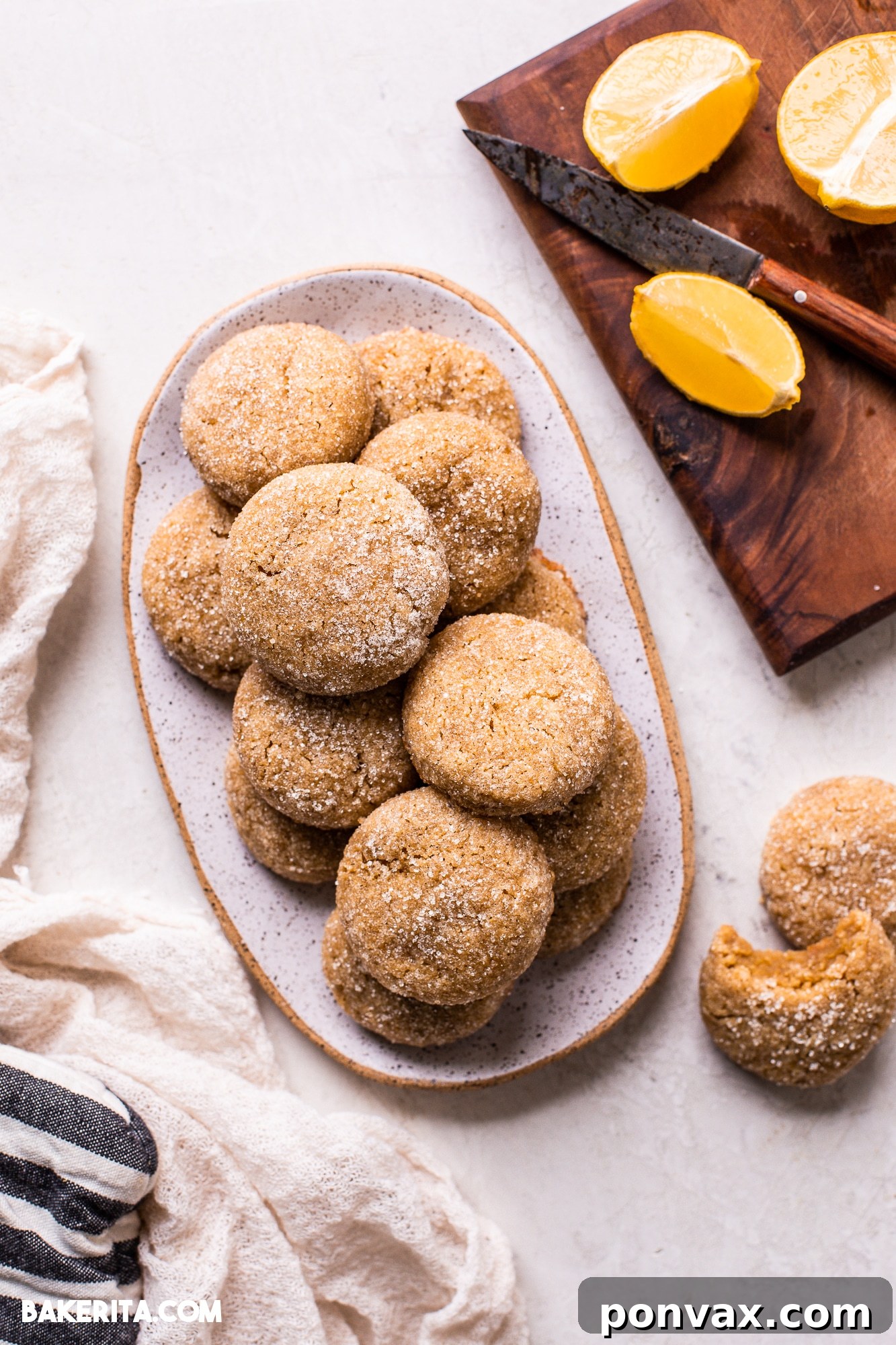
Discover the ultimate treat with these Vegan Gluten-Free Lemon Cookies! Perfectly soft, delightfully chewy, and bursting with vibrant lemon flavor, these cookies are a citrus lover’s dream. Crafted with nutrient-rich almond flour, they offer a naturally gluten-free indulgence without compromising on taste or texture. If you’re passionate about bright, zesty desserts, prepare to fall in love with this easy and delicious recipe!
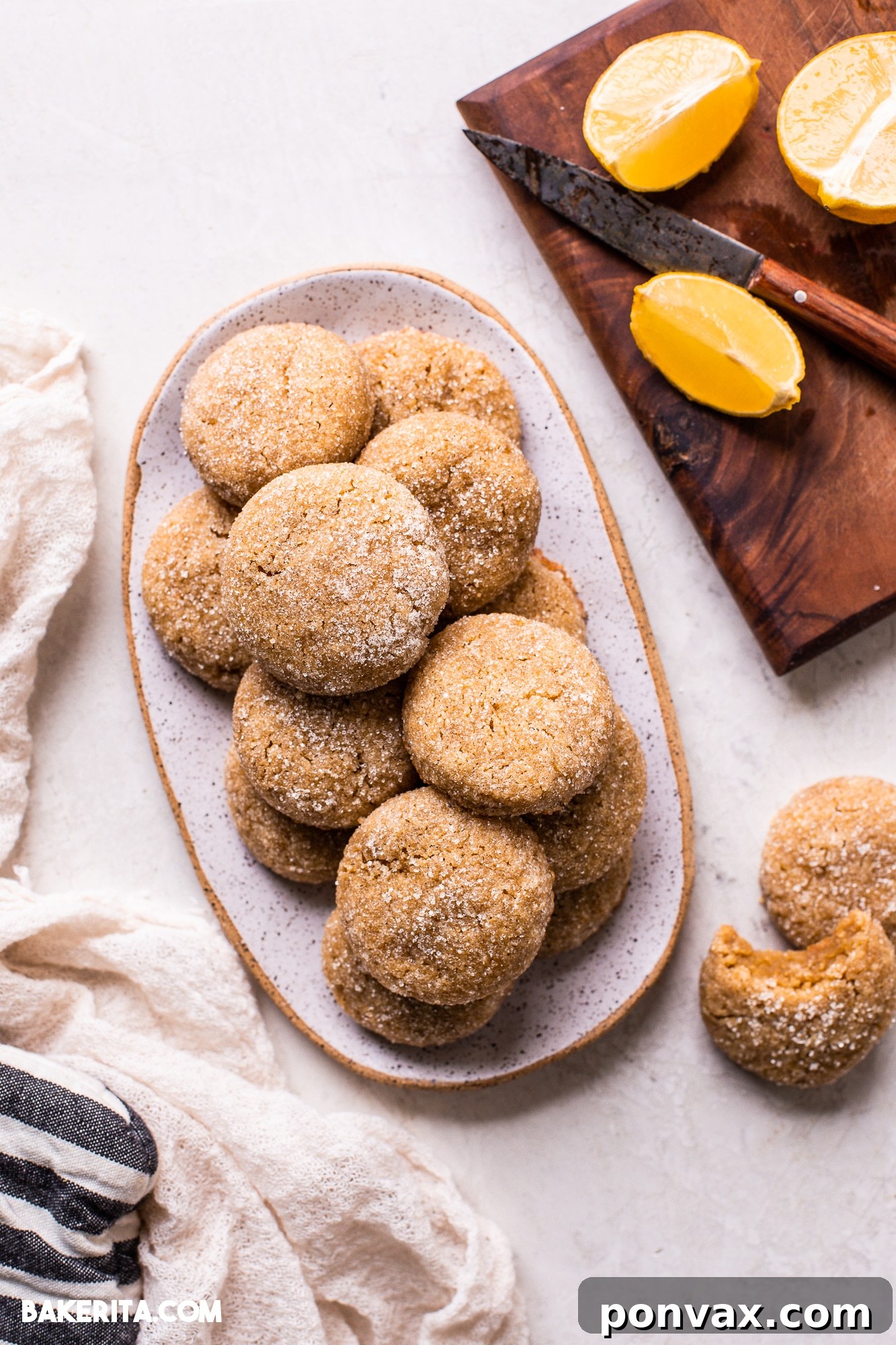
Irresistible Vegan Gluten-Free Lemon Cookies: A Zesty Delight
Are you firmly in the camp of lemon dessert enthusiasts? It seems there’s no middle ground when it comes to lemon—you either adore it or you don’t. For those who can’t get enough of that refreshing, tangy sweetness, this vegan lemon cookie recipe is tailor-made for you. We understand the craving for bright, citrusy treats, and these cookies deliver an explosion of flavor in every bite. (And if you’re a true lemon aficionado, be sure to also try our Vegan Gluten-Free Lemon Cake and these fantastic Lemon Poppy Seed Muffins!).
Our Gluten-Free Vegan Lemon Cookies are nothing short of a culinary triumph. They strike a perfect harmony between a tender, soft interior and a delightfully chewy texture, all infused with an incredibly fresh and vivid lemon essence. The delicate sugary coating on the outside adds a subtle crunch and a beautiful sparkle, elevating them from delicious to truly exceptional. These aren’t just cookies; they’re a little ray of sunshine in edible form, proving that plant-based, gluten-free baking can be utterly phenomenal.
Beyond their incredible taste, these cookies offer several nutritional advantages. The star ingredients—fresh lemon juice and zest—are a fantastic source of Vitamin C, providing a bright, natural boost. Meanwhile, almond flour, the foundation of these cookies, is a popular choice for gluten-free baking not only for its low-carb profile but also for its wealth of nutrients, including healthy fats and protein. It creates a wonderfully soft texture that’s truly satisfying. You know how much we love our almond flour cookies, and this recipe is a testament to its versatility. For even more gluten-free vegan cookie inspiration, don’t forget to check out our top-selling cookbook!
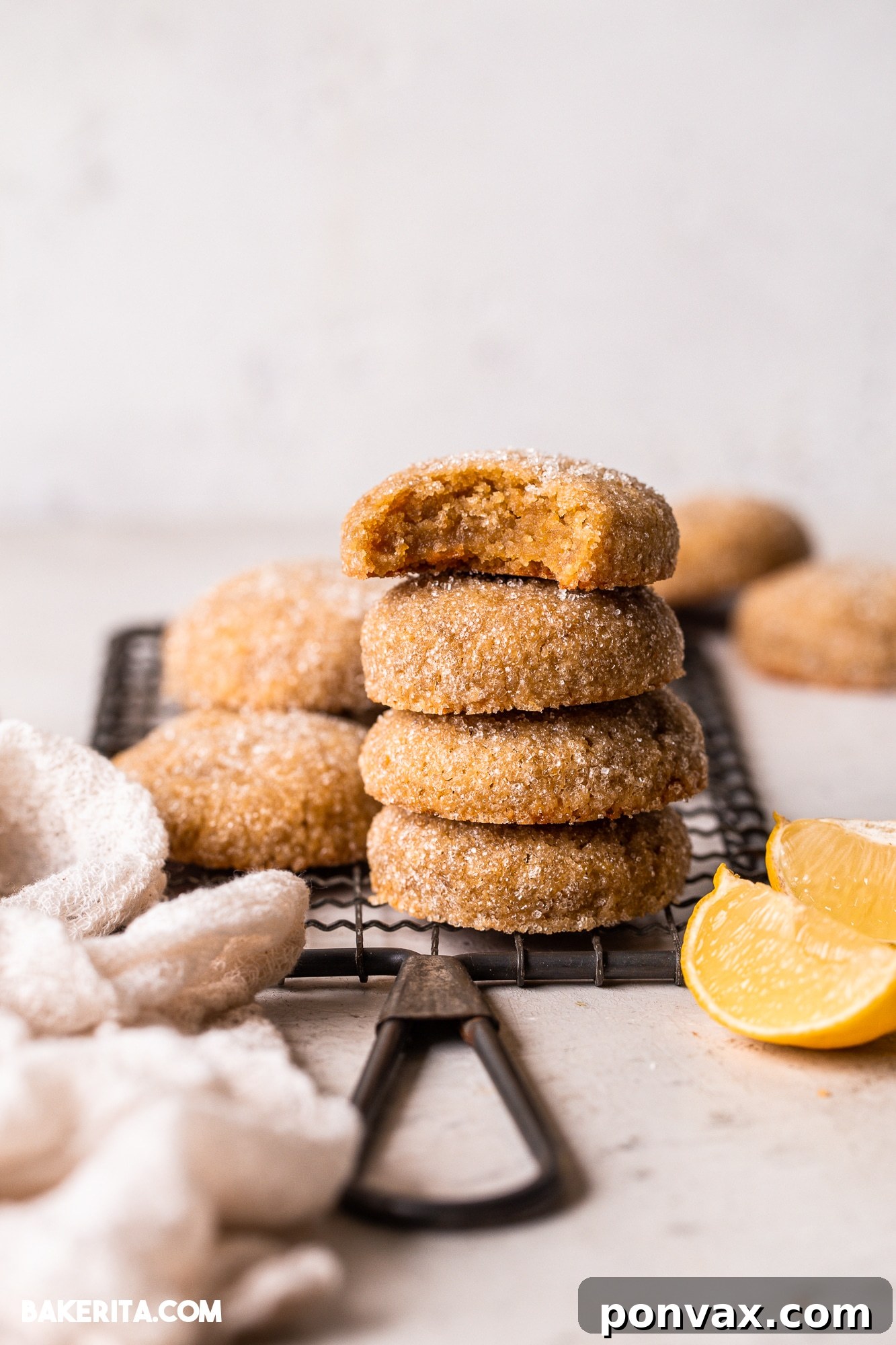
Essential Ingredients for Bright Lemon Cookies
The single most crucial element for these lemon cookies is undeniably **fresh lemons**. We cannot stress this enough: for that truly vibrant, authentic, and refreshing lemon flavor that defines these gluten-free vegan cookies, bottled lemon juice simply won’t suffice. The complex aroma and bright zest can only come from real, fresh lemons. In addition to our citrus star, you’ll need a few other key ingredients to create these delightful treats:
- Olive Oil: We specifically opt for a light, fruity-flavored olive oil in this recipe. Its subtle fruity notes complement the lemon beautifully and contribute to the cookies’ tender texture. It’s a wonderful alternative to butter, adding moisture without dairy.
- Cashew Butter: Known for its mild and neutral flavor, cashew butter is perfect here as it allows the lemon to truly shine. If you don’t have cashew butter, a creamy, mild-flavored nut butter like almond butter could work, but be aware it might subtly alter the flavor profile.
- Coconut Sugar: Our choice for natural sweetness, coconut sugar offers a rich, caramel-like undertone that pairs wonderfully with the tangy lemon. It’s a less refined alternative to granulated sugar and helps keep these cookies wholesome.
- Fresh Lemons: As mentioned, these are non-negotiable! You’ll need both the juice for tanginess and the zest for that intense aromatic citrus punch. Always zest your lemons before juicing them – it’s much easier!
- Flax Eggs: This is our vegan secret weapon for binding. Made from ground flaxseed and water, flax eggs effectively replace traditional eggs, creating a cohesive dough structure. This ensures your cookies hold their shape and have that perfect chewy consistency.
- Vanilla Extract: A touch of vanilla helps to round out the flavors, adding warmth and depth that complements the bright lemon without overpowering it.
- Almond Flour: The foundation of our gluten-free cookies! Blanched almond flour provides a wonderfully soft, almost melt-in-your-mouth texture and a delicate nutty flavor. It’s an excellent choice for tender, moist baked goods and is a healthier alternative to wheat flours.
- Baking Soda + Salt: These are essential leavening agents that work together to give the cookies a slight puff and a beautiful crackled top. Salt also balances the sweetness and enhances all the other flavors.
Quick Guide: How to Make a Flax Egg for Vegan Baking: To create one flax egg, combine 1 tablespoon of flax meal (ground flaxseed) with 2.5 tablespoons of water in a small bowl. Whisk thoroughly until well combined. Allow the mixture to sit undisturbed for about 5 to 10 minutes, during which time it will thicken into a gel-like consistency. Stir again before incorporating it into your recipe.
Pro Tip: How to Zest a Lemon Like a Pro: For the best results, invest in a quality microplane zester. Hold the lemon firmly in one hand and the zester in the other. Gently scrape the lemon against the sharp blades of the zester, rotating the fruit as you go. Focus on removing only the brightly colored outer peel, avoiding the white pith underneath. The pith is bitter and can impart an unpleasant taste to your cookies, so take care to extract only the flavorful zest.

Essential Tools for Baking Success
Having the right equipment at hand can truly make the baking process smoother and more enjoyable, especially when creating these delicate lemon cookies. Here are our recommended must-haves to ensure you achieve the best possible results:
- Mixing Bowls: A set of various sizes is invaluable for separating wet and dry ingredients and then combining them without mess.
- Silicone Spatula: Flexible yet sturdy, a silicone spatula is perfect for scraping down the sides of the bowl, ensuring all ingredients are thoroughly incorporated without overmixing.
- Baking Sheet: A good quality, heavy-gauge baking sheet promotes even heat distribution, preventing burnt bottoms and undercooked centers.
- Parchment Paper or Silicone Baking Mat: Lining your baking sheet prevents sticking, makes cleanup a breeze, and helps your cookies bake evenly.
- Cookie Scoop: For consistently sized cookies, a cookie scoop is a game-changer. It ensures even baking and a professional look.
- Microplane Zester: As mentioned before, this specialized tool is key for extracting fine, flavorful lemon zest without including the bitter pith.

Step-by-Step Guide: How to Make Gluten-Free Vegan Lemon Cookies
You’ll be delighted to hear that these vegan almond flour cookies are incredibly simple and quick to prepare – a huge win in our busy lives! The faster we can get to enjoying these delicious treats, the better, right? Here’s a detailed breakdown of how to whip up a batch of these delightful lemon cookies:
- Combine Wet Ingredients: Begin by taking a large mixing bowl. Add the olive oil, cashew butter, and coconut sugar. Stir these ingredients together thoroughly until the mixture is smooth and evenly combined. The consistency should be uniform with no streaks of individual ingredients.
- Add Flavor & Binder: Next, incorporate the prepared flax eggs, a teaspoon of pure vanilla extract, and most importantly, the fresh lemon juice and aromatic lemon zest. Stir everything together until all components are fully integrated, and the mixture is fragrant with lemon.
- Mix Dry Ingredients: In a separate, medium-sized bowl, whisk together all your dry ingredients: the blanched almond flour, baking soda, and a pinch of salt. Whisking ensures they are evenly distributed before adding them to the wet mixture.
- Form the Dough: Gradually add the whisked dry ingredients into the wet mixture. Stir gently until a cohesive dough forms. Be careful not to overmix; stop as soon as the flour is fully incorporated to keep the cookies tender.
- Chill the Dough: This step is crucial for the best cookie texture. Cover the bowl of dough and refrigerate it for at least 30 minutes. Chilling allows the almond flour to fully hydrate and the fats to firm up, which prevents the cookies from spreading too much during baking and makes the dough much easier to handle. You can even leave the dough in the fridge for up to 48 hours, making it perfect for preparing ahead!
- Prepare for Baking: When you’re ready to bake, preheat your oven to 350°F (175°C). Line a baking sheet with parchment paper or a silicone baking mat. Pour some raw cane sugar, turbinado sugar, or coconut sugar into a small, shallow bowl for rolling.
- Scoop and Coat: Using a cookie scoop, portion out even amounts of dough. Roll each portion between your palms to form smooth, round balls. Then, gently roll each dough ball in the sugar mixture until it’s evenly coated. This step gives the cookies a beautiful glistening sparkle and a slightly crisp exterior after baking.
- Bake to Perfection: Place the sugar-coated dough balls on your prepared baking sheet, leaving about 2 inches between each cookie to allow for spreading. Gently press down on each dough ball with the palm of your hand to slightly flatten them.
- Bake and Cool: Bake for approximately 9 to 11 minutes in the preheated oven. Baking time can vary slightly depending on your oven and the size of your cookies, so keep an eye on them. They are ready when they have puffed up slightly and show small cracks on their surface, with lightly golden edges. Once baked, remove from the oven and allow them to cool completely on the cookie sheet. They will firm up as they cool, so resist the urge to move them too soon.
- Devour and Store: Once cooled, these cookies are ready to be enjoyed! Store any leftovers in an airtight container at room temperature for up to 5 days.

Tips & Tricks for the BEST Vegan Gluten-Free Lemon Cookies:
Achieving bakery-quality vegan gluten-free lemon cookies at home is absolutely possible with a few insider tips:
Let’s reiterate: always use fresh lemons! This is the cornerstone of exceptional lemon flavor. Bottled lemon juice or artificial lemon extract simply cannot replicate the complex, bright, and authentic taste that comes from freshly squeezed juice and finely grated zest. The difference in flavor is truly remarkable and will elevate your cookies from good to unforgettable.
Make-Ahead and Freezing Options:
- Prepare Dough Ahead: You have a couple of flexible options for preparing these cookies in advance. You can make the cookie dough and refrigerate it (covered) for up to 2 days. When ready to bake, proceed with forming and rolling the balls in sugar.
- Freeze Dough Balls: For even longer storage, prepare the dough, form it into balls, and roll them in sugar as directed. Place the raw cookie dough balls on a parchment-lined tray and freeze until solid. Once frozen, transfer them to a freezer-safe zip-top bag or airtight container. They can be stored in the freezer for up to 3 months. When you’re ready to bake, simply place the frozen dough balls on a lined baking sheet, press down slightly, and bake directly from frozen. You may need to add an extra 2-4 minutes to the baking time.
- Freeze Baked Cookies: Allow baked cookies to cool completely. Arrange them in a single layer in an airtight freezer-safe container, separated by parchment paper if stacking. Freeze for up to 3 months. Thaw at room temperature for an hour or two before serving.
Storage for Optimum Freshness:
To maintain their soft and chewy texture, we recommend storing baked cookies in an airtight container at room temperature for up to 4 days. While they rarely last that long, proper storage ensures they remain delicious until the last bite.
Achieving the Perfect Texture:
Ensure your cashew butter and olive oil are at room temperature. This helps them cream together smoothly with the coconut sugar, creating a uniform base for your dough. Overmixing the dough can develop the gluten in wheat flour, but even with almond flour, it’s best to mix until just combined to keep the cookies tender.
Measuring Flour Correctly:
For almond flour, it’s best to use a kitchen scale for accuracy. If measuring by volume, spoon the flour lightly into your measuring cup and level it off; don’t pack it down. Too much flour can result in dry, crumbly cookies.

Frequently Asked Questions (FAQ)
Can I substitute almond flour with another gluten-free flour?
Unfortunately, no. Almond flour has a unique composition and fat content that is crucial for the texture of these specific cookies. Substituting with other gluten-free flours like oat flour, rice flour, or a GF blend will significantly alter the moisture, texture, and overall success of the recipe. We highly recommend sticking to blanched almond flour for the best results.
Can I use a different nut butter?
Cashew butter is recommended for its neutral flavor, which allows the lemon to be the star. While you could technically use another creamy nut butter like almond butter, be aware that its distinct flavor will subtly change the overall taste of the cookie. Peanut butter, for example, would likely overpower the delicate lemon notes.
What if I don’t have coconut sugar?
Coconut sugar offers a unique caramel note and is less refined. However, if you don’t have it, you can substitute it with an equal amount of granulated cane sugar. The cookies might be slightly sweeter and lose the subtle richness of the coconut sugar, but they will still be delicious.
How can I make these cookies even more lemony?
For an extra burst of lemon, you can add an additional teaspoon of lemon zest to the dough. You could also make a simple lemon glaze to drizzle over the cooled cookies. Just mix powdered sugar with a little fresh lemon juice until you reach a pourable consistency.
My cookies spread too much. What went wrong?
The most common reasons for cookies spreading are: 1) The dough wasn’t chilled long enough (or at all). Chilling is crucial for firming up the fats. 2) The oven temperature was too low, causing the fat to melt before the cookie sets. 3) Too much liquid or not enough flour. Ensure you’re measuring accurately, especially with the almond flour.
Serving Suggestions
These Vegan Gluten-Free Lemon Cookies are absolutely divine on their own, but they also pair wonderfully with a variety of accompaniments. Enjoy them with a warm cup of herbal tea for a cozy afternoon treat, or alongside a strong espresso to cut through the sweetness. They are also fantastic with a scoop of vanilla bean dairy-free ice cream for a refreshing dessert. For an elevated experience, dust them with a little extra powdered sugar just before serving!
More Delicious Vegan & Gluten-Free Cookies to Try:
If you’ve enjoyed these lemon delights, you’ll love exploring more of our vegan and gluten-free cookie recipes. Here are some other favorites from our kitchen:
- Lemon Macaroons with Lemon Glaze
- Vegan Gluten-Free Snowball Cookies
- Gluten-Free Vegan Chai Sugar Cookies
- Flourless Almond Butter Chocolate Chip Cookies
- Paleo Chocolate Chip Cookies

Gluten-Free Vegan Lemon Cookies
Pin Recipe
15 minutes
10 minutes
30 minutes
55 minutes
16
cookies
Ingredients
- 3 tablespoons 37g light, fruity olive oil
- 3 tablespoons 48g creamy cashew butter or other creamy nut butter
- 1/3 cup coconut sugar
- 1½ flax eggs, see Notes
- 1 teaspoon vanilla extract
- 2 tablespoons lemon juice + 1 teaspoon lemon zest
- 1⅔ cups 160g blanched almond flour
- ¾ teaspoon baking soda
- ½ teaspoon sea salt
- Raw cane sugar, turbinado sugar, or coconut sugar (for rolling)
Instructions
-
In a large bowl, stir together the olive oil, nut butter, and coconut sugar until fully combined and smooth.
-
Beat in the prepared flax egg, then stir in the vanilla extract, fresh lemon juice, and lemon zest until fully incorporated.
-
In a separate bowl, whisk together the blanched almond flour, baking soda, and salt. Add these dry ingredients to the wet ingredients and stir until a uniform dough forms. Be careful not to overmix.
-
Place the dough in the refrigerator, covered, for at least 30 minutes. This step is essential for easier handling and prevents the cookies from spreading too much during baking. The dough can be refrigerated for up to 48 hours.
-
When you’re ready to bake, preheat your oven to 350°F (175°C).
-
Pour your chosen sugar (raw cane, turbinado, or coconut) into a small, shallow bowl for rolling the cookies.
-
Use a cookie scoop to portion the dough. Roll each portion into a smooth ball with your hands, then roll it in the sugar mixture until well coated. Place the cookies about 2 inches apart on a parchment-lined cookie sheet and gently press down with your palm to slightly flatten them.
-
Bake for approximately 9 to 11 minutes in the preheated oven, adjusting time based on cookie size and your oven. They are done when they’ve puffed up and show slight cracks on the surface. Let them cool completely on the cookie sheet before moving, as they will firm up as they cool.
-
Store any leftover cookies in an airtight container at room temperature for up to 5 days for optimal freshness.
Notes
Did you make this recipe?
Please consider leaving a star rating and review!