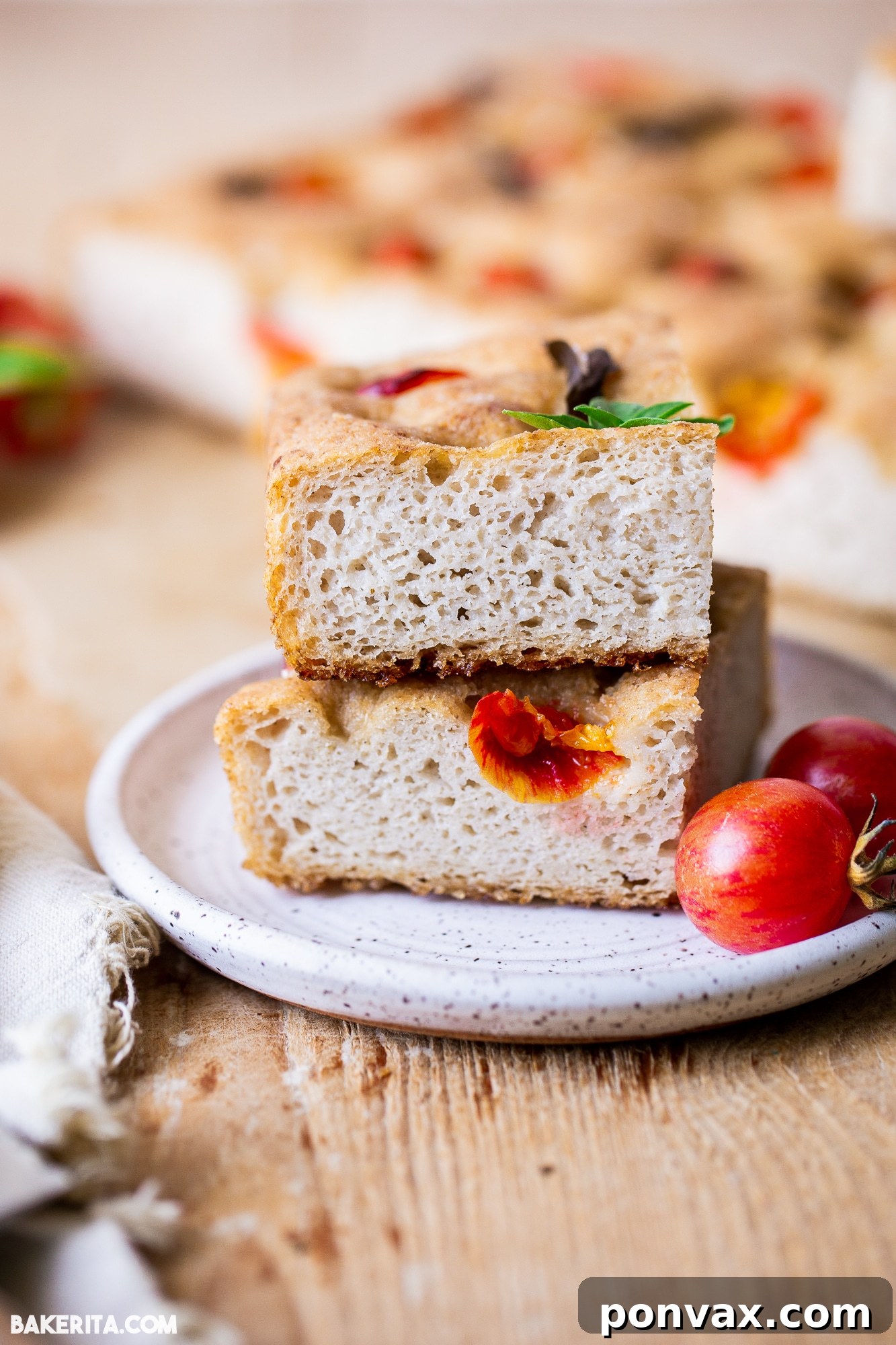
This Gluten-Free Sourdough Focaccia Bread is an incredibly simple, seven-ingredient recipe that leverages gluten-free sourdough discard. It’s remarkably easy to prepare, yielding a focaccia that is exceptionally fluffy, soft, and utterly delicious! Perfect for dipping in high-quality olive oil, crafting gourmet sandwiches, or transforming into delightful sourdough croutons.
Looking to make focaccia without a sourdough starter? You’ll love this quick and easy gluten-free focaccia recipe made with yeast!
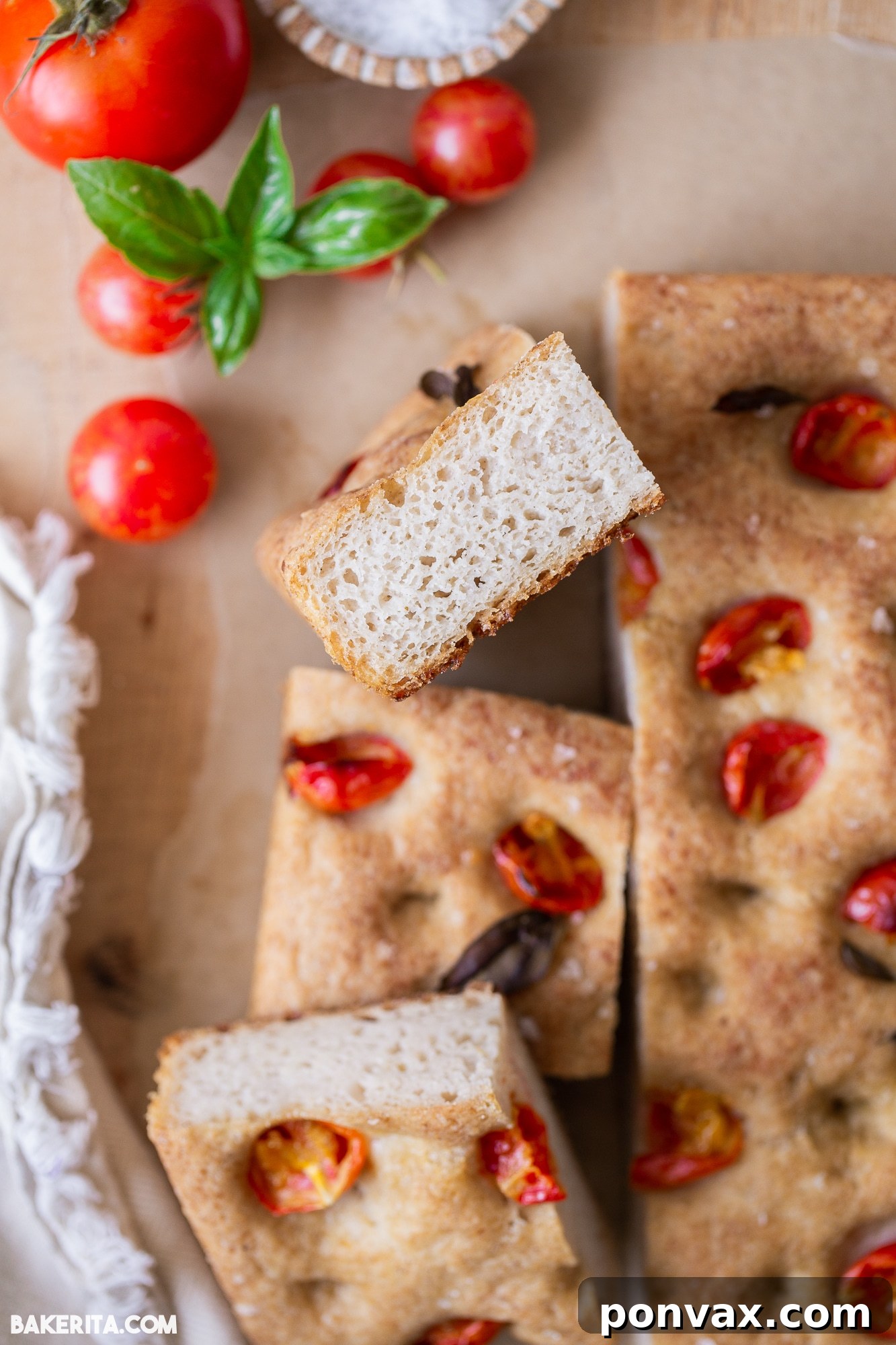
Effortless Gluten-Free Sourdough Focaccia: A Simple & Flavorful Recipe
Embarking on my journey into the world of gluten-free sourdough bread, I quickly found myself eager to experiment with focaccia. Despite never having baked focaccia before—gluten-free, sourdough, or otherwise—the prospect was both exciting and a little daunting. Initial searches for sourdough focaccia recipes often presented lengthy, complex instructions, many of which included eggs, a common binding agent that I wished to avoid to keep my recipe vegan. It became clear that if I wanted a truly simple and accessible gluten-free sourdough focaccia, I would have to forge my own path.
Thankfully, the universe of gluten-free baking proved to be on my side. What I discovered was a revelation: gluten-free sourdough focaccia doesn’t have to be complicated! In fact, it can be incredibly straightforward. This recipe ingeniously utilizes sourdough discard, meaning you don’t need a highly active starter, and it requires no eggs. Best of all, it calls for a mere seven core ingredients—two of which are simply water and salt. This streamlined approach makes baking delicious, fluffy focaccia accessible to everyone, even those new to sourdough or gluten-free baking.
This award-winning recipe is a testament to the versatility of my gluten-free sourdough pizza crust, which has already garnered immense popularity. If you appreciate the simplicity and flavor of this focaccia, you absolutely must try its pizza crust cousin!
Already in love with this focaccia recipe? Explore more of my favorite gluten-free sourdough creations!
Madison says: “This is the best gluten free bread ever! This is my third time making it (the last one I made I brought to a potluck and got compliments). Thank you for putting this lovely recipe with its AMAZINGLY EASY to follow instructions out into the universe.”
Key Ingredients for Your Gluten-Free Sourdough Focaccia
Creating this wonderfully airy and soft gluten-free focaccia relies on a thoughtful selection of ingredients, each playing a crucial role in achieving the perfect texture and flavor. Here’s a closer look at what you’ll need:
- Psyllium Husk: This is a cornerstone ingredient in many gluten-free bread recipes, and particularly important here. We use whole psyllium husk (not powder, as it absorbs liquid differently and can make the dough too stiff). Psyllium acts as a binder, mimicking gluten by providing elasticity, structure, and that coveted chewy texture that is often missing in gluten-free baked goods. It helps the dough hold together and creates a soft, pliable crumb.
- Water: As with all sourdough endeavors, using filtered water is always recommended. This prevents any chlorine or other chemicals found in tap water from potentially interfering with the delicate balance of your sourdough starter. Room temperature water is ideal for optimal mixing and allowing the psyllium to gel properly.
- Gluten-Free Sourdough Starter: This recipe is perfect for using up your gluten-free sourdough discard. This means your starter doesn’t need to be at peak activity or freshly fed; a discard from a recent feeding works perfectly. However, avoid using discard that has been sitting dormant in your fridge or freezer for an extended period, as it may lack the necessary vigor and flavor. The discard provides a fantastic depth of flavor and contributes to the focaccia’s characteristic light and airy texture.
- Starch: Starches are essential in gluten-free baking for lightness and tenderness. I prefer using potato, tapioca, or arrowroot starch. These starches help create a delicate crumb structure and prevent the focaccia from becoming too dense or heavy. You can choose one based on what you have on hand or what gives you the best results.
- Gluten-Free Flours: A combination of gluten-free whole grain flours provides structure, fiber, and a more complex flavor profile. I typically use a blend of brown rice flour, sorghum flour, and/or quinoa flour, all of which I’ve thoroughly tested with excellent results. Other grain and pseudograin flours like cassava, teff, or buckwheat can also work well, offering different nuances in taste and texture. The key is to use flours that contribute positively to the bread’s structure and overall mouthfeel.
- Sea Salt: Beyond basic seasoning, sea salt enhances all the other flavors in the focaccia. It’s crucial for balancing the slight tang from the sourdough and ensuring a well-rounded taste. Adjust the amount slightly if you plan on adding very salty toppings.
- Olive Oil: A high-quality olive oil is non-negotiable for authentic focaccia. It’s not just for greasing the pan; a generous drizzle over the dough before baking infuses the bread with its distinctive Mediterranean flavor, creates a beautifully crisp crust, and helps achieve those signature dimples.
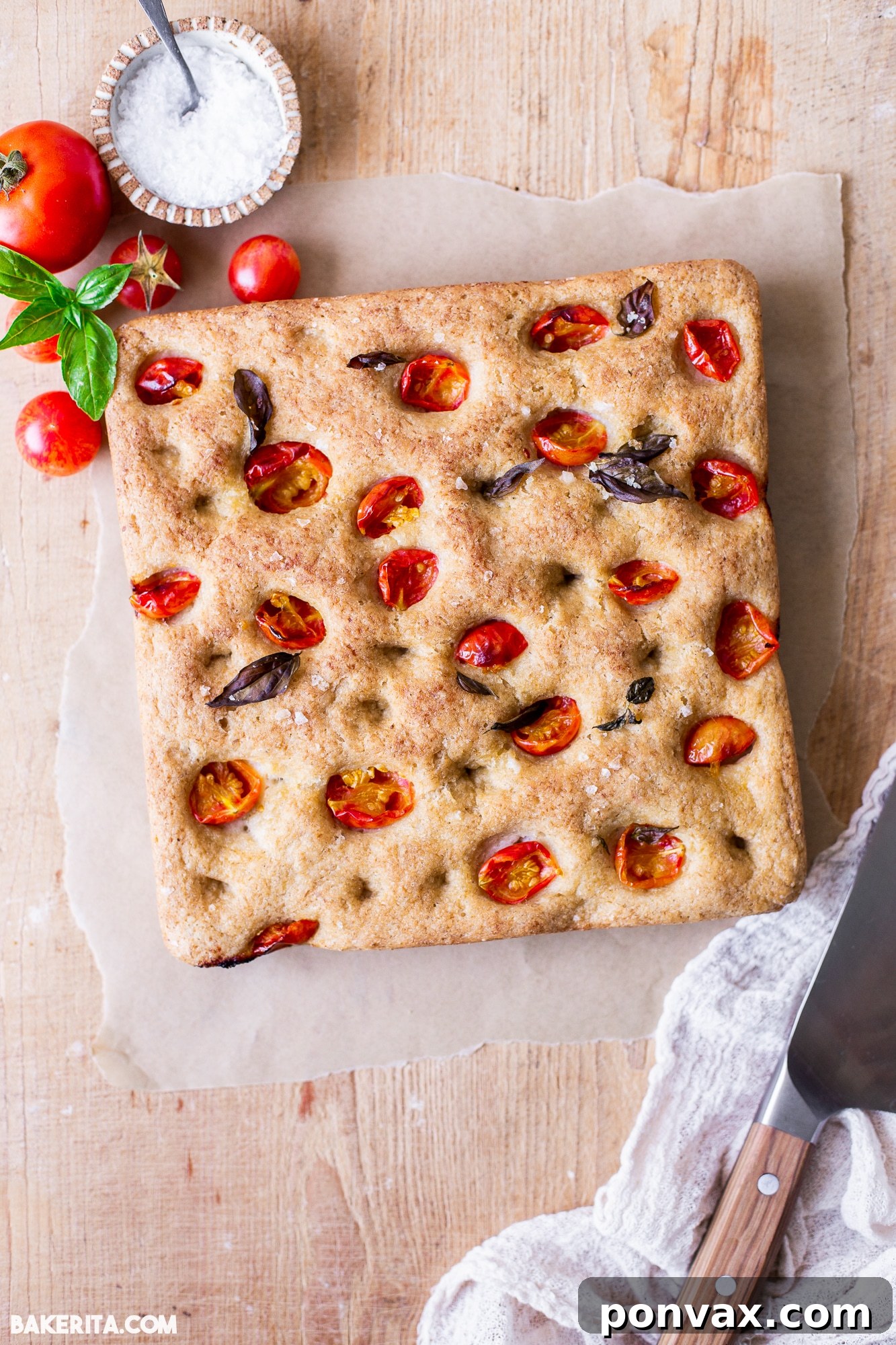
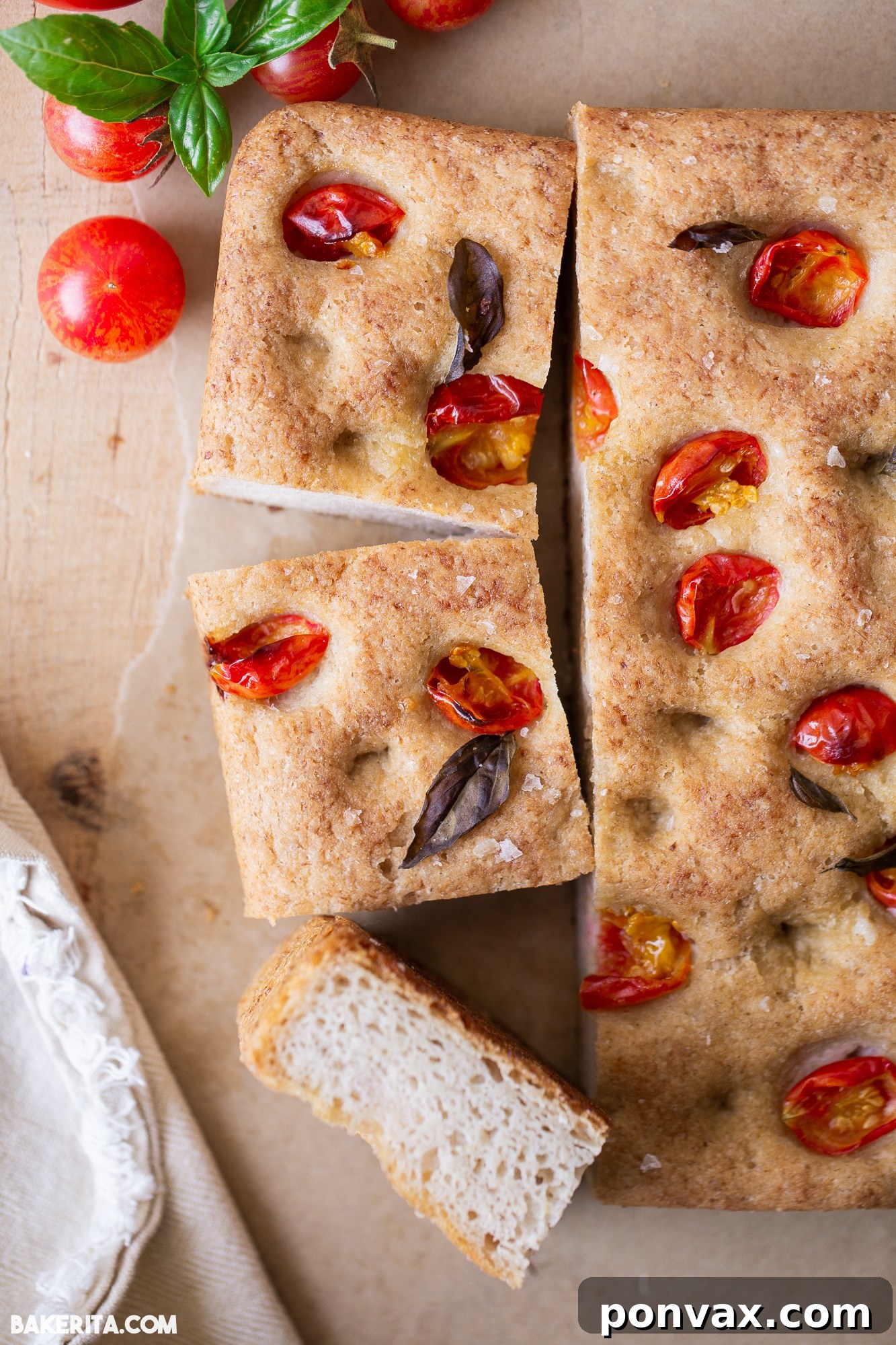
- Toppings of your choice: While this sourdough focaccia is delightful on its own, it’s also a perfect canvas for creative toppings. Sometimes I enjoy it plain, but often I press juicy cherry tomatoes into the dough, as pictured, or sprinkle fresh herbs like rosemary and thyme. The possibilities are endless – let your imagination guide you! (See my comprehensive idea list below for inspiration.)
Can I Use a Gluten-Free Flour Blend for This Recipe?
Absolutely! Using a pre-made gluten-free flour blend can simplify the baking process significantly, especially if you prefer not to measure out individual flours and starches. The key is to use the right blend to ensure the focaccia maintains its wonderful texture.
If you’re inclined to create your own mix, I highly recommend my homemade gluten-free bread flour blend. This blend is specifically formulated for bread-making, containing an ideal ratio of both starches and whole grain flours. When using this blend for this focaccia recipe, you will replace the total amount of starch and individual flours with 335g of the homemade blend.
For those who prefer the convenience of a store-bought option, I’ve had excellent results with this multi-flour blend from Vitacost. This particular blend is commendable because it closely matches the ingredient profile of what my recipe calls for, and importantly, it contains no unnecessary additives or gums that can sometimes alter the texture or flavor of your final product.
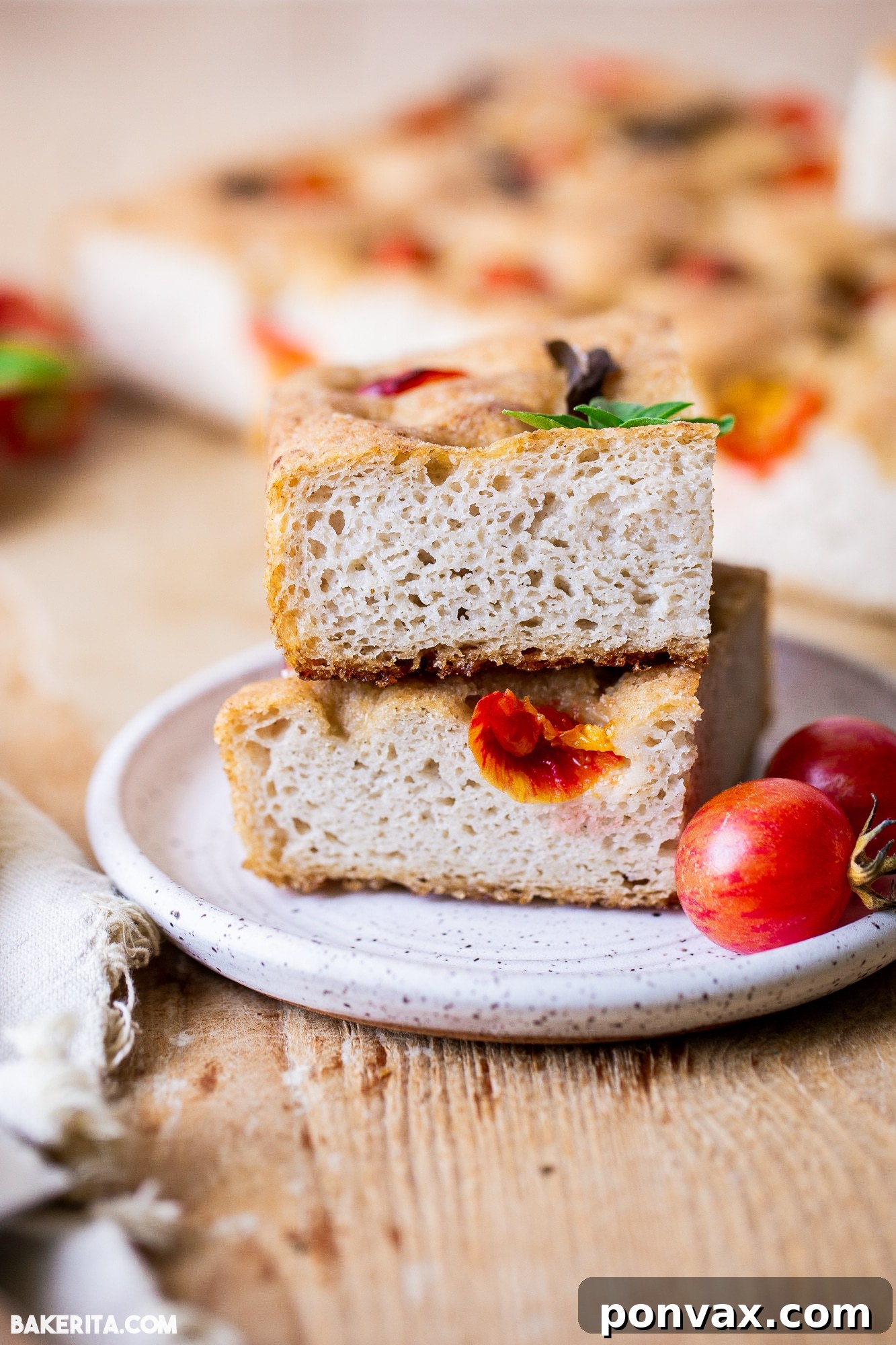
Simple Steps to Crafting Perfect Gluten-Free Socaccia:
Achieving this light and airy gluten-free sourdough focaccia is simpler than you might imagine. The full, detailed recipe can be found in the recipe card below, but here’s a step-by-step overview to guide you:
- Prepare the Psyllium Gel: Begin by combining the psyllium husk with water in a large bowl. Allow this mixture to sit for approximately 5 minutes. During this time, the psyllium will absorb the water and transform into a thick, gelatinous consistency, which is crucial for binding the gluten-free dough. Once gelled, add your gluten-free sourdough discard and mix thoroughly until well combined.
- Combine Dry Ingredients: While the psyllium is gelling, take another bowl and whisk together all of your chosen gluten-free flours (starches and whole grain flours) and the sea salt. Ensuring these dry ingredients are well-mixed will help distribute the salt and flours evenly throughout the dough.
- Form the Dough: Gradually incorporate the dry flour mixture into the psyllium-sourdough starter mixture. Stir vigorously until a smooth, cohesive dough forms. The dough will feel thick, soft, and somewhat squishy. If it feels overly sticky, don’t worry—simply let it rest for a few more minutes. This additional resting time allows the psyllium and flours to fully hydrate and absorb any remaining moisture, resulting in a more manageable dough.
- Press into Pan: Lightly grease a 9×9-inch baking pan with olive oil. Carefully transfer the dough into the prepared pan and gently press it out to fill the entire pan, ensuring an even thickness. Alternatively, you can shape it into a similar size on a parchment-lined baking sheet if you prefer a free-form focaccia.
- First Rise (Proofing): Cover the pan loosely with plastic wrap or a clean kitchen towel. Allow the dough to rise at a warm room temperature for three to five hours. The exact time will depend on the warmth of your kitchen and the activity of your sourdough discard. The dough is ready when it looks noticeably lighter, feels puffy to the touch, and has visibly increased in volume. For deeper flavor development, you can also opt for a slower rise in the refrigerator for up to a day.
- Preheat Oven: About an hour before you plan to bake, preheat your oven to 425ºF (220ºC). This ensures the oven is thoroughly heated and maintains a consistent temperature, which is vital for a good oven spring and a crisp crust.
- Dimple and Drizzle: Once the focaccia has completed its rise, generously drizzle the surface of the dough with a good quality olive oil. Using your fingertips, gently press dimples into the dough. Be careful not to press too hard or deflate the airy structure that has developed during the rise. These dimples will hold the olive oil and create those characteristic pockets of flavor and texture.
- Add Toppings: Now is the time to get creative! Add your desired toppings – whether it’s fresh herbs, thinly sliced vegetables, or a sprinkle of flaky sea salt. Even just a sprinkle of flaky sea salt is enough to elevate its flavor.
- Bake to Golden Perfection: Place the pan in the preheated oven and bake for 35 to 40 minutes, or until the focaccia is beautifully golden brown on top and baked through. For an accurate measure of doneness, the internal temperature should reach approximately 210°F (99°C) (slightly less if you are baking at a higher altitude).
- Cooling: Once baked, remove the focaccia from the oven. Let it cool in the pan for about 30 minutes before carefully transferring it to a wire baking rack to cool completely. Cooling on a rack is important to allow air circulation, preventing the bottom of the focaccia from becoming soggy.
- Enjoy & Store: Your gluten-free sourdough focaccia is now ready to be enjoyed! It’s best warm, but also delicious at room temperature. Store any leftovers in an airtight container at room temperature for two to three days, or in the fridge for up to a week. For longer storage, slice and freeze individual portions for up to six months.
The Best Gluten-Free Sourdough Focaccia Toppings:
The beauty of focaccia lies in its versatility as a culinary canvas. While delicious plain, adding toppings can elevate your gluten-free sourdough focaccia to a new level of flavor and visual appeal. Here are some of the best topping ideas to inspire your next bake:
- Tomatoes: Whether you opt for sweet slow-roasted tomatoes that burst with flavor or fresh, thinly sliced raw cherry tomatoes for a pop of color and acidity, tomatoes are a classic focaccia topping.
- Fresh or Dried Herbs: Rosemary and thyme are traditional choices that lend an aromatic, earthy note. Other fantastic options include oregano, basil, or a mix of Italian herbs.
- Cheese: For an indulgent twist, sprinkle with your favorite vegan or regular cheese. Feta, mozzarella (dairy-free or traditional), or Parmesan (vegan or conventional) melt beautifully and add a savory richness.
- Onions : Thinly sliced raw red onions offer a sharp bite and beautiful color, while caramelized onions provide a sweet, savory depth that is truly irresistible.
- Edible Flowers: For a stunning and elegant presentation, press edible flowers like pansies, chive blossoms, or calendula into the dough before baking.
- Your Favorite Seasoning Blend: Beyond individual herbs, consider a prepared spice blend for a quick flavor boost. Everything bagel seasoning adds a delightful crunch and savory mix, while dukkah (an Egyptian nut and spice blend) or za’atar (a Middle Eastern herb and spice blend) introduce unique and exotic flavors.
- Artichoke Hearts: Jarred, drained artichoke hearts (marinated or plain) add a briny, tender texture and Mediterranean flair.
- Roasted Garlic: Soft, sweet, and mellow roasted garlic cloves pressed into the dough before baking will infuse the entire focaccia with their incredible aroma and taste.
No matter which topping or combination you choose, I always recommend a generous sprinkle of flaky sea salt over the entire focaccia just before it goes into the oven. This final touch enhances the flavors and adds a pleasant textural contrast.
Best Ways to Enjoy Your Homemade Gluten-Free Sourdough Focaccia:
Once your perfectly baked gluten-free sourdough focaccia emerges from the oven, the possibilities for enjoying it are truly endless. Its soft interior and crisp exterior make it incredibly versatile. Here are some of the best ways to savor every delicious bite:
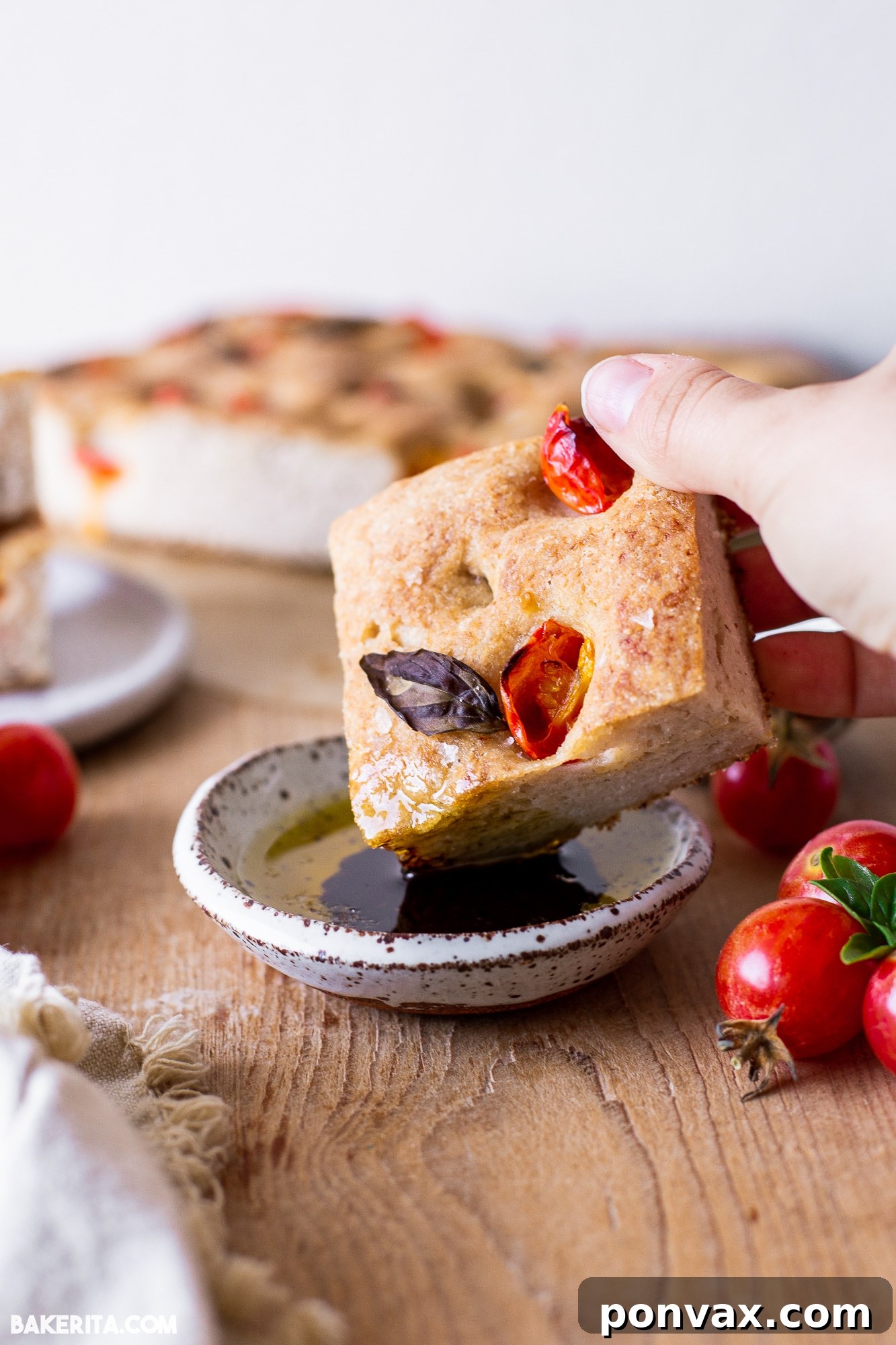
- Appetizer Delight: Serve it simply as an appetizer, cut into squares or strips, and invite your guests to dunk it into a flavorful mixture of high-quality olive oil and balsamic vinegar. This classic Italian way to enjoy focaccia allows its pure flavor to shine.
- Sourdough Croutons: Transform any leftover focaccia into homemade, crispy gluten-free sourdough croutons. Simply cube the focaccia, toss with a little olive oil and your favorite seasonings, then bake until golden and crunchy. They’re perfect for topping salads or enriching soups.
- Soup’s Perfect Companion: There’s nothing quite like a warm, hearty piece of focaccia to accompany your favorite soup. Its absorbent texture is ideal for soaking up the rich broth of a creamy broccoli quinoa soup with cashew cream, or any other comforting stew. Pair it with my creamy broccoli quinoa soup with cashew cream for an unforgettable meal.
- Gourmet Sandwich Bread: Ditch ordinary sandwich bread and elevate your lunch by using slices of this gluten-free sourdough focaccia. Its robust flavor and soft texture make it the ideal foundation for a hearty sandwich. Try it with my vegan tempeh BLT sandwich for a truly satisfying experience.
Craving More Gluten-Free Sourdough Goodness?
If you’ve enjoyed making and eating this delicious focaccia, you’ll be thrilled to discover the wide world of gluten-free sourdough baking. The versatility of sourdough discard extends far beyond bread. Here are some other fantastic recipes to continue your gluten-free sourdough adventure:
- How to Make a Gluten-Free Sourdough Starter: Master the foundation by learning how to create your own vibrant gluten-free sourdough starter from scratch. This essential guide will set you up for success.
- Easy Gluten-Free Sourdough Pizza Crust: Use your sourdough discard to create a phenomenal, chewy pizza crust that rivals any traditional version. Perfect for family pizza night!
- Gluten-Free Sourdough Chocolate Chip Cookies: Sourdough isn’t just for savory bakes! These cookies are chewy, subtly tangy, and incredibly satisfying, proving sourdough can elevate sweets too. Plus, they’re dairy-free and vegan!
- Gluten-Free Sourdough Scones: Light, tender, and boasting that wonderful sourdough tang, these scones are perfect for breakfast or an afternoon tea.
By Rachel Conners
Gluten-Free Sourdough Focaccia
4.92 from 45 reviews
This Gluten-Free Sourdough Focaccia Bread is a simple seven-ingredient focaccia recipe that’s made with gluten-free sourdough discard. It’s easy to make, super fluffy and soft, and absolutely delicious! Perfect for dunking in olive oil, using as sandwich bread, or making into sourdough croutons.
Pin Recipe
- Prep Time:
- 15 mins
- Cook Time:
- 40 mins
- Rising Time:
- 4 hrs
- Total Time:
- 4 hrs 55 mins
- Servings:
- 9 large slices
Ingredients
- 20 g psyllium husk (see Notes)
- 450 g filtered water, room temperature
- 225 g gluten-free sourdough starter (can be active or fresh discard)
- 120 g starch of your choice (such as potato starch, tapioca starch, or arrowroot starch. See Notes.)
- 215 g gluten-free whole grain flours of your choice (such as quinoa flour, sorghum flour, brown rice flour, or combination. I have tested with these three. See Notes.)
- 12 g to 15g sea salt (use the smaller amount if you’re adding salty toppings)
- Olive oil, for drizzling on top
- Toppings of choice: herbs, flaky sea salt, tomatoes, raw or caramelized onions, etc. (be creative!)
Instructions
- Grease a 9×9″ square baking pan with olive oil; set aside.
- Combine the psyllium husk (20 g) and the filtered water (450 g) in a large bowl or the bowl of a stand mixer. Let it thicken and gel up for about 5 minutes. Add in the gluten-free sourdough starter (225 g) and mix to combine.
- Add in the starch (120 g), flour (215 g), and sea salt (12-15 g). Mix until a smooth dough forms. If the dough seems sticky, let it rest for a few more minutes to let the psyllium and flours absorb.
- Press the dough into your prepared pan, or press it into a similarly sized shape on a baking sheet.
- Let rise for 3 to 5 hours at warm room temperature, or for up to a day in the refrigerator. The dough will feel lighter and puffy when it’s ready.
- An hour before you’re ready to bake, preheat the oven to 425ºF (220ºC).
- When it’s fully risen, drizzle the dough with a healthy glug of olive oil and use your fingers to press dimples into the dough.
- Add toppings (herbs, flaky sea salt, tomatoes, onions, etc.) if desired, or just sprinkle with flaky sea salt.
- Bake for 35 to 40 minutes, or until golden brown and baked through. If you’d like to test for temperature, you’re looking for an internal temp of about 210°F (99°C) (or a little less if you’re at altitude).
- Let cool for 30 minutes in the pan and then remove from the pan and allow to cool completely on a wire baking rack (this keeps the bottom from getting soggy).
- Store at room temperature for two to three days, in the fridge for up to a week, or slice and freeze in an airtight container for up to six months.
Notes
If you’d like to replace the starch and flour with a gluten-free flour blend, I recommend using my homemade gluten-free bread flour blend. In this case of this recipe, use 335g of the blend.
If you prefer a store-bought blend, I like this multi-flour blend from Vitacost. This blend uses very similar ingredients to the ones my recipe calls for, with no additives or gums.
Did you make this recipe? Please consider leaving a star rating and review!