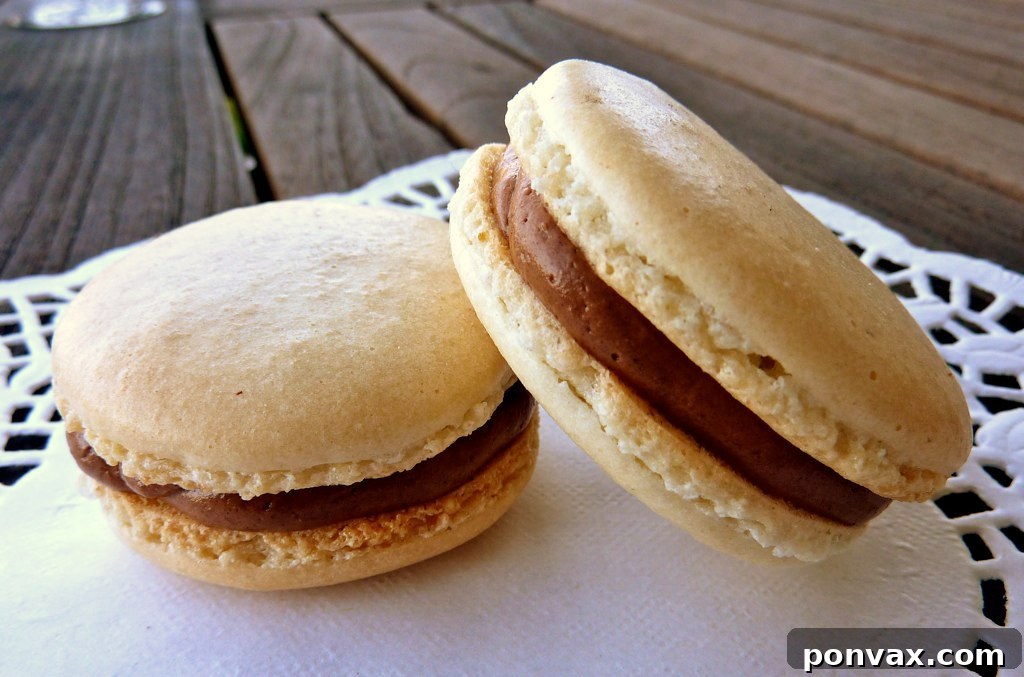
Mastering Vanilla French Macarons with Rich French Chocolate Buttercream
Your comprehensive guide to crafting exquisite vanilla French macarons, complete with essential tips for success and a recipe for the most decadent, creamy French chocolate buttercream.
There are days that simply radiate positivity, where you wake with a smile, a sense of quiet contentment settling in your soul. Recently, such days have been a rare gift, lost amidst the whirlwind of life’s demanding pace. Between fulfilling a colossal baking order—one hundred bags of cookies, a testament to countless hours of dedication—and meticulously completing college applications before my best friend, Sarah, arrives from Canada for winter break, my schedule has been relentlessly packed. Yet, today, the dawn brought a different perspective. I woke up realizing that the very things causing my stress are, in fact, sources of immense joy and future excitement.
My “stress” over baking is merely the pressure of managing a high volume of something I absolutely adore. The process itself is a therapeutic dance of ingredients, a creative outlet that consistently brings me happiness. And when I truly reflect on it, college applications, despite the repetitive paperwork (who knew I’d write my name and birthday so many times?), represent the thrilling gateway to the next chapter of my life. It’s the initial stride towards building the future I envision. A cliché, perhaps, but profoundly true nonetheless.
The Allure of French Macarons: A Baker’s Triumph
Beyond the personal reflections, another significant reason for today’s buoyant spirit traces back to an extraordinary baking session yesterday. I ventured into the intricate world of French macarons, a pastry renowned for its delicate charm and notoriously finicky nature. And guess what? They worked! Not just worked, but emerged from the oven with perfect “feet,” smooth tops, and an undeniable elegance. The sheer thrill of this accomplishment, especially on the first attempt (mostly!), felt nothing short of magical.
Of course, calling myself “magical” might be a slight exaggeration. I attribute much of it to a stroke of beginner’s luck, combined with a crucial lesson learned. My initial batch, rushed onto the baking sheet after a mere 10 minutes of resting, was a disheartening sight: ugly, cracked, and footless. It turns out that widely circulated advice about resting time being optional is, for me, completely false. Resting is *paramount*. As I slumped on the couch, lamenting my first batch of sad cookies, my second tray of macarons sat patiently on the counter, undergoing whatever mystical transformation occurs during that resting period. When I finally remembered them and slid them into the oven with bated breath, they emerged as little princesses—flawless, beautiful, and utterly perfect. The screams of joy and celebratory jumps that ensued, witnessed by my cousin Sami, are a testament to the exhilarating moment of macaron success!
So, take it from my direct experience: allow your piped macarons to rest on the counter for at least an hour, or even longer, before baking. This crucial step, often referred to as “curing” or “drying,” allows a slight skin to form on the surface, which is essential for developing those characteristic “feet” – the ruffled base that lifts the macaron shell during baking. Trust me; this simple step can transform a deflated disaster into a delicate triumph.
The Rewarding Challenge of Macaron Baking
Admittedly, making macarons can be a demanding endeavor. The process often leaves the kitchen dusted in almond flour and powdered sugar, and requires meticulous attention to detail. These cookies are truly temperamental—you must treat them with precision and respect, or they simply will not cooperate. They demand patience, exact measurements, and a keen eye, but the immense sense of accomplishment that washes over you when you achieve a perfect batch is unequivocally worth every single effort.
If you haven’t yet, I wholeheartedly encourage you to embark on this rewarding baking journey. The confidence and pride you’ll feel are truly unparalleled. I’m already eager to experiment with new colors and exciting flavor combinations for my next batch! For this particular vanilla macaron recipe, I turned to the revered “macaron goddess” herself, Tartlette. Her expertise is undeniable, and her basic recipe, enhanced with my vanilla sugar and a luscious French chocolate buttercream filling, proved to be an absolute winner. If you’re feeling ambitious and ready for a delightful challenge today, give these a try!
Understanding the Key to Macaron Perfection
Successfully baking French macarons is often seen as the ultimate test of a baker’s skill. But it’s not about magic; it’s about understanding a few critical scientific principles and mastering specific techniques. Beyond the resting period, consistent oven temperature, proper ‘macaronage’ (the folding of the meringue and dry ingredients), and humidity control all play vital roles. Don’t be discouraged by initial failures; each attempt is a learning opportunity that brings you closer to perfection.
Essential Macaron Tips for Success:
- Accurate Measurements: Macarons are a science. Use a kitchen scale for precise measurements of all ingredients, especially the almond flour and powdered sugar.
- Room Temperature Egg Whites: Cold egg whites won’t whip to their full volume. Separate your eggs a day in advance and let the whites sit uncovered at room temperature to dehydrate slightly, yielding a more stable meringue.
- Sift Dry Ingredients Thoroughly: Sift the almond flour and powdered sugar together at least twice. This removes lumps and ensures a fine, smooth texture for your macaron shells.
- Perfect Macaronage: This is the most crucial step. Fold the dry ingredients into the meringue until the batter flows like “lava” or a thick ribbon from your spatula, but is not too runny. Undermixed batter will result in lumpy shells, while overmixed batter will lead to flat, footless macarons.
- Tap the Trays: After piping, firmly tap your baking sheets against the counter a few times. This releases air bubbles, preventing hollow shells and cracks.
- The Resting Period (Crucial!): As learned the hard way, allow piped macarons to rest for at least 1 hour, or until a dry skin forms. When you gently touch a shell, your finger should come away clean. This allows the shells to form a proper “foot” during baking.
- Oven Temperature: Macarons are sensitive to heat. Use an oven thermometer to ensure accuracy, and consider baking one tray at a time for consistent results.
The Recipe: Vanilla French Macarons with French Chocolate Buttercream
Vanilla French Macarons with French Chocolate Buttercream
Pin Recipe
25 mins
15 mins
40 mins
Ingredients
- 2 ¼ cups confectioners sugar, powdered sugar
- 2 cups almond flour
- 2 tablespoons granulated sugar
- 5 egg whites, at room temperature
For the French chocolate buttercream
- 3 oz egg yolk
- ½ pound granulated sugar (8 oz)
- 2 oz water
- 1 ¼ cups butter (2 1/2 sticks)
- 1 tsp vanilla extract
- ¼ cup cocoa powder
- ½ cup semisweet chocolate chips, melted and cooled
Instructions
- Preheat the oven to 200°F (93°C). (If you have two ovens, turn one to 200°F and the other to 375°F). Combine the confectioners’ sugar and almond flour in a medium bowl. If grinding your own nuts, combine nuts and a cup of confectioners’ sugar in a food processor and grind until very fine and powdery. If your almond flour is a bit wet, place it in the 200°F oven for about 10 minutes or until dry.
- Beat the egg whites in the clean, dry bowl of a stand mixer until they hold soft peaks. Slowly add the granulated sugar and continue beating until the mixture holds stiff, glossy peaks and has quadrupled in size.
- Sift a third of the almond flour mixture into the meringue and fold gently to combine. If adding zest or other flavorings, incorporate them now. Sift in the remaining almond flour in two batches, folding gently each time. Be careful not to overfold, but ensure all ingredients are fully incorporated.
- Spoon the mixture into a pastry bag fitted with a plain half-inch tip (e.g., Ateco #806). You can also use a Ziploc bag with a corner cut off. For easier filling, stand the bag upright in a tall glass and fold the top down before spooning in the batter.
- Pipe one-inch-sized (2.5 cm) mounds of batter onto baking sheets lined with nonstick silicone mats or parchment paper. Leave them sitting on the counter for at least an hour to form a skin.
- Bake the macarons for 5 minutes in the 200°F oven. Remove the pan and increase the oven temperature to 375°F (190°C) (or transfer the pan to another oven already at 375°F). Once the oven reaches temperature, return the pans and bake for an additional 7 to 8 minutes, or until lightly colored.
- Cool completely on a wire rack before filling.
For the French chocolate buttercream
- Add water and granulated sugar to a small saucepan. Place on medium-high heat until the syrup reaches 115°C (240°F). Do not stir once it begins to boil. While the sugar syrup is boiling, begin to whip the egg yolks on medium speed until they are light in color and considerably thickened (they should vaguely resemble a custard).
- Very CAREFULLY and SLOWLY pour the hot sugar syrup into the egg yolks while the mixer is still running. Avoid scrambling the eggs or crystallizing the sugar. Continue mixing on medium speed until the mixture is no longer hot to the touch (the side of the bowl should be about body temperature).
- Slowly add the butter in chunks, allowing each addition to be fully incorporated before adding more. Once all the butter has been added, mix in the vanilla extract, cocoa powder, and the melted and cooled chocolate. Add more cocoa powder to taste if a deeper chocolate flavor is desired.
- The buttercream will appear runny at first, but it will thicken considerably once refrigerated. Once firm enough, transfer the buttercream to a pastry bag and pipe it onto the cooled macaron shells.
Please consider leaving a star rating and review!
Troubleshooting Common Macaron Mistakes
- No Feet: This is often due to insufficient resting time (no skin formed), overmixing the batter, or an oven that’s too cool.
- Cracked Shells: Usually caused by trapped air bubbles (tap trays more firmly!), insufficient resting, or an oven that’s too hot.
- Hollow Macarons: Can be tricky, often linked to overwhipping the meringue, incorrect oven temperature, or issues with macaronage. Experimenting with baking times and temperatures can help.
- Lumpy Tops: Indicates the almond flour/powdered sugar mixture wasn’t sifted enough, or the batter was undermixed.
Serving Suggestions and Variations
These Vanilla French Macarons with French Chocolate Buttercream are delightful on their own, but can also be part of a larger dessert platter. Pair them with a cup of freshly brewed coffee or a delicate tea. For variations, consider:
- Different Fillings: Lemon curd, raspberry jam, salted caramel, coffee ganache, or even a simple vanilla bean buttercream.
- Flavorful Shells: Add a tiny amount of food coloring to the batter for vibrant shells. Extracts like almond, pistachio, or lemon can be incorporated into the batter (be careful not to add too much liquid).
- Toppings: A sprinkle of sea salt on the chocolate buttercream, a drizzle of contrasting chocolate, or edible glitter can add an extra touch of elegance.
The Ultimate Delight: Creamy French Chocolate Buttercream
The French chocolate buttercream in this recipe is more than just a filling; it’s a star in its own right. Unlike its American counterpart, French buttercream is made with egg yolks (often cooked with a hot sugar syrup) and butter, resulting in an incredibly rich, smooth, and less sweet consistency that melts in your mouth. The addition of cocoa powder and melted chocolate amplifies the depth of flavor, creating a luxurious counterpoint to the delicate vanilla macaron shells. It’s truly the perfect accompaniment, adding an intense chocolate experience without being overly heavy, allowing the subtle almond and vanilla notes of the macaron to shine through.