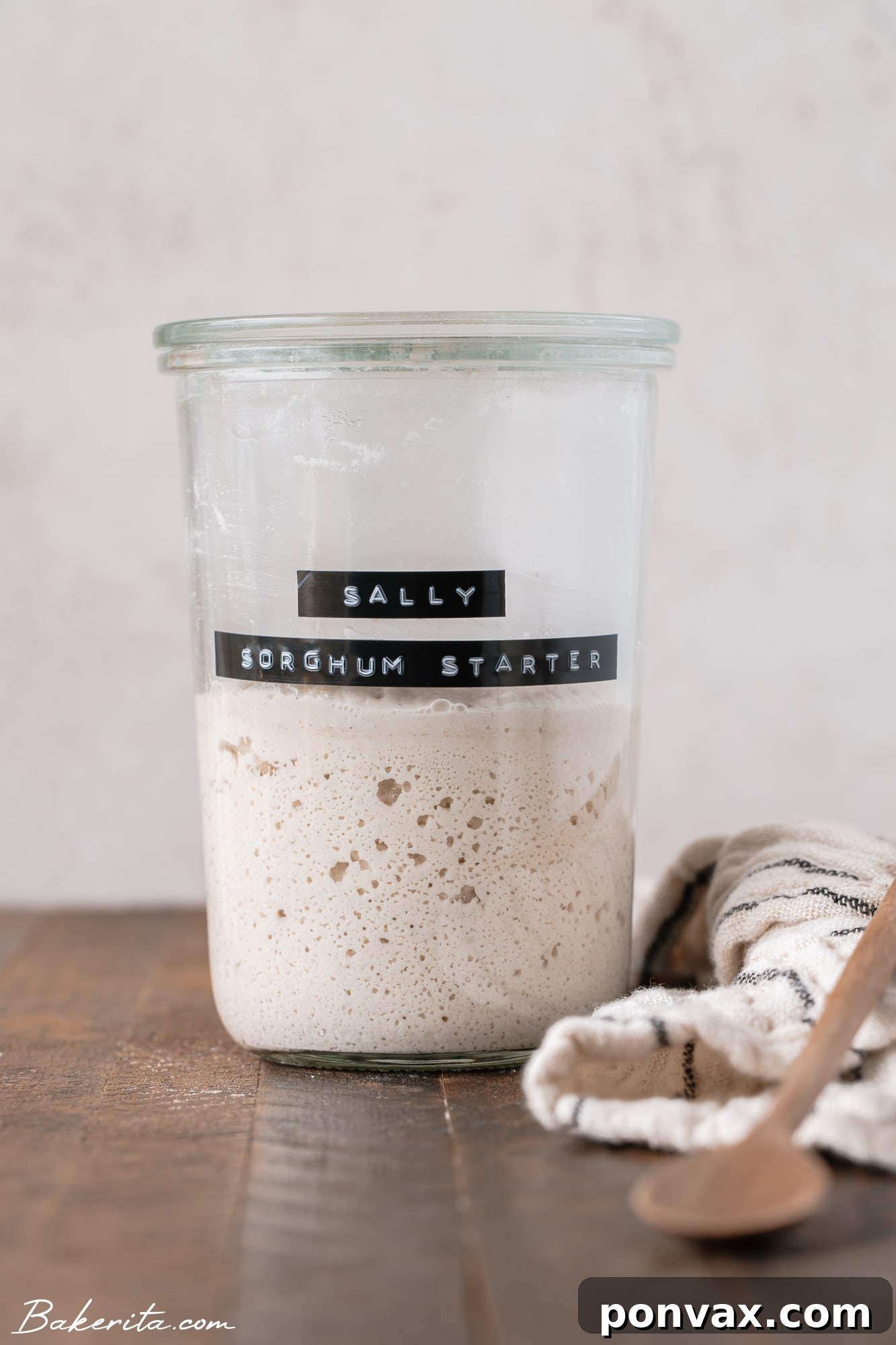
Ever dreamed of baking your own wholesome gluten-free sourdough bread? The journey begins with mastering **How to Make a Gluten-Free Sourdough Starter**! This foundational guide will walk you through the simple yet rewarding process, requiring just a few basic ingredients: gluten-free flour, water, and a sprinkle of patience and time.
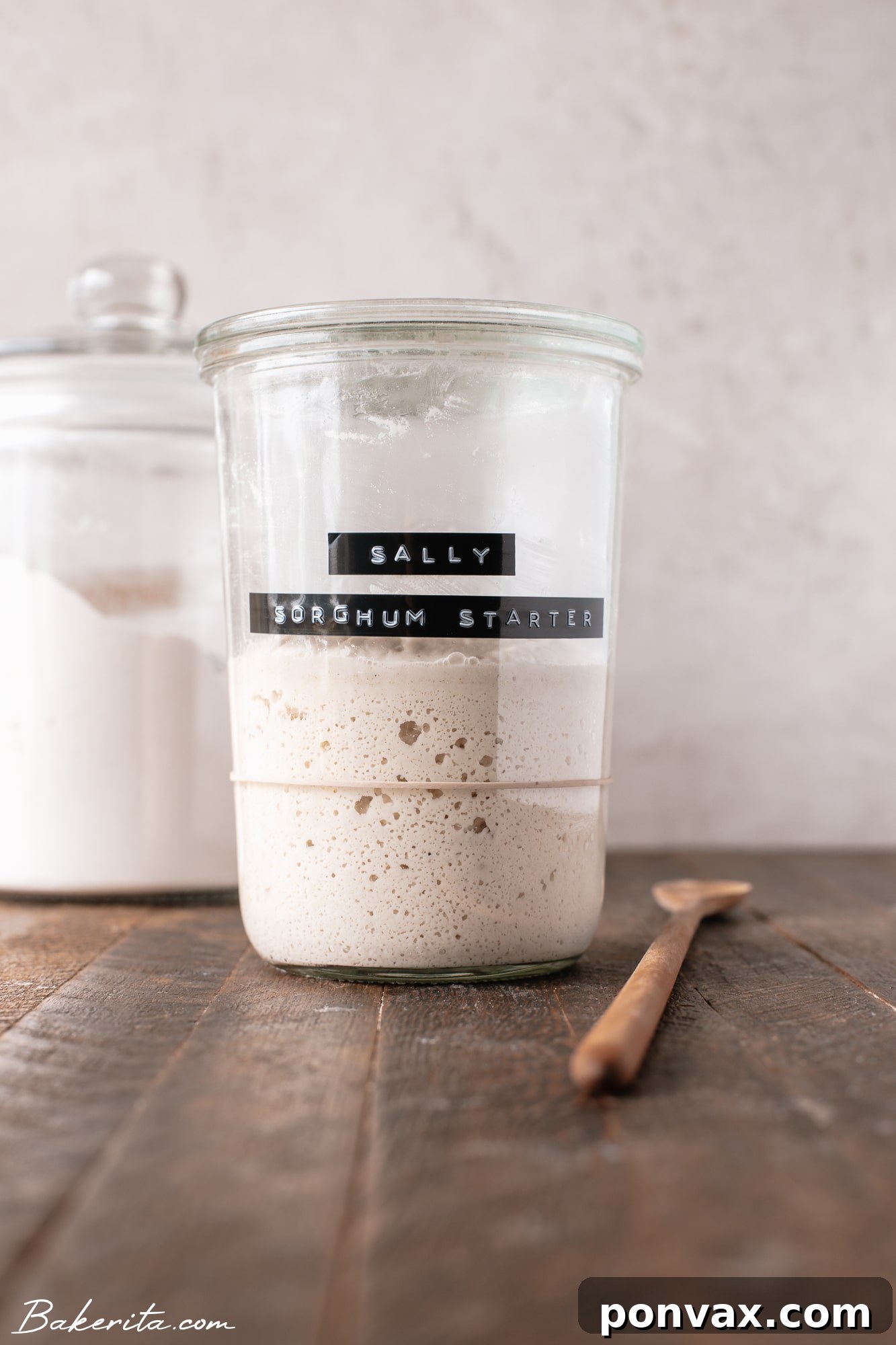
Embarking on the adventure of baking gluten-free sourdough bread opens up a world of culinary possibilities, including a variety of gluten-free sourdough discard treats. Before you can craft these delectable creations, you’ll need to cultivate your very own robust gluten-free sourdough starter. While creating a healthy and active starter from scratch typically spans one to two weeks of consistent daily care, the actual hands-on time each day is remarkably short—just a few minutes.
What is Sourdough, and is All Sourdough Gluten-Free?
Sourdough bread stands apart from conventional loaves due to its unique leavening agent: a sourdough starter. This starter is a fermented mixture of flour and water, housing naturally occurring wild yeasts and beneficial bacteria. This live culture is precisely what gives sourdough its characteristic tangy flavor and distinct texture, acting as the primary leavener for our gluten-free sourdough bread. It’s crucial to understand, however, that **not all sourdough is gluten-free**. Traditional sourdough starters are made with wheat flour, which inherently contains gluten. To ensure your sourdough products are truly gluten-free, you must consistently use gluten-free flours for both your starter and your bread.
The “sour” in sourdough doesn’t always imply an intensely tart flavor. The degree of sourness is largely controllable; a longer fermentation period will yield a more pronounced sour taste, while a shorter ferment can result in a milder flavor profile. This flexibility allows you to tailor your sourdough to your personal preference. Beyond taste, sourdough offers notable health advantages. As a fermented food, it’s often praised for its ability to support gut health by enhancing gut flora and contributing to a healthier microbiome. The natural fermentation process also predigests some of the flour’s components, breaking down complex carbohydrates and making sourdough easier to digest for many individuals compared to other breads that often contain various additives and commercial yeasts. This makes gluten-free sourdough an excellent choice for those seeking both flavor and digestive wellness.
The Fascinating Science of a Sourdough Starter
At its core, a sourdough starter is a living ecosystem crafted from just flour and water. So, how does this humble mixture transform into a dynamic agent capable of making bread rise? The magic lies in the process of fermentation, specifically the cultivation and harnessing of naturally occurring wild yeasts and beneficial lactic acid bacteria (LAB) present in the air and on the flour itself.
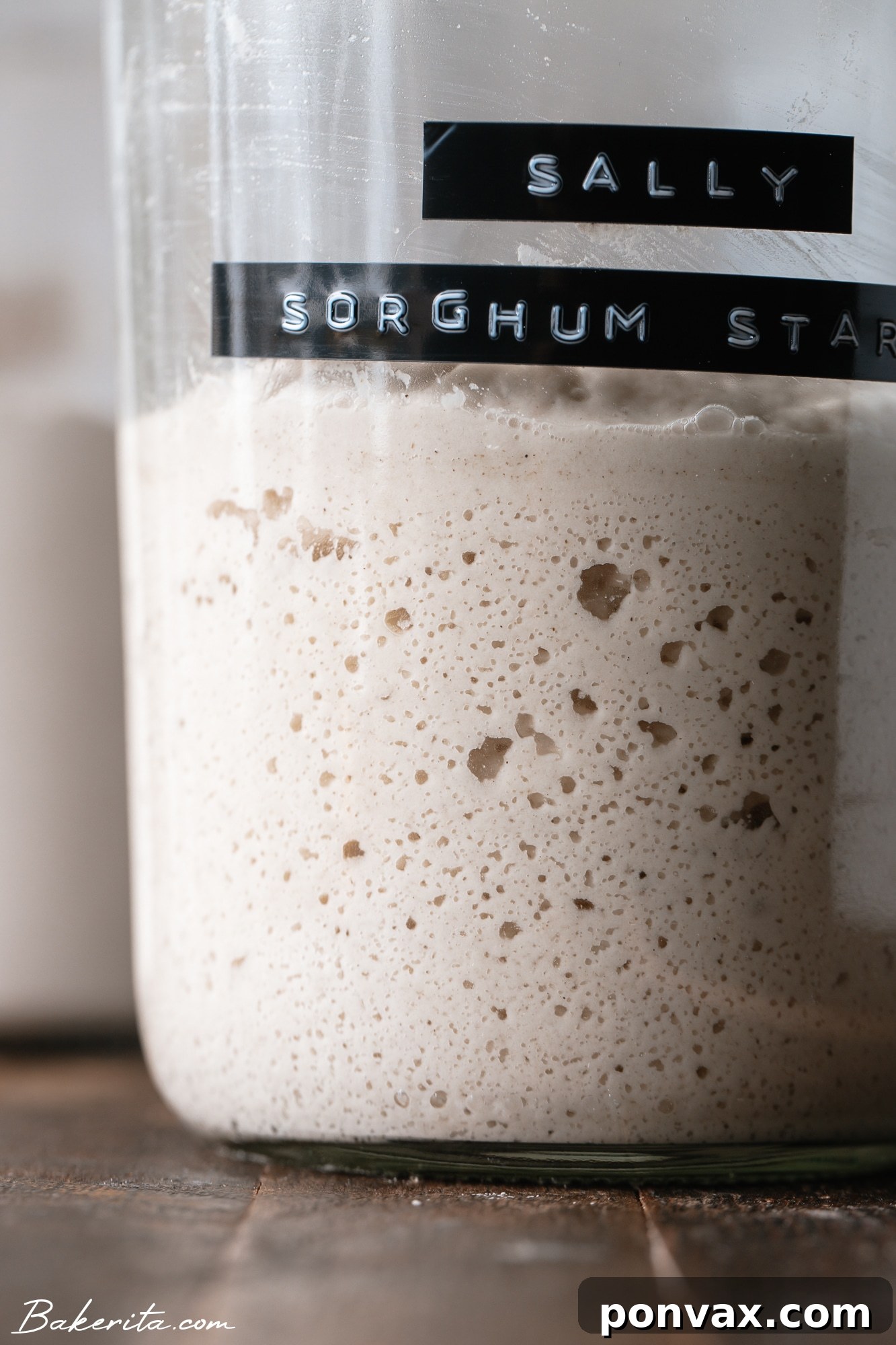
These microorganisms, primarily yeasts and LAB, feed on the starches and sugars found in the flour. As they metabolize these nutrients, they produce a variety of byproducts. The lactic acid and acetic acid generated by the bacteria are responsible for the distinctive “sour” flavor of sourdough. These acids also play a crucial role in improving the bread’s shelf life, contributing to its unique texture, and inhibiting the growth of undesirable molds. Simultaneously, the yeasts produce carbon dioxide gas. These tiny carbon dioxide bubbles are what cause your starter to visibly bubble and grow, and later, they create the airy, open crumb structure that defines exceptional sourdough bread. This intricate biological process, while seemingly complex, is a testament to natural synergy, working identically for both traditional gluten-filled and gluten-free sourdough starters, though their visual and textural characteristics may differ slightly. Understanding this science helps in nurturing a robust and reliable starter, capable of delivering consistent baking results.1
Essential Ingredients & Supplies for Your Gluten-Free Sourdough Starter
While the process of initiating a gluten-free sourdough starter is straightforward, it requires dedication over one to two weeks of consistent feeding and nurturing before it’s ready to produce fantastic bread. With only a few core ingredients and supplies, each component plays a critical role in your starter’s success. Choosing the right components sets the stage for a thriving culture.
- Gluten-Free Whole Grain Flour: This is arguably the most critical “ingredient” as it forms the backbone of your starter and provides the primary food source for the wild yeast and bacteria. It’s imperative to use whole grain gluten-free flour, such as brown rice flour, buckwheat flour, sorghum flour, or millet flour. These flours naturally contain a richer diversity of microorganisms necessary to kickstart robust fermentation. Avoid using pre-made gluten-free flour blends, which often include starches, gums, and other additives that can impede your starter’s development and produce inconsistent results. You’ll want to have approximately 3 lbs (around 1.3-1.4 kg) of your chosen whole-grain flour on hand to get your starter established and for initial feedings. In my experience, quinoa flour tended to create an unusually runny starter and is generally not recommended for initial starter creation due to its unique protein structure.
- Filtered Water: The quality of your water significantly impacts your starter’s activity and health. Always use filtered water for feeding your starter. Tap water, especially city water, can be high in chlorine or chloramines, which are potent antimicrobial agents designed to kill bacteria and can thus inhibit the growth of the beneficial bacteria and yeast essential for your starter’s development. Room temperature water is ideal as it helps the microbes become active more quickly, but not too warm as it could harm them.
- Warm Location: While not an ingredient you add, the ambient air and consistent temperature of your environment are crucial. Your starter relies on “wild yeast” and beneficial bacteria from the air and flour to colonize and grow. Maintaining a relatively warm environment (ideally between 70-80°F or 21-27°C) will significantly accelerate and encourage the fermentation process. A consistent warm spot helps the starter thrive and become active, as cooler temperatures can slow down or even stall its development.
- Glass Container/Jar: A clean, clear glass jar is perfect for housing your starter. Glass allows you to easily observe its activity, bubbling, and growth, which are key indicators of its health. A quart-sized (approximately 1-liter) jar is generally a perfect size for a mature, active starter. Ensure the jar isn’t too small, as an active starter can expand considerably and overflow, creating a mess. You’ll need a loose-fitting lid for the jar, or a clean tea towel secured with a rubber band, to allow for essential airflow while protecting the starter from airborne contaminants.
- Kitchen Scale: Precision is paramount in sourdough baking, especially when establishing and feeding your starter. A reliable digital kitchen scale is indispensable for accurately measuring your flour and water by weight, which is far more consistent and reproducible than volume measurements. This accuracy ensures your starter receives the correct hydration and nutrient balance with every feed.
- Wooden Spoon or Whisk: A non-reactive utensil is best for mixing your starter. A wooden spoon or whisk works well, ensuring you don’t introduce any unwanted metallic reactions that could potentially harm the delicate microbial balance of your starter.
Recommended Items for Gluten-Free Sourdough Starter
Buy Now →
Buy Now →
Buy Now →
How to Make a Gluten-Free Sourdough Starter: Step-by-Step
Creating your own gluten-free sourdough starter is a journey of observation and patience. While full instructions are provided in the recipe card below, here’s a detailed run-down to familiarize you with each stage of the process, ensuring your success.
Preparation for Your Sourdough Starter
- Clean Your Jar Thoroughly: Begin by washing your glass jar meticulously with hot water and soap. While it doesn’t need to be sterile like for canning, it must be impeccably clean to prevent any unwanted bacteria from interfering with the beneficial microbes you’re trying to cultivate. Rinse well to remove all soap residue.
- Weigh Your Empty Jar: Place your clean, empty jar on your kitchen scale and note its weight in grams. Use a label or a piece of tape to mark this weight on the jar. This simple step will be incredibly helpful later for accurately calculating the amount of starter remaining during feedings, especially when discarding, and helps maintain precision.
Days One and Two: Twice-Daily Feedings for Initial Activation
The initial days are about waking up the dormant wild yeasts and bacteria present in the flour and air. Consistency and a warm environment are paramount during this foundational period.
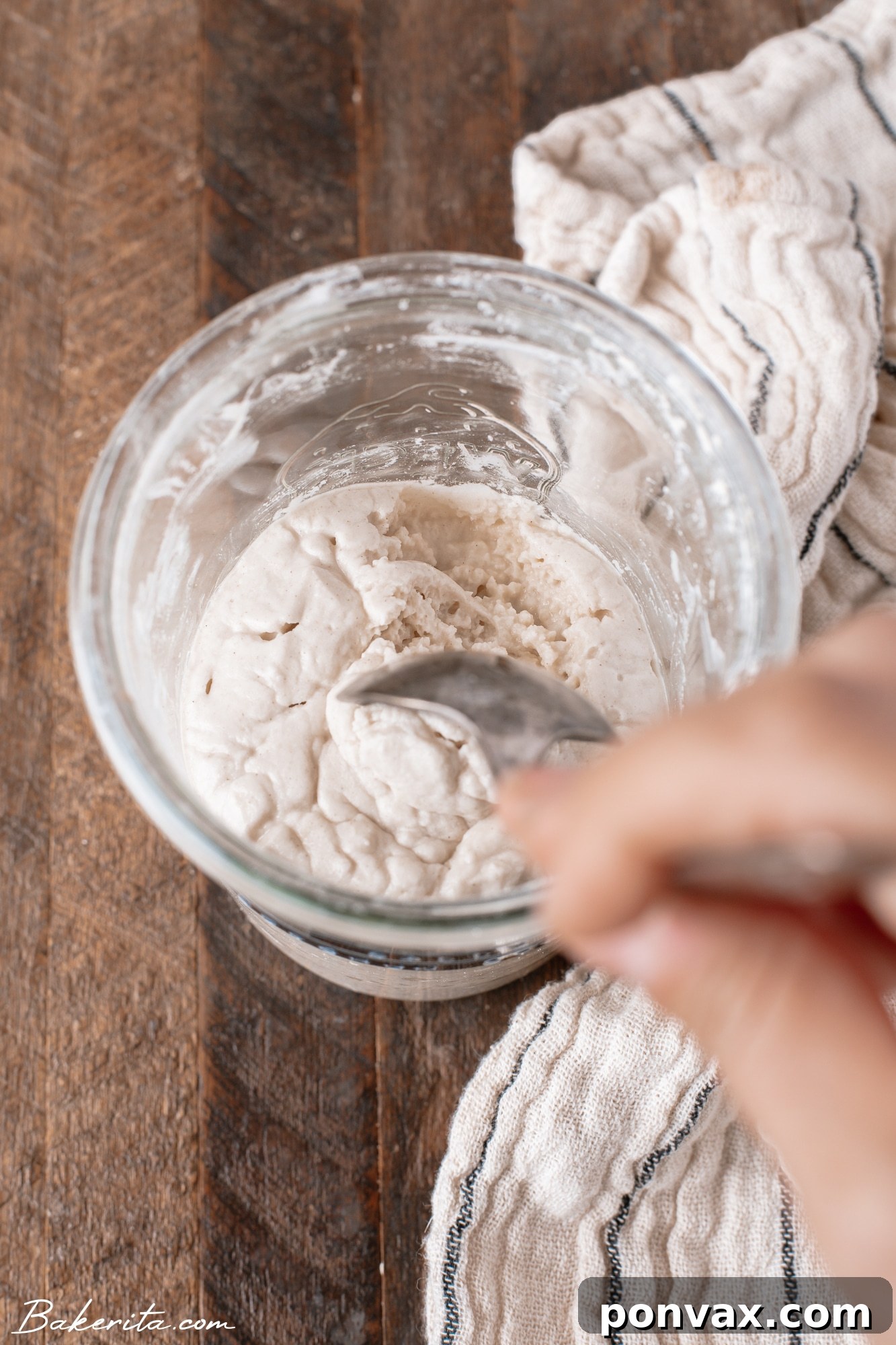
- Morning Feed: In your prepared jar, combine exactly 50g of whole-grain gluten-free flour with 50g of room temperature filtered water. Use a non-reactive spoon (like wood or stainless steel) to mix thoroughly until no dry spots of flour remain and the mixture is smooth. The consistency should be a thick, paste-like batter, similar to a pancake batter. If your chosen flour (e.g., buckwheat) is particularly absorbent, you might need to add a tiny bit more water (1-5g) to achieve this consistency. Scrape down the sides of the jar to keep it tidy and minimize dry crusts, then cover it lightly. A loose lid or a breathable tea towel secured with a rubber band works perfectly, allowing for some airflow while protecting the starter from contaminants. Place the jar in a consistently warm spot (ideally 70-80°F or 21-27°C), away from cold drafts. As a helpful visual aid for tracking growth, place a rubber band around the jar at the exact level of your freshly fed starter.
- Evening Feed: Approximately 10-12 hours after your morning feed, repeat the process. Add another 50g of flour and 50g of water to the existing mixture in the jar. Stir vigorously, ensuring everything is well combined, scrape down the sides, and cover lightly again. These twice-daily feedings during the initial phase are crucial for rapidly building the strength and activity of your nascent starter, providing frequent nourishment for the developing microbial colony.
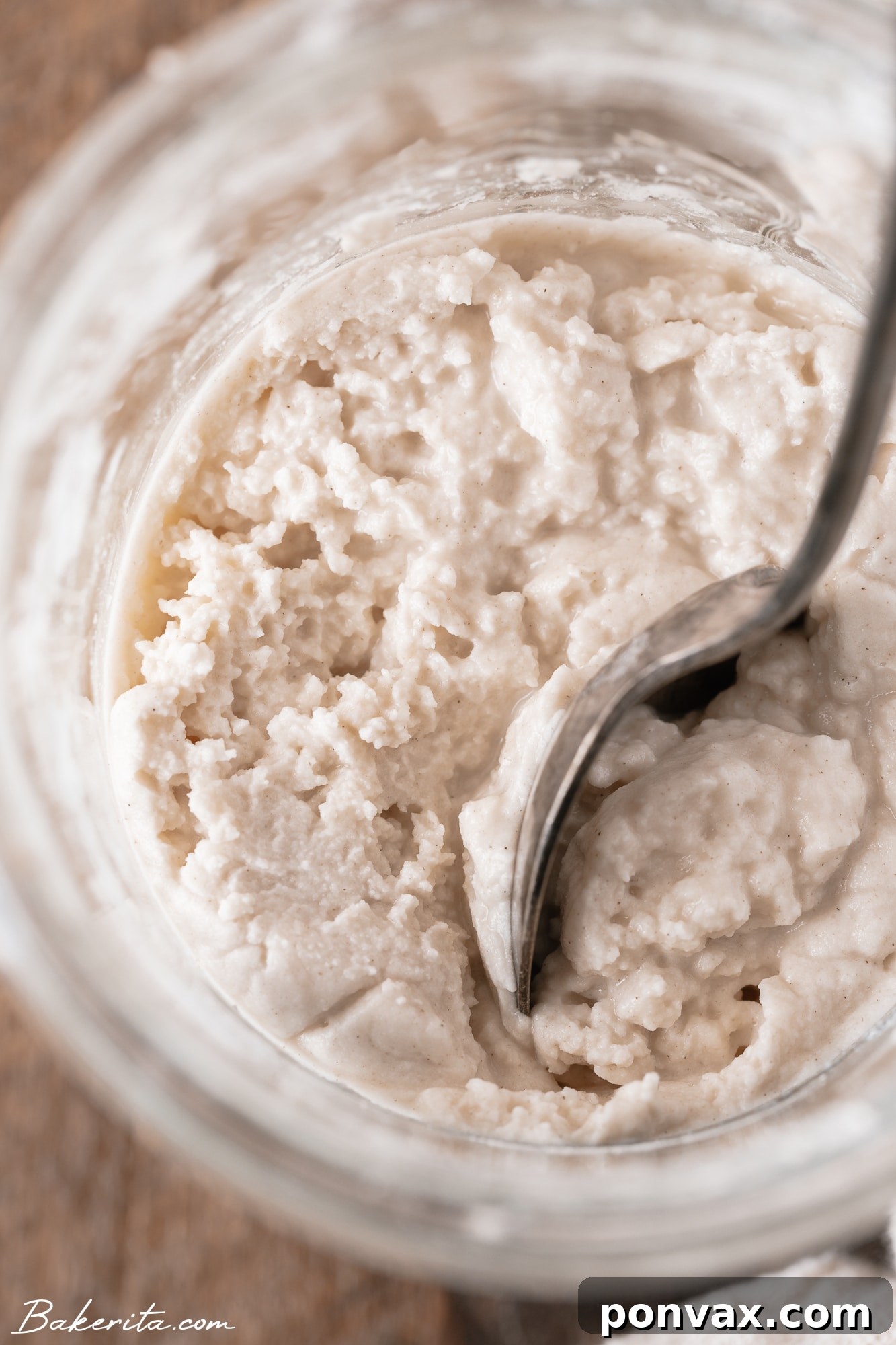
- Observe and Repeat: Continue this morning and night feeding routine for two full days (a total of four feedings). By the end of day two, you should begin to notice some small bubbles forming within the mixture, indicating initial microbial activity. You might also detect some unusual, yet typically not unpleasant, smells (they can range from earthy to slightly vinegary). These are positive signs of fermentation. Don’t be alarmed by any initial “off” smells; these often dissipate and evolve into a more pleasant, yeasty aroma as the starter matures.
Days Three Through Seven: The Discarding Phase and Building Strength
This period introduces the critical step of discarding, which helps concentrate the beneficial yeast and bacteria, leading to a more robust and stable starter. It’s also when you’ll truly start to see your starter evolve.
- First Discard (Morning of Day Three): Before your morning feed, you’ll need to remove a significant portion of your starter. Using your kitchen scale to measure accurately, discard all but 100g to 120g of the starter mixture. At this early stage, your starter may still contain some less desirable bacteria and isn’t yet fully mature, so it’s best to discard this portion (e.g., into the trash or compost). Later, when your starter is mature and healthy, this “discard” can be joyfully used in a variety of delicious recipes.
- Continued Discarding and Feeding: For the next five days (Days 3-7), continue the twice-daily feeding schedule. Before each feed, consistently discard all but 100g of starter, then feed it with 50g of flour and 50g of water. You might observe a temporary decrease in activity or a period of sluggishness after you begin discarding; this is entirely normal and indicates your starter is undergoing a stabilization phase, consolidating its strength and allowing the beneficial microbes to dominate. The goal at this stage is to build a healthy, active culture without creating excessive waste.
- Transition to Once-A-Day Feeds: Maintain the twice-daily feeding routine until you consistently observe good bubbling and a noticeable rise (often doubling or nearly doubling) after each feeding. The “rubber band” trick will be very useful here. Once these signs are consistent and the starter has a pleasant, yeasty smell, you can confidently transition to a once-a-day feeding schedule.
Week 2 and Beyond: A Mature, Active Starter and Peak Activity
By the second week, your starter should be showing clear signs of maturity and readiness for baking. This is where your patience truly pays off!
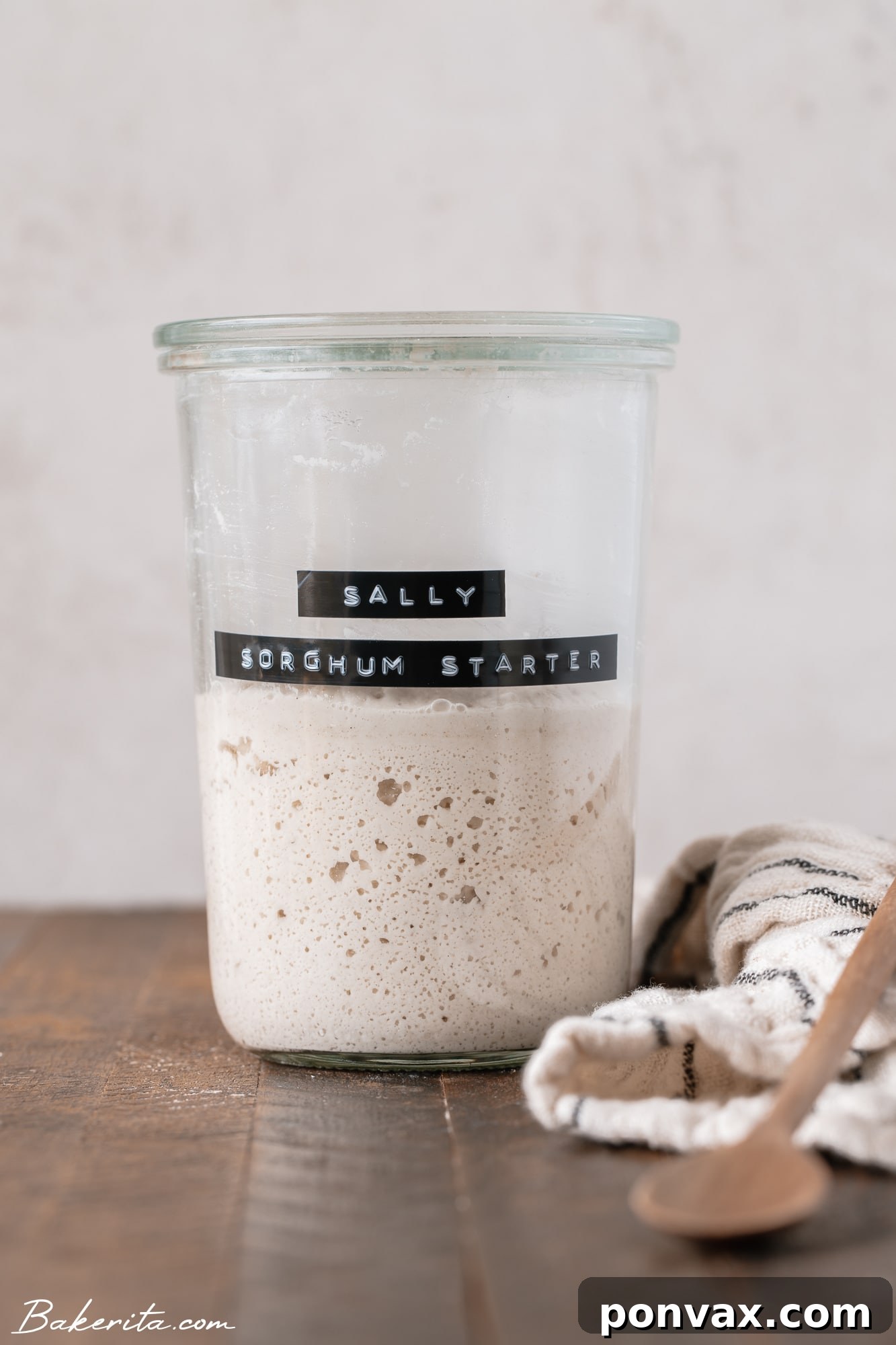
- Signs of a Healthy and Ready Starter: Around this time, you should begin to see consistent, vigorous bubbling throughout the starter, along with a pleasant, yeasty, slightly sour aroma. It should look like a lively sponge. Keep in mind that environmental factors (temperature, humidity, specific flour type) vary significantly, so if your starter isn’t quite there yet, simply continue with the regular feeding schedule. Patience is key. Once your starter exhibits these healthy characteristics, any discarded portions can now be happily incorporated into gluten-free sourdough discard recipes.
- Transition to 100% Hydration Feeding: Once your starter demonstrates consistent bubbling and a pleasant, ripe smell, typically sometime during week two, it’s time to adjust your feeding ratio to 100% hydration. This means you will feed your starter with equal weights of starter, flour, and water (a 1:1:1 ratio). For example, if you maintain 100g of existing starter, you would feed it with 100g of filtered water and 100g of your chosen whole-grain gluten-free flour. This higher hydration level often promotes more vigorous activity.
- Adjusting for Flour Absorbency: While 1:1:1 is the general guideline for 100% hydration, some gluten-free flours have different absorbency levels. For instance, my brown rice flour starter typically works perfectly with equal parts. However, with my sorghum flour starter, I often find that 80g of sorghum flour is sufficient for 100g each of starter and water to achieve the desired consistency. The ideal consistency is a thick, pasty batter that can still be stirred easily but holds its shape somewhat. If your starter appears too thick or dry, add a little extra water, a few grams at a time, until you reach the right texture.
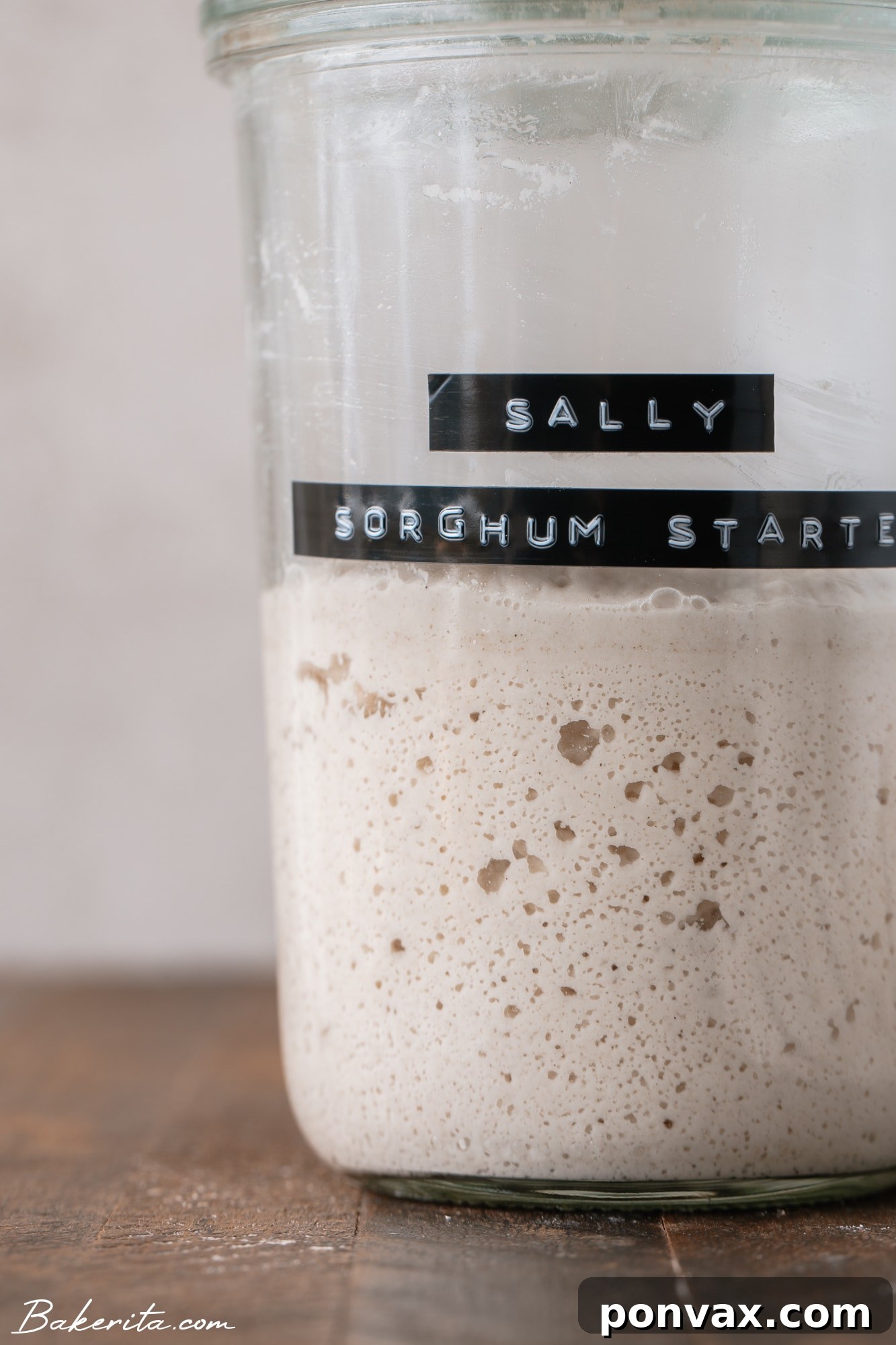
- Identifying Peak Activity: With 100% hydration feedings, you’ll observe significant growth and activity. Your starter should noticeably double in size (or come very close to it) within three to five hours after feeding, forming a dome shape at the top. This point of maximum expansion is known as peak activity. This is the optimal time to use your starter to mix your preferment for your gluten-free sourdough bread, as it contains the most active and potent yeast for optimal rise and flavor development. Using it at peak ensures your bread gets the best possible lift.
Patience is a Baker’s Virtue! As your gluten-free sourdough starter continues to mature with consistent feedings, its strength and ability to leaven bread will improve significantly. Don’t be discouraged if your first few loaves come out a little flatter or denser than expected. Each feeding strengthens the microbial community, leading to larger, more consistent bubbles and a superior rise in your future sourdough creations. Think of it as developing a strong, reliable friend for your baking endeavors.
Gluten-Free Sourdough Starter Maintenance and Storage
Once your gluten-free sourdough starter is established and consistently active, proper maintenance is key to its longevity and reliability. You have a few options for storage and feeding frequency, depending on how often you plan to bake and your lifestyle.
- Room Temperature Storage (Daily Feeding): If you plan to bake frequently (several times a week), keeping your starter on the counter at room temperature is ideal. In this scenario, you’ll need to feed it daily to keep it happy and active, preventing it from becoming “hungry” and developing a thick layer of “hooch” (alcoholic liquid) on top. Continue with the 100% hydration feeding method: discard down to 100g of starter, then feed it with 100g of room temperature filtered water and 80-100g of your preferred gluten-free whole grain flour. Mix thoroughly, scrape down the sides, and cover lightly. This routine ensures your starter is always ready to go.
- Refrigerator Storage (Weekly Feeding): For less frequent baking, or if you’re going away for a few days, storing your starter in the refrigerator is a convenient option. The cold temperature significantly slows down microbial activity, greatly reducing the need for frequent feedings. When stored in the fridge, you only need to feed your starter approximately once a week, following the same 100% hydration instructions as above. This method is often referred to as “hibernation.”
Specific Feeding Scenarios for Refrigerated Starters:
- For Maintenance (Refrigerator): If you’re simply feeding for maintenance and don’t plan to bake immediately, you can feed your starter as usual and return it straight to the refrigerator after mixing. The cold will slow down the fermentation, and it will slowly consume its food over the week.
- Preparing for a Bake (From Refrigerator): When you’re ready to bake after storing your starter in the fridge, remove it, feed it as normal (discarding first), and allow it to sit at room temperature until it reaches its peak rise. Sometimes, a single feeding is enough to revive it and get it bubbly. However, for a truly robust and active starter, especially if it’s been in the fridge for a while, two consecutive feedings (12-24 hours apart) may be needed to help it fully recover from dormancy and achieve a strong, consistent, bubbly rise.
Environmental Considerations for Starter Health: I successfully store my starter on the kitchen counter in a moderate climate. However, in cooler environments, some bakers find it beneficial to keep their starter in a warmer spot, such as on a fireplace mantle, on top of a microwave, or even in an oven with just the light on (ensuring the oven itself is off!). If using the oven method, always place a prominent sticky note over the “on” button as a crucial reminder to prevent accidental preheating with your precious starter inside!
Frequently Asked Questions About Gluten-Free Sourdough Starter
My gluten-free sourdough starter isn’t bubbling or active yet. What should I do?
Developing a sourdough starter relies heavily on harnessing wild yeast, a natural process that can be quite variable. Factors like ambient temperature, humidity levels, time of year, and even the specific strains of wild yeast present in your local environment all play a role in how quickly your starter becomes active. If your starter seems sluggish, patience is truly your best friend. Often, simply giving it a little more time and consistent nurturing will do the trick.
To give it a boost, consider these troubleshooting tips:
- Increase Warmth: Ensure your starter is in a consistently warm spot (ideally 70-80°F or 21-27°C). A slightly warmer environment significantly encourages yeast activity. Avoid cold drafts.
- Nutrient Boost: Some bakers find success by adding a thin slice of organic apple or a few raisins to the starter for a day or two. The natural sugars and yeasts on these fruits can provide an extra food source and boost for the microbial community. Remember to remove them before your next feeding.
- Fresh Flour/Water: Double-check that you are using fresh, whole-grain gluten-free flour and chlorine-free filtered water.
If, after three to five days of consistent feeding, you observe absolutely no activity (no bubbles, no change in smell, no rise), it might be time to start over. Sometimes, despite best efforts, a batch just doesn’t take off, and that’s perfectly normal in the world of wild fermentation.
My starter isn’t doubling in size. Is it ready for baking?
Ideally, you should wait until your starter consistently doubles (or nearly doubles) in size after feeding before using it for baking bread. This visual indicator signifies that it has enough active yeast to properly leaven your dough, resulting in a good rise and open crumb. Catching the starter precisely at its peak doubling point can be tricky; it often rises and then begins to fall back down as the food source is depleted. Even experienced bakers sometimes miss the exact peak!
It’s crucial to closely observe your starter during its active phase to learn how long it takes to reach its peak rise under your specific environmental conditions. Hot, humid days can accelerate activity, while cooler days might slow it down. The more you observe and track its behavior, the better you’ll become at anticipating its peak, allowing you to use it at its optimal strength for your preferment and ensuring the best possible rise for your gluten-free sourdough bread.
There is mold or colored slime on my starter. What does this mean?
This is generally not a good sign and indicates contamination. If you notice any fuzzy, discolored patches (like green, black, orange, or pink mold), or any slime that looks distinctly “off” or unusual in texture, it’s best to err on the side of caution. Your instincts are usually right when something seems amiss. Contamination can occur despite careful cleaning. Do not attempt to salvage a moldy or slimy starter; discard it entirely and start fresh to avoid any potential health risks. A healthy starter should smell pleasantly yeasty and subtly sour, not foul, extremely pungent, or overtly unpleasant.
What’s the alcoholic-smelling liquid on top of my starter?
That liquid is commonly called “hooch,” and it’s a completely normal byproduct of the fermentation process, essentially a form of alcohol. Hooch forms when your starter gets very hungry because the yeast has consumed most of the available food (flour) and is now producing alcohol as it runs out of sugars. It can vary in color from clear to dark brown or even black, depending on the type of flour used and how hungry the starter is.
You have two options when hooch appears:
- Stir it in: You can simply stir the hooch back into your starter before feeding. This can contribute to a more pronounced sour flavor in your bread, as the acids present in hooch add to the tang.
- Pour it off: Alternatively, you can carefully pour off the hooch before feeding. This tends to result in a milder, less sour starter and bread.
The choice depends on your personal preference for sourness. If you see hooch frequently or very dark hooch, it’s a strong sign that your starter might need more frequent feedings or a slightly larger feeding ratio to keep it well-fed.
Once established, do I need to feed my starter every day?
Not necessarily! The feeding frequency depends on where you store your starter and how often you plan to bake.
- Room Temperature: If you keep your active starter on the counter at room temperature, daily feedings are recommended to keep it robust and prevent it from becoming overly hungry and producing too much hooch.
- Refrigerator: For more casual bakers or if you’re taking a break, storing your starter in the refrigerator significantly slows down its metabolism, allowing you to feed it only about once a week.
It’s important to note that missing a single day of feeding while it’s at room temperature usually isn’t disastrous; your starter is quite resilient! For very long-term storage or if you’re traveling for an extended period, you can even dehydrate your starter into flakes, which can then be rehydrated with water when you’re ready to bake again, essentially putting it into a deep sleep.
Can I use gluten-free all-purpose flour for my starter?
It is generally not recommended to use gluten-free all-purpose flour blends for your starter. These blends often contain various refined starches (like tapioca, potato, corn) and gums (like xanthan gum, guar gum), which are not ideal for cultivating a healthy, active starter. The wild yeasts and bacteria thrive best on the more complex carbohydrates and nutrients found in whole-grain flours. Whole-grain gluten-free flours (such as brown rice, buckwheat, sorghum, or millet) are superior because they contain a richer natural microbial population and more diverse nutrients that the wild yeasts and bacteria thrive on, leading to a stronger, more predictable, and more reliable starter.
Do I need to use the same flour to feed my starter forever?
Initially, it’s best to be relatively consistent with the type of whole-grain gluten-free flour you use to establish your starter, as this helps the microbial community stabilize and get accustomed to its food source. However, once your starter is well-established and consistently active, you absolutely can switch between different gluten-free whole-grain flours. For example, you could transition from feeding brown rice flour to sorghum flour, or even a blend. While you have flexibility, try not to switch flours *every* single time you feed, as constant drastic changes can sometimes stress the starter and lead to temporary dips in activity. A gradual transition or consistency for a few feedings after a switch is often best.
Can I feed my starter with a combination of flours?
Yes, many bakers achieve excellent results by feeding their starter a combination of gluten-free whole-grain flours. Blending flours like brown rice flour and buckwheat flour, or sorghum flour and brown rice flour, can sometimes provide a broader spectrum of nutrients for the wild yeasts and bacteria, potentially leading to a more vigorous or flavorful starter. If you find your starter is struggling to get consistently active with just one type of flour, experimenting with a combination can often give it the “kick-start” it needs to thrive and become more robust. It’s a great way to customize your starter’s profile.
What should I do with the discard? I don’t like throwing it away!
You are in luck! Once your starter is mature and healthy (typically after the first week or when it’s showing consistent activity), you absolutely do not have to throw away your sourdough discard. It’s a fantastic ingredient for a wide array of recipes, lending a subtle tang and unique texture to baked goods without needing to be active or bubbly. I rarely discard mine and have several beloved recipes that put it to good use, reducing food waste and expanding your gluten-free baking repertoire. Here are some delicious ideas for your gluten-free sourdough discard:
- Gluten-Free Sourdough Scones
- Gluten-Free Sourdough Chocolate Chip Cookies
- Easy Gluten-Free Sourdough Pizza Crust
- Gluten-Free Sourdough Cinnamon Sugar Crackers
How to Make a Gluten-Free Sourdough Starter
Ready to make your own delicious gluten-free sourdough bread? The essential first step is cultivating a robust gluten-free sourdough starter. This process, requiring only gluten-free whole-grain flour, filtered water, and time, is simpler than you might think and incredibly rewarding.
While developing a strong, active starter takes about one to two weeks with twice-daily feedings initially, each feeding requires only a few minutes of your time.
For visual learners, I’ve documented the entire process of creating a sourdough starter from scratch on my Instagram story highlights. Visit my Instagram page and look for the “GF Starter” and “Starter 2” highlights to see the step-by-step visuals. You’ll also find a “Starter Q&A” highlight for helpful troubleshooting tips, making your journey even smoother.
Pin Recipe
Ingredients
- Gluten-Free Whole Grain Flour, I recommend brown rice flour, sorghum flour, buckwheat flour, or millet flour, or a combination. Start with about 3 lbs (approx. 1.3 kg); you’ll need more for ongoing maintenance once your starter is established.
- Room Temperature Filtered Water
Instructions
Preparation Steps:
- Clean your jar well with soap and hot water. It needs to be impeccably clean to ensure no harmful bacteria impede your starter’s growth. Rinse thoroughly.
- Weigh your empty jar on your kitchen scale and note its weight in grams. Mark this weight on the jar with a label or tape; this helps you accurately track the amount of starter remaining during feedings and discarding.
Days One and Two: Twice-Daily Feedings
- In the morning, combine 50g gluten-free whole grain flour and 50g room temperature filtered water in your clean jar using a non-reactive spoon. Adjust water slightly if using a very absorbent flour (e.g., buckwheat) to achieve a thick, paste-like consistency, similar to pancake batter. Scrape down sides of the jar to keep it clean. Cover lightly (e.g., with a loose lid or tea towel secured by a rubber band) to allow airflow. Place the jar in a warm area (70-80°F recommended) away from drafts. As a visual aid, place a rubber band around the jar at the level of your freshly fed starter to track any rise.
- Repeat this process at night, approximately 10-12 hours later. Add another 50g of flour and 50g of water to the existing mixture in the jar. Stir vigorously until well combined, scrape down the sides, and cover lightly again. These twice-daily feedings are crucial in the beginning to rapidly strengthen the starter’s microbial activity.
- Continue this morning and night feeding routine for two full days (four total feedings). By the end of day two, you should begin to notice small bubbles forming within the mixture, indicating initial activity. You might also detect some unusual, evolving smells; persevere through any initial “bad” smells, as they should typically dissipate and improve as the beneficial bacteria establish dominance.
Days Three through Seven: Discarding and Building Strength
- First Discard (Morning of Day Three): If you observe consistent bubbles and a developing sour smell (indicating initial fermentation), your starter is ready for its first discard. Remove all but 100g of the starter from the jar. At this early stage, it’s best to discard this portion (to compost or trash) as it may still contain some less desirable initial bacteria.
- For the next five days (Days 3-7), continue the twice-daily feeding schedule. Before each feed, discard all but 100g of starter, then feed with 50g each of flour and water. You may notice your starter gets *less* active temporarily after you begin discarding; this is entirely normal and signifies that the beneficial microbes are consolidating their strength. Continue consistent feedings.
- Maintain the twice-daily feeding routine until you consistently see good bubbling and a noticeable rise (often doubling or nearly doubling) after each feeding. Once these signs are consistent, you can switch to once-a-day feedings.
Week 2 and Beyond: Maturation and 100% Hydration
- Around this time (beginning of week two), you should generally start having a nice, consistently bubbly starter with a pleasant, yeasty, slightly sour smell. However, every environment is different, so don’t worry if you’re not there yet! Just continue with consistent feedings. Once your starter smells good and has consistent bubbles, you can safely start using the discard for delicious gluten-free sourdough discard recipes.
- Once you consistently observe good bubbles and a pleasant, ripe smell (which typically occurs sometime during the second week), increase your feedings to a 100% hydration ratio. This means you will feed equal weights of starter, flour, and water.
- 100% hydration feeding means a 1:1:1 ratio of starter:flour:water. For example, if you maintain 100g of starter, you would feed it with 100g of filtered water and 100g of whole-grain gluten-free flour. This can vary slightly based on the absorbency of your specific flour. For my brown rice flour starter, it ends up being pretty even. With my sorghum starter, I find I only need about 80g of sorghum flour to 100g each of starter and water to achieve the right consistency. We’re looking for a thick, pasty batter; add a little extra water (a few grams) if your starter gets too thick.
- Once you switch to the 100% hydration feeding, you will start seeing significant growth and should notice that your starter will consistently double (or come very close) in size sometime between three to five hours after feeding. When it reaches its highest point of expansion, that’s what we call peak activity. Peak activity is the optimal time to use your starter to mix your preferment for your gluten-free sourdough bread, ensuring maximum leavening power.
Gluten-Free Sourdough Starter Maintenance:
- Where to store your starter: If you bake often, store your starter on the counter and feed daily. In cooler climates, some people prefer to keep it in a consistently warm area, such as on a fireplace mantle, on top of the microwave, or in an oven with just the oven light on (ensure the oven is OFF!). Once established and if you bake less frequently, you can store your starter in the refrigerator.
- Regular Feeding Instructions (Room Temperature): If your starter is kept at room temperature, you will want to feed it every day so it doesn’t get too “hungry” and produce a lot of “hooch.” Continue with the 100% hydration feedings: discard down to 100g of starter every day, then feed it with 100g room temperature filtered water and 80-100g gluten-free whole grain flour. Mix well and cover lightly.
- If you are storing your starter in the refrigerator: You will only need to feed it once a week, following the same 100% hydration instructions as above (discard to 100g, feed with 100g water and 80-100g flour).
- If you are feeding for maintenance (refrigerated): You can feed your starter and return it straight to the refrigerator after mixing.
- If you are feeding to prepare for a bake (from refrigerator): Remove your starter from the refrigerator, feed it as normal (discarding first), and allow it to sit at room temperature until it reaches its peak rise. Sometimes, two consecutive feedings (12-24 hours apart) are needed to help the starter fully come back from its dormancy in the fridge and get to a good, bubbly rise for baking.
Notes
Did you make this recipe?
Please consider leaving a star rating and review! Your feedback helps other bakers.