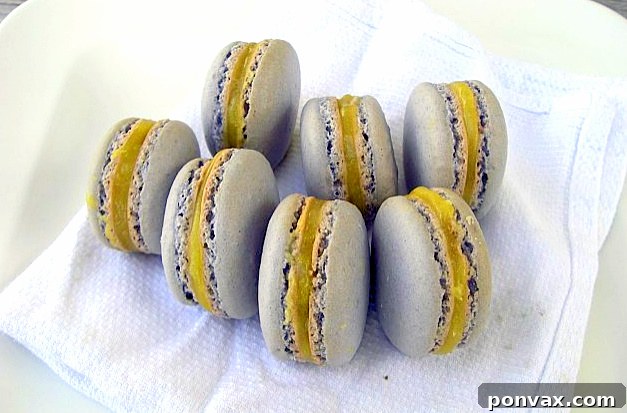
Delicate Lavender Macarons with Zesty Lemon Curd: A French Pastry Masterpiece
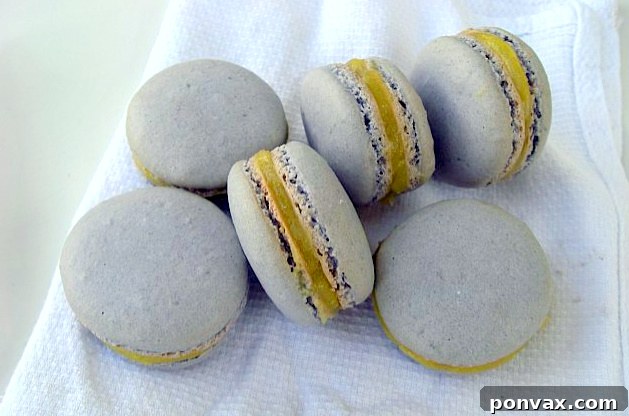
Baking can be an incredibly rewarding journey, filled with moments of exhilarating success and, occasionally, the quiet contemplation of a less-than-perfect outcome. Few confections embody this dynamic quite like the French macaron. These delicate, almond-based cookies, known for their crisp shell, chewy interior, and characteristic “feet,” present a fascinating challenge for even seasoned bakers. But the satisfaction of achieving those perfectly smooth tops and airy textures is unparalleled.
Today, we’re diving into a truly special rendition: Lavender Macarons with Zesty Lemon Curd. This recipe marries the subtle, aromatic elegance of culinary lavender with the bright, tangy zest of fresh lemon, creating a harmonious flavor profile that is both sophisticated and utterly delicious. It’s a floral and citrus twist that elevates the classic French cookie into something truly memorable.
The Enchanting World of Macarons: A Baker’s Journey
The allure of the macaron lies not just in its exquisite taste but also in the precision required for its creation. It’s a dance of exact measurements, controlled technique, and a sprinkle of patience. There’s nothing quite like the rush of attempting something reputedly difficult – a feat that even the most experienced bakers sometimes struggle with – and seeing it come to fruition. Conversely, the heart-sinking feeling of failure is a common companion on this path. This particular journey into lavender macarons was a testament to both, though thankfully, it culminated in the ecstatic rush of getting them just right!
A recent upgrade to my baking arsenal – a new whisk attachment for my Kitchen Aid stand mixer – sparked a renewed excitement. Finally, I could tackle meringues, whipped creams, and, most importantly, macarons, with the efficiency and power needed to achieve perfect results. This tool makes all the difference when aiming for that impeccably stiff meringue, a non-negotiable step in macaron mastery.
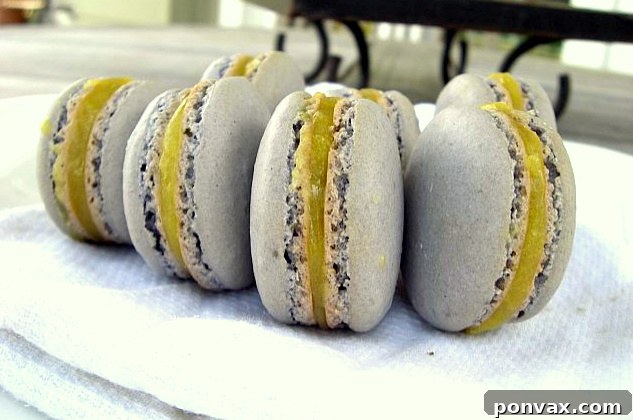
To say I approached these macarons with utmost care would be an understatement. Every step was meticulously observed: I watched the meringue transform into perfect, glossy peaks; I diligently sifted my almond flour and powdered sugar a full four times to ensure an ultra-fine, lump-free mixture; and I precisely counted each fold during the crucial “macaronage” stage. The intensity was real, driven by the desire to conquer this iconic French pastry.
My extensive research paid off. While I’ve shared macaron experiences before, this was my first venture into coloring and flavoring the batter directly. The anticipation was a whirlwind of nervousness, excitement, a touch of fear, and, inevitably, hunger! Who knew a single cookie could evoke such a spectrum of emotions? But then again, it’s not just any cookie; it’s a macaron, and the effort, without a doubt, was worth every moment.
The Perfect Pairing: Floral Lavender and Zesty Lemon
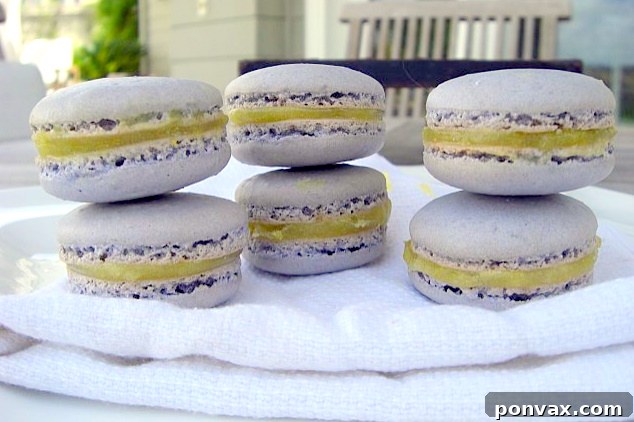
For this batch, I chose the enchanting flavor of lavender. I had acquired some exquisite culinary dried lavender during a trip to Seattle a few weeks prior and had been eager to incorporate its unique aroma into a dessert. For the filling, I prepared a bright and creamy lemon curd. The delicate floral notes of the lavender shells found their perfect counterpoint in the tart, citrusy burst of the lemon curd. The combination is simply divine – a sophisticated blend that delights the palate with every bite.
Achieving macaron perfection can be elusive, and it often involves trial and error. While I’m sharing my detailed recipe below, I highly recommend delving into resources that explain the science and technique. One such invaluable guide is BraveTart’s “Macaron Mythbusters” post. Her insights into the intricacies of macaron making, from meringue consistency to the art of macaronage, are incredibly helpful for understanding the nuances of this delicate cookie. It’s worth noting that while some methods suggest no resting period after piping, my personal experience has shown that allowing the piped shells to rest for about an hour significantly improves their chances of developing those coveted “feet” and preventing cracks. Experiment and discover what works best in your own kitchen!
Mastering the Art of Macaronage
The “macaronage” – the process of folding the dry ingredients into the meringue – is perhaps the most critical and intimidating step in macaron making. It’s where many bakers falter, leading to either hollow shells (undermixed) or flat, featureless discs (overmixed). The goal is to deflate the meringue just enough to achieve a “lava-like” consistency, also known as the “ribbon stage.”
- **The Initial Mix:** When you first add the almond flour and powdered sugar mixture to the stiff meringue, it will look impossibly thick and dry. Don’t despair!
- **Folding and Pressing:** Use a combination of gentle folding to incorporate the dry ingredients and a deliberate pressing motion against the side of the bowl to gently deflate the meringue.
- **Monitoring Consistency:** After about 25-30 folds, the mixture will still be quite lumpy. Continue folding, checking the consistency every few strokes.
- **The Ribbon Test:** The ideal consistency is achieved when you can lift your spatula and the batter falls back into the bowl in a thick, continuous ribbon that slowly melts back into the rest of the batter within 15-30 seconds. If it holds its shape perfectly, it’s undermixed. If it’s too runny and melts immediately, it’s overmixed. This stage is paramount for creating those signature “feet” and a full, chewy interior.
Remember, macarons are a journey of learning. Don’t be discouraged by initial setbacks. Each attempt brings you closer to understanding the nuances of your ingredients and your oven. The reward of these beautiful, flavorful lavender lemon macarons is well worth the dedication!
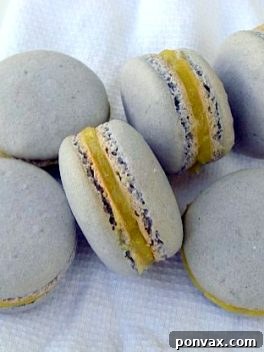
Lavender Macarons with Lemon Curd
Pin Recipe
Ingredients
- 4 ounces (115g) blanched almonds (or almond flour)
- 8 ounces (230g) powdered sugar*
- 5 ounces egg whites, room temperature
- 2 ½ ounces (72g) granulated sugar
- The scrapings of 1 vanilla bean, or 2 tsp vanilla extract
- ¼ teaspoon salt
- 1 tablespoon dried culinary lavender
- Lavender colored gel paste (optional, for color)
For the Lemon Curd
- 3 eggs
- 1 cup sugar
- ½ cup fresh lemon juice
- ¼ cup butter or margarine, melted
- 1 tablespoon grated lemon peel
Instructions
- Preheat your oven to 300°F (150°C). Prepare two large baking sheets by lining them with parchment paper. Have a large (18”) pastry bag fitted with a plain round tip ready.
- If using store-bought almond flour, simply sift it together with the powdered sugar into a large bowl. Set aside.
- If starting with blanched almonds, process the almonds, dried lavender, and powdered sugar in a food processor for about a minute until finely ground. Sift the mixture into a bowl, reserving any larger bits that don’t pass through the sieve. Return these larger bits to the food processor and process again for another minute. Sift once more. You should have approximately 2 tablespoons of slightly chunkier almond bits remaining; add these into your dry mix.
- In the impeccably clean and dry bowl of a stand mixer, combine the egg whites, granulated sugar, vanilla bean scrapings (if using, otherwise add extract later), and salt. Begin whipping on medium speed (setting 4 on a Kitchen Aid) for 3 minutes.
- Increase the speed to medium-high (setting 7 on a Kitchen Aid) and continue whipping for another 3 minutes. Then, increase the speed to high (setting 8) for a final 3 minutes.
- At this point, turn the mixer off. Add the vanilla extract (if not using vanilla bean) and lavender gel food coloring. Whip for one more minute on the highest speed to ensure even distribution of color and flavor.
- After this final minute, your meringue should be very stiff, glossy, and dry. When you remove the whisk attachment, a firm clump of meringue will remain in the center; gently tap the whisk against the bowl to release it.
- Add all of the dry ingredients (sifted almond flour and powdered sugar mixture) into the meringue at once. Begin folding them in. Use both a broad folding motion to incorporate the dry ingredients from the bottom up and a pressing motion against the side of the bowl to gently deflate the meringue. This crucial step is known as “macaronage.”
- For beginners: Initially, the mixture will appear hopelessly incompatible and stiff. After about 25 turns, it will still have a lumpy texture. Another 15-20 strokes should bring you closer to the right consistency. Remember, macaronage is about carefully deflating the egg whites, so don’t be overly gentle; a firm but controlled hand is needed.
- **Undermixed batter:** Will be too stiff. If you spoon some out and drop it back into the mix, it will sit on top and not incorporate. Continue folding.
- **Overmixed batter:** Will have a runny, pancake-batter-like texture. It will ooze continuously, making it impossible to pipe into neat circles. Avoid this!
- To continuously check the batter after about 30 strokes, perform the “ribbon test”: lift your spatula, and allow the batter to fall back into the bowl. If it creates a thick ribbon that slowly melts back into the batter within 15-30 seconds, it’s ready. If it doesn’t melt back or is too runny, adjust your folding accordingly.
- Transfer approximately half of the macaron batter into your prepared piping bag. Avoid overfilling the bag, as it makes controlling the piping more difficult.
- When piping, hold the bag as vertically as possible, about ½ inch above the parchment paper. Pipe consistent circles onto the baking sheets. Stop piping just before your desired size, as the batter will spread slightly.
- After piping, firmly tap the baking sheets a few times on your counter to release any trapped air bubbles. Use a toothpick to pop any remaining bubbles. This step helps create smooth tops.
- Allow the piped macarons to rest at room temperature for 30 minutes to 1 hour, or until they form a dry skin. You should be able to gently touch a shell without any batter sticking to your finger. This resting period is crucial for the development of the “feet.”
- Bake for 10-18 minutes, depending on the size of your macarons and your oven’s calibration. The shells are done when they do not wobble on their feet when gently touched. Allow them to cool completely on the baking sheets before attempting to remove them.
- Once thoroughly cooled, carefully peel the macaron shells from the parchment paper. A thin metal spatula can assist if needed.
- Fill a pastry bag fitted with a plain tip with the prepared lemon curd (recipe below). Pipe a quarter-sized mound of lemon curd onto the flat side of half of the macaron shells. Then, gently sandwich them with the remaining plain halves.
- Macarons, defying many pastry traditions, actually improve with age. The shells soften and become wonderfully chewy, allowing the flavors of the shell and the curd to meld beautifully. While you can certainly enjoy them immediately, they are often best after being refrigerated for at least 24 hours (and up to a week) to allow the flavors and textures to fully mature.
For the Lemon Curd
- In a microwave-safe bowl, whisk together the eggs, sugar, fresh lemon juice, melted butter (or margarine), and grated lemon peel until well combined.
- Microwave the mixture for one minute. Remove and stir thoroughly. Repeat this process, microwaving for one minute intervals and stirring after each, until the curd is thick enough to coat the back of a spoon (this typically takes about 3-5 minutes, depending on your microwave).
- If you accidentally overcook the curd and notice small bits of cooked egg, simply strain the mixture through a fine-mesh sieve to achieve a smooth consistency.
- Transfer the lemon curd to a clean jar or container, cover, and refrigerate until it is thick, cold, and set before using it to fill your macarons.